ECI Announces By-Polls for 5 Assembly Seats & Nagaon Lok Sabha Seat on October 6…
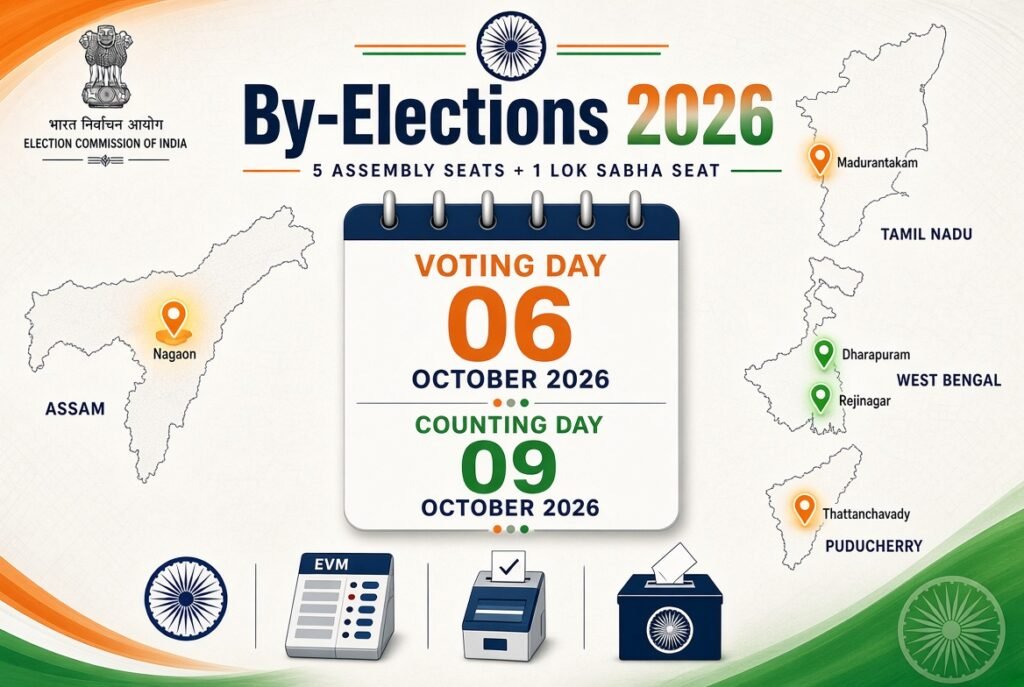
The Election Commission of India (ECI) has officially announced the dates for by-elections to five assembly seats and one Lok Sabha seat in four states and union territories. The Election Commission (ECI) has announced the election schedule for vacant assembly seats in Tamil Nadu, Puducherry, and West Bengal, and one parliamentary seat in Assam. Voting will take place in the Madurantakam and Dharapuram assembly seats in Tamil Nadu, Thattanchavady in Puducherry, and Rejinagar and Nandigram assembly seats in West Bengal. Voting will also take place in the Nagaon Lok Sabha seat in Assam. According to a notification issued by the Election Commission, voting for all these seats will take place on October 6, 2026, with counting of votes taking place on October 9, 2026. These by-elections are being held following the resignation of MLAs and MPs. According to the official schedule released by the Commission, the formal gazette notification for the elections will be issued on September 9, 2026. The deadline for filing nomination papers is September 16, after which scrutiny of nominations will take place on September 17. Candidates can withdraw their nominations until September 19. The complete election schedule is as follows: Prior to the elections, the Election Commission also notified the schedule for the final publication of voter rolls in the respective constituencies. It should be noted that the final voter list for the Nagaon parliamentary seat in Assam was released on February 10, while for the Thattanchavady assembly seat in Puducherry, it was released on February 14. In Tamil Nadu, the final voter list for the Madurantakam (SC) and Dharapuram (SC) assembly seats was released on February 23. These MLAs resigned MP Pradyut Bordoloi resigned from the Nagaon Lok Sabha seat in Assam, necessitating a by-election. Representatives from five other assembly seats have also resigned. Chief Minister Suvendu Adhikari resigned from Nandigram in West Bengal. Humayun Kabir resigned from the Rejinagar seat in Murshidabad district. MLA Maragatham Kumaravel resigned from the Madurantakam seat in Tamil Nadu, and P. Satyabhama from Dharapuram. MLA N. Rangasamy resigned from the Thattanchavady seat in Puducherry. The Election Commission has directed the Chief Electoral Officers of the respective states to ensure free, fair, and peaceful elections. Adequate availability of Electronic Voting Machines (EVMs) and VVPATs (VVPATs) has been ensured. Orders have also been issued to ensure strict security arrangements in sensitive areas.
UCC Expansion Continues: West Bengal Prepares to Table Uniform Civil Code Bill Amid Political Debate
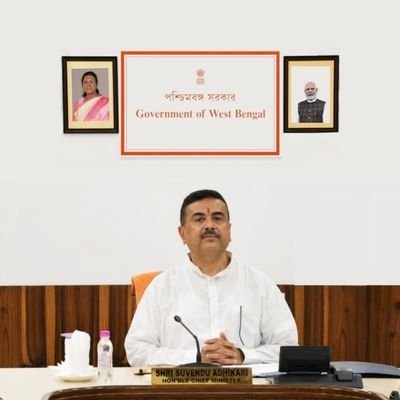
After Uttarakhand, Assam, and Gujarat, the Uniform Civil Code (UCC) is now set to be implemented in West Bengal as well. The West Bengal government is preparing to table the UCC Bill in the Legislative Assembly on June 29, 2026. Under this law, regulations concerning marriage, divorce, inheritance, and adoption will be uniform for all citizens. Key aspects of the UCC in West Bengal include the process of establishing legal timelines. Chief Minister Suvendu Adhikari announced that the UCC Bill would be introduced during the Assembly’s current budget session. Notably, the West Bengal government will follow the roadmap adopted by Uttarakhand, Assam, and Gujarat; a committee headed by a retired judge will be constituted for the UCC. It is worth noting that implementing the UCC in West Bengal was a key promise in the BJP’s election manifesto, in which the party pledged to enforce the UCC within six months of forming the state government. While this move is garnering support from Muslim women, it is also facing stiff opposition from the opposition parties, including the Trinamool Congress and the Congress. They argue that personal laws specific to certain religions are linked to cultural and religious identities, and that the UCC would effectively strip various religions of their distinct cultural identities.
Assam’s New Uniform Civil Code Proposes Strict Registration Rules and Penalties Across the State..
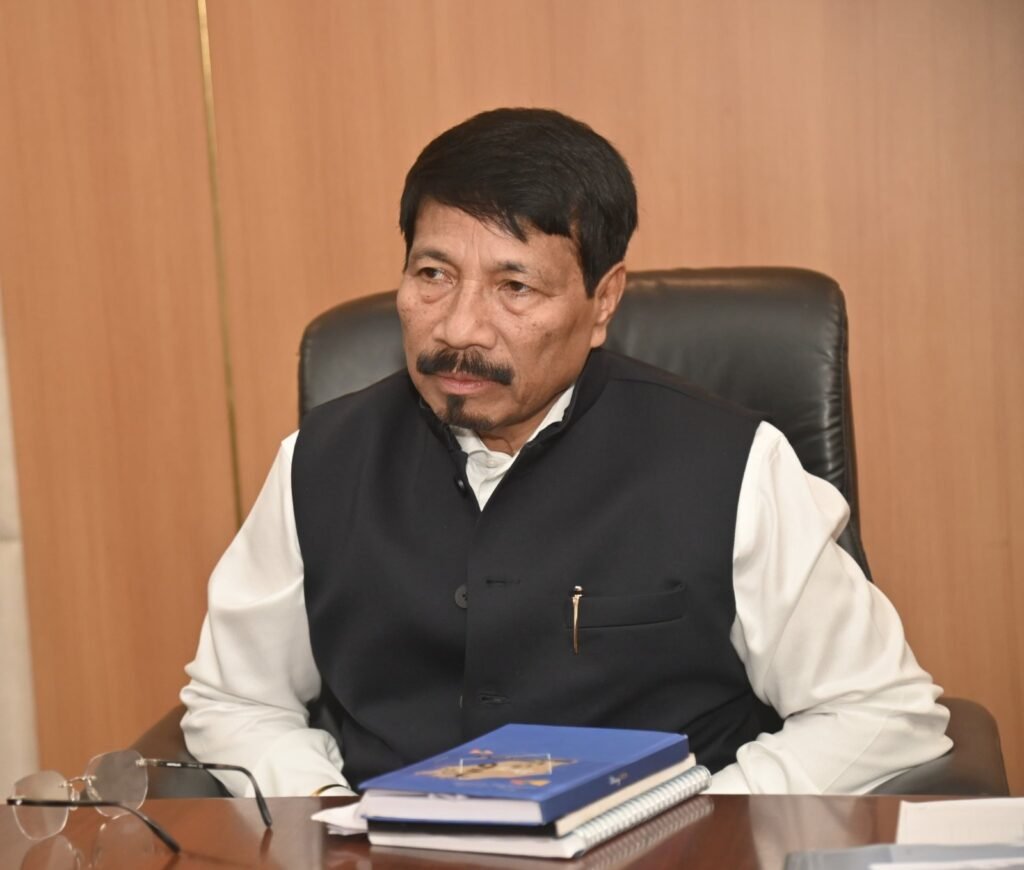
Assam’s Parliamentary Affairs Minister, Atul Bora, introduced the Uniform Civil Code (Assam) Bill, 2026, in the state assembly. The bill reportedly establishes a uniform age for marriage at 21 years for men and 18 years for women. It also prohibits polygamy and mandates registration for those in live-in relationships. Different regulatory mechanisms and penalties have been implemented across the state for this bill. Key regulations include requiring couples in live-in relationships to register their partnership within one month, and any child born to a registered live-in couple will be legally legitimate. The bill mandates registration of all divorce cases Minors entering into such relationships will face prosecution, and if either partner is already married, the partnership will be considered valid. The bill mandates registration of all divorce cases, whether a ceremony or order, within 60 days of marriage and divorce. Scheduled Tribe communities and their traditional customs are exempt from this law. Those who disobey this legal proposal will be punished with imprisonment of up to 3 months and a fine of ₹10,000. Those who conceal facts upon declaration will be punished with imprisonment of up to 3 months and a fine of ₹25,000. Failure to register a marriage or divorce within 7 days will result in a fine of ₹10,000. Forging documents during registration will result in imprisonment of up to 3 months and a fine of ₹25,000..
From Student Leader to Assam CM Twice: The Rise of Himanta Biswa Sarma
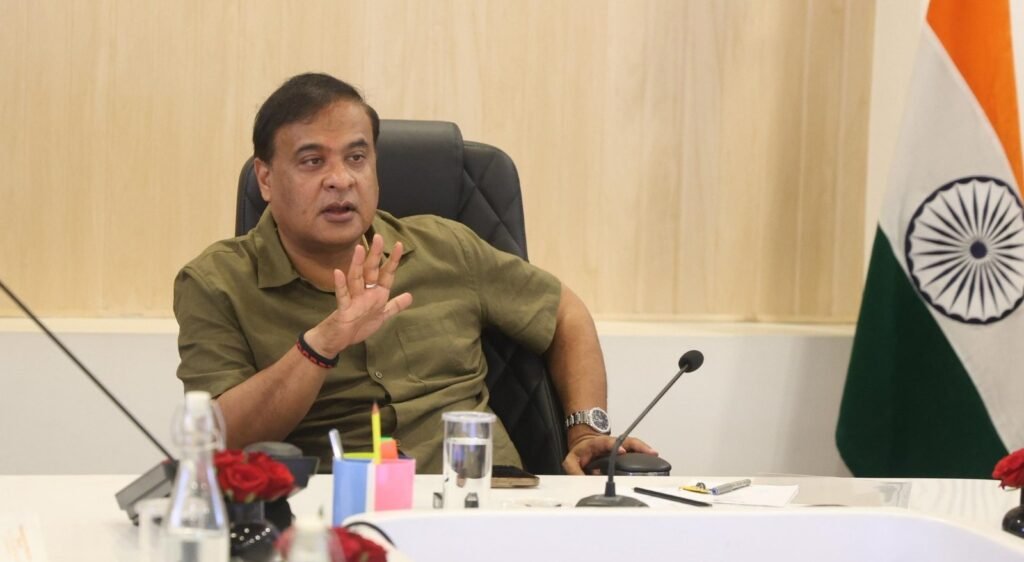
Himanta Biswa Sarma, who became the Chief Minister of Assam for two consecutive terms on 12 May 2026, was born on 1 February 1969 in Jorhat, Assam. His father Kailash Nath Sarma was an Assamese poet and novelist and mother Mrinalini Devi was a litterateur. Himanta Biswa Sarma graduated from Kamrup Academy Higher Secondary School, Guwahati. He also obtained a Bachelor’s degree in Political Science from Cotton College, Guwahati and a Master’s degree in Political Science from Guwahati University in 1990 and a Master’s degree in Political Science from Guwahati University in 1992. Sarma also obtained an LL.B. from Government Law College, Guwahati in 1995 and practiced law in the Guwahati High Court for the next five years before being elected to the Legislative Assembly in 2001. In 2006, he obtained a Ph.D. in Political Science from Guwahati University. Regarding his political career, he entered politics while still in college. Sarma served as the General Secretary of the Students’ Union while studying at Cotton College in 1991-92. Sarma’s legislative career began when Assam Chief Minister Tarun Gogoi entrusted him with the state ministries of Agriculture and Planning and Development in 2001. Subsequently, Sarma’s credibility within the party grew, and he was entrusted with more prominent roles, including cabinet ministership, during Gogoi’s second and third terms. During his tenure as Minister of Health and Education, Sarma was highly praised for his strategic skills and actions. He also played a key role in managing the 2011 assembly election campaign, helping the party secure a landslide victory. Following this, Sarma resigned from the Assembly and the Congress party in 2015 due to differences of opinion. Hemanta Biswa Sarma joined the BJP in August 2015. The party entrusted him with the responsibility of forming alliances with other parties in the state and strategizing for the BJP’s victory in the 2016 state elections, the party’s first in the state. The BJP-led National Democratic Alliance won the election, and Sarma was appointed a cabinet minister, holding key portfolios such as finance, education, and health. In 2021, when the BJP and its allies won the elections for the second consecutive time, Sarma was appointed the 15th Chief Minister of the state. During his tenure as Chief Minister, Assam achieved several significant economic and cultural achievements. Subsequently, in 2026, the BJP won a landslide victory in the assembly elections, returning to power for the third consecutive time, and Biswa Sarma became the Chief Minister of Assam for the second consecutive time.