
General MM Naravane’s New Book Explores the Untold Stories and Mysteries of India’s Armed Forces
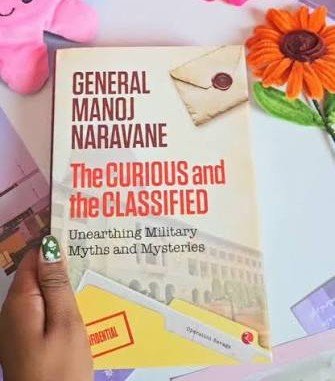
Former Army Chief General Manoj Mukund Naravane is back in the spotlight with his latest book, The Curious and the Classified: Unearthing Military Myths and Mysteries, published by Rupa. The book takes readers beyond battles, operations and military strategy, exploring lesser-known stories, traditions, legends and unusual incidents from the Indian Army, Navy and Air Force. Interestingly, Naravane says the idea for the book was inspired by Congress leader and Thiruvananthapuram MP Shashi Tharoor’s A Wonderland of Words, which he came across at a friend’s house about two years ago. The book’s exploration of the quirks of the English language made Naravane wonder whether a similar approach could be used to tell fascinating stories from the Indian armed forces. The idea stayed with him and eventually took shape when he began working seriously on the book in mid-2025. Rather than writing a conventional military history, Naravane aimed to create an engaging and accessible book that could introduce the lesser-known and human side of military life to a wider audience. Stories Behind Military Traditions and Legends The Curious and the Classified brings together a wide range of stories from the armed forces. Among the subjects covered are the origins of the popular phrase “Chak De Phatte”, the traditions behind military call signs, the story of INS Khukri, the legend of Baba Harbhajan, stories of airmen and even the unusual tale of Pedongi, a military mule. One of the most interesting stories in the book is that of “Badluram Ka Badan”, the well-known regimental song of the Assam Regiment. The Story Behind ‘Badluram Ka Badan’ The story goes back to the Battle of Kohima in 1944 during the Second World War. Rifleman Badluram of the 1st Battalion, Assam Regiment, was killed during the early stages of the fighting. According to the account cited in Naravane’s book, Badluram’s name was not removed from the unit’s ration strength after his death. As a result, his authorised ration continued to arrive while supply lines were still functioning. When Japanese forces later besieged the unit and supplies were cut off, the accumulated surplus reportedly became a crucial source of food for the soldiers. The unusual wartime episode eventually inspired the marching song “Badluram Ka Badan.” Naravane writes that Major M. T. Proktor composed the song in 1946. It later became closely associated with the Assam Regiment and continues to be performed during military ceremonies, including passing-out events at the regiment’s centre in Shillong. A Book for General Readers, Not Exam Preparation Naravane has made it clear that the book is not intended to be an academic work or a guide for competitive examinations. His aim is to tell real-life military stories in a way that ordinary readers can enjoy while also getting a glimpse into the values, humour, traditions and human side of the armed forces. He also notes that the stories originate in real events, although some details may have become embellished over the years through repeated retelling. The larger purpose, he says, is to make military history relatable and help bridge the gap between the armed forces and civilian society. What About ‘Four Stars of Destiny’? Naravane’s latest book comes months after controversy surrounding his memoir Four Stars of Destiny. The memoir itself has not been officially published. Penguin Random House India, which holds the exclusive publishing rights, clarified in February 2026 that the book had not gone into publication and that no authorised print or digital copies had been released to the public. The Delhi Police also registered a case over the alleged circulation of a pre-print version of the unpublished memoir and began investigating how the material had been circulated. Unlike that controversy, The Curious and the Classified focuses on a lighter and more accessible side of military life. Through stories of soldiers, traditions, wartime incidents and military folklore, Naravane seeks to show that the armed forces are not defined only by battles and strategy, but also by humour, camaraderie, sacrifice and deeply rooted traditions.