PM Modi Inaugurates International Conference Organized by NGT, Highlights India’s Leadership in Environmental Protection…
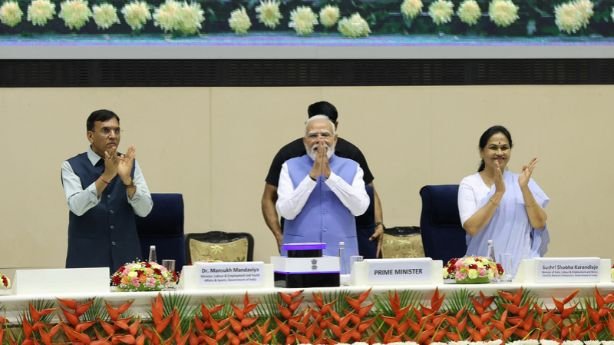
Prime Minister Narendra Modi inaugurated a two-day international conference on “The Future of Environment and Climate Dynamics,” organized by the National Green Tribunal (NGT) at Vigyan Bhawan in New Delhi on September 19, 2026. Chief Justice of India (CJI) Justice Surya Kant, Union Environment Minister Bhupendra Yadav, Attorney General R. Venkataramani, and NGT Chairperson Justice Prakash Srivastava also attended the inaugural session.Eminent judges and judicial representatives from 17 countries are participating in this conference. Its main objective is to discuss global environmental and climate challenges, identify shortcomings in policy formulation and implementation, and strengthen environmental governance.The two-day event (September 19 and 20) is also preparing a strategic roadmap on four specific themes:The main focus is on… Addressing the event, PM Modi said that for centuries, India has guided the world on matters related to nature and the environment. Drawing on this ideological commitment and cultural experiences, India is now offering solutions to modern climate challenges and calling for collective global action. I am pleased that this NGT conference is furthering that mission. The Prime Minister said that we have presented our traditions and their true strengths to the world. With this vision, we launched the book “Convenient Action: Continuity for Change” during the COP21 Summit in Paris. We are bringing the world together and setting new standards for environmental protection. Whether it’s the concept of “One Sun, One World, One Grid” or the International Solar Alliance, CDRI, Initiatives like the Global Biofuel Alliance, the International Big Cat Alliance, and Mission LiFE (Lifestyle for the Environment) all demonstrate India’s dedicated commitment to climate and the environment. PM Modi said that in the last 12 years, India has made extraordinary progress in every area related to the environment. We have placed great emphasis on renewable energy, which has played a vital role in environmental protection. India is the only G20 country to have fulfilled all the commitments made at the COP21 Summit in Paris ahead of schedule. This reflects India’s strength.
BRICS Summit 2026: Putin arrives in Delhi, will hold important talks with PM Modi on defense and strategic issues…
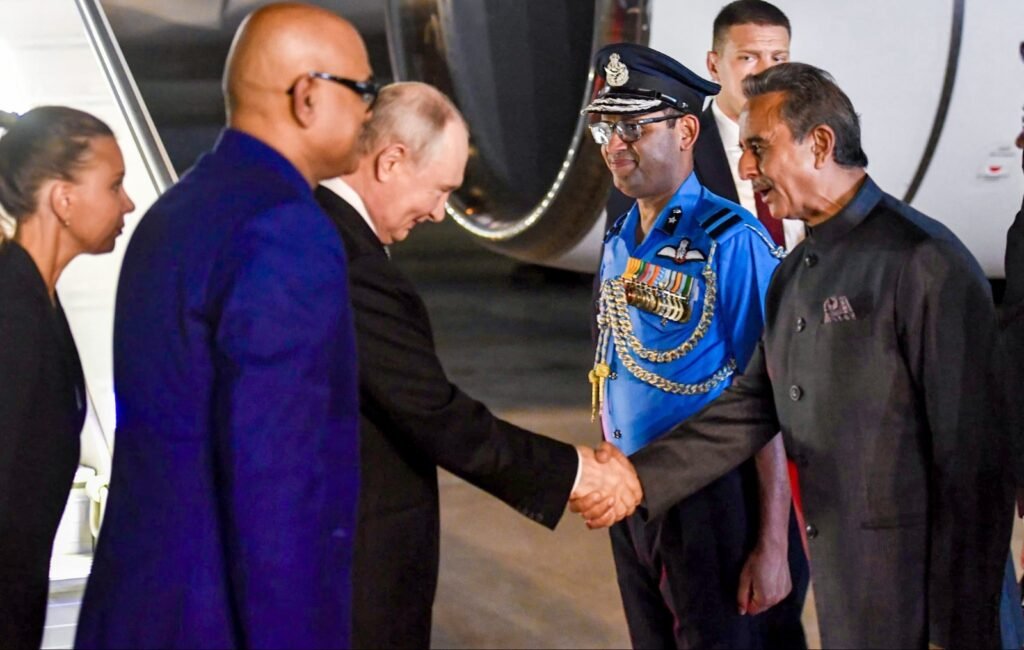
BRICS Summit 2026: Putin arrives in Delhi: Russian President Vladimir Putin arrived in New Delhi early Friday morning to participate in the BRICS Summit 2026. He was welcomed at Palam Airport by Union Minister of State for External Affairs Kirti Vardhan Singh. Following Putin’s arrival in India, all eyes are now on his crucial bilateral meeting with Prime Minister Narendra Modi. The two leaders are expected to discuss a number of important issues, including defense cooperation, trade, economic relations, and energy. The Ministry of External Affairs has underscored the long-standing and strong relationship between India and Russia. Welcoming Putin in a social media post, Ministry of External Affairs spokesperson Randhir Jaiswal described the partnership between the two countries as multifaceted and long-term. Issues such as strategic trade, cross-border payment systems, and energy security are also expected to be central to Putin’s visit. The two sides are also expected to discuss ongoing geopolitical tensions in Eastern Europe and West Asia. According to the Kremlin, Putin will address the plenary session of the BRICS Business Forum on September 11th. This forum brings together leading business representatives from BRICS countries. He will then hold a bilateral meeting with Prime Minister Modi. Putin’s program also includes a visit to the “Innoprom India” industrial trade fair, organized by the Ministries of Industry and Trade of Russia and India. The BRICS summit, chaired by India, is expected to discuss issues such as trade, digital technology, finance, energy security, and reforms in global governance. Topics such as strong global supply chains, trade in national currencies, cross-border payment systems, MSME development, and artificial intelligence will also be high on the agenda. Member countries are also expected to discuss climate change, development finance, and the expansion of the New Development Bank.
Modi, Sitharaman, Jaishankar, Goyal & Doval Lead 3 Week Global Outreach Before BRICS 2026…
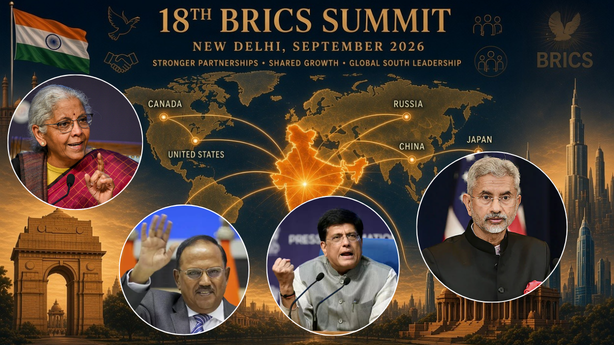
India has intensified diplomatic engagements and bilateral meetings with major global powers to strengthen its position on the global stage ahead of the BRICS Summit. The primary objective is to safeguard its national interests in multilateral forums and maintain balance in the global order. Ahead of the 18th BRICS Summit, scheduled to be held in New Delhi in September 2026, the Indian government has launched a major diplomatic push. Four of India’s most prominent officials and ministers are visiting five key countries to strengthen India’s national interests ahead of the summit. Prime Minister Narendra Modi, along with his three ministers Nirmala Sitharaman, S. Jaishankar, Piyush Goyal, and National Security Advisor (NSA) Ajit Doval is leading a major diplomatic campaign. These diplomatic meetings will last for three weeks, concluding in the second week of September, immediately following the BRICS Summit in New Delhi. Finance Minister Nirmala Sitharaman is on a highly important official visit to Canada and the United States from August 25 to September 2, 2026. This visit, taking place just before the BRICS Summit, is considered strategically important for India’s economic diplomacy. Finance Minister Nirmala Sitharaman’s visit to Canada and the United States prioritizes four key agendas: investor meetings, interactions with corporate leaders, strengthening economic ties, and G20 financial discussions. As part of this diplomatic mission, External Affairs Minister Dr. S. Jaishankar recently held a crucial meeting with Russian President Vladimir Putin and Foreign Minister Sergey Lavrov in Moscow. Key areas of economic cooperation, energy and fertilizers, technology and defense were discussed amid preparations for the upcoming Modi-Putin meeting. Commerce Minister Piyush Goyal is also visiting Japan with a large delegation of 200 Indian business leaders and veterans. The main objective of this visit is to enhance India-Japan bilateral trade and attract significant Japanese investment in India’s infrastructure, high-tech manufacturing, semiconductor, and next-generation industries. National Security Advisor (NSA) Ajit Doval is in Beijing, the capital of China, for the 25th round of India-China Special Representatives’ Dialogue. The main objective of this high-level strategic meeting is to find a lasting solution to the long-standing border issues between the two countries and effectively manage the current tensions along the Line of Actual Control (LAC).
Xi Jinping May Visit India for BRICS Summit on September 2026, With 400 Member Delegation..
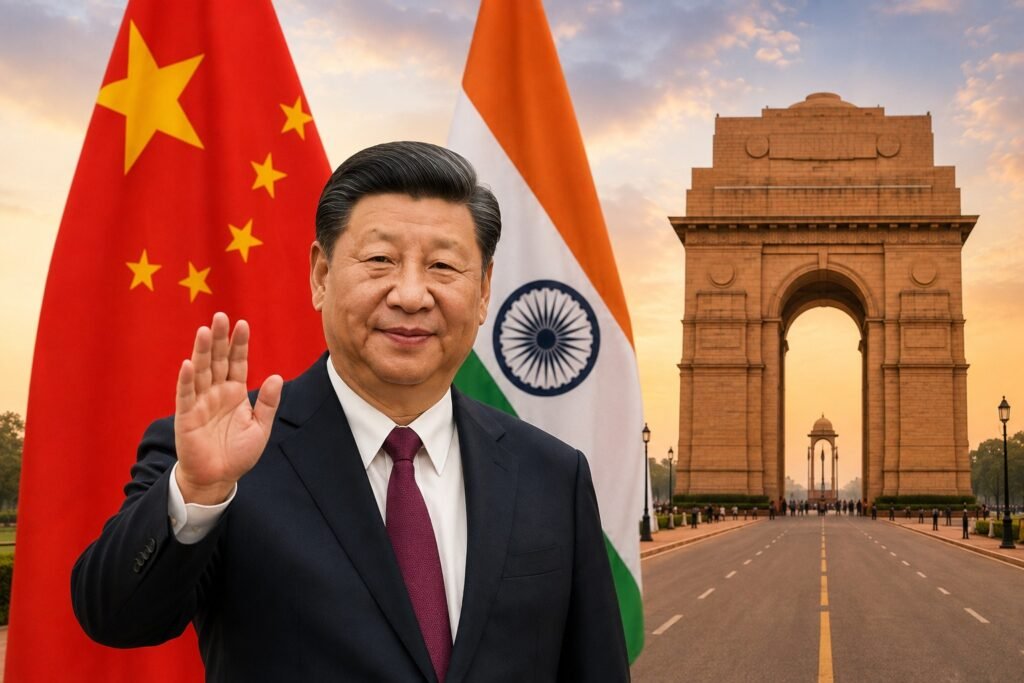
Chinese President Xi Jinping may visit India next month on September 12 and 13, 2026 to attend the BRICS summit in New Delhi, accompanied by a large delegation of approximately 400 officials. Although Xi Jinping’s visit has not yet been officially confirmed, sources indicate that Chinese officials are busy finalizing arrangements regarding hotels and security. It is worth noting that this visit by the Chinese President is taking place after a gap of seven years. He last visited India in October 2019 for the second informal summit with Prime Minister Narendra Modi in Mahabalipuram (Mamallapuram), near Chennai. Sources claim that this time, a massive delegation of around 400 Chinese officials could accompany Xi Jinping to India. This would be a significantly larger contingent compared to 2019, the number of officials accompanying Xi to India in 2019 was fewer than 200. Xi Jinping’s potential visit to India could prove crucial for efforts to improve relations between the two nations following the border clashes of 2020. Violent clashes between the troops of both countries occurred in the Galwan Valley of Eastern Ladakh during May and June of 2020. Twenty Indian soldiers and four Chinese soldiers lost their lives in the Galwan Valley clash. Subsequently, a standoff persisted between the armies of both nations for nearly four years. Relations between the two countries hit rock bottom, and heavy military deployments were made along the border. Notably, Xi Jinping did not visit India when the country hosted the G20 summit in New Delhi in 2023, instead, Chinese Premier Li Qiang attended the summit on his behalf. However, the first formal bilateral meeting between PM Modi and Xi Jinping took place during the BRICS summit in Kazan, Russia, in October 2024. Following this, both countries reached an agreement regarding patrolling along the LAC. According to sources, officials from India and China might use the BRICS summit to address long-standing differences concerning the border and regional security, as well as to explore avenues for enhancing mutual cooperation. However, the final plan for Xi’s visit and the agenda for a potential bilateral meeting with Prime Minister Narendra Modi have not yet been finalized. Therefore, it remains unclear which issues would be discussed in detail should the two leaders meet.
Dr. Vipin Gaur Meets Minister Dr. L. Murugan – A Warm and Useful Conversation…
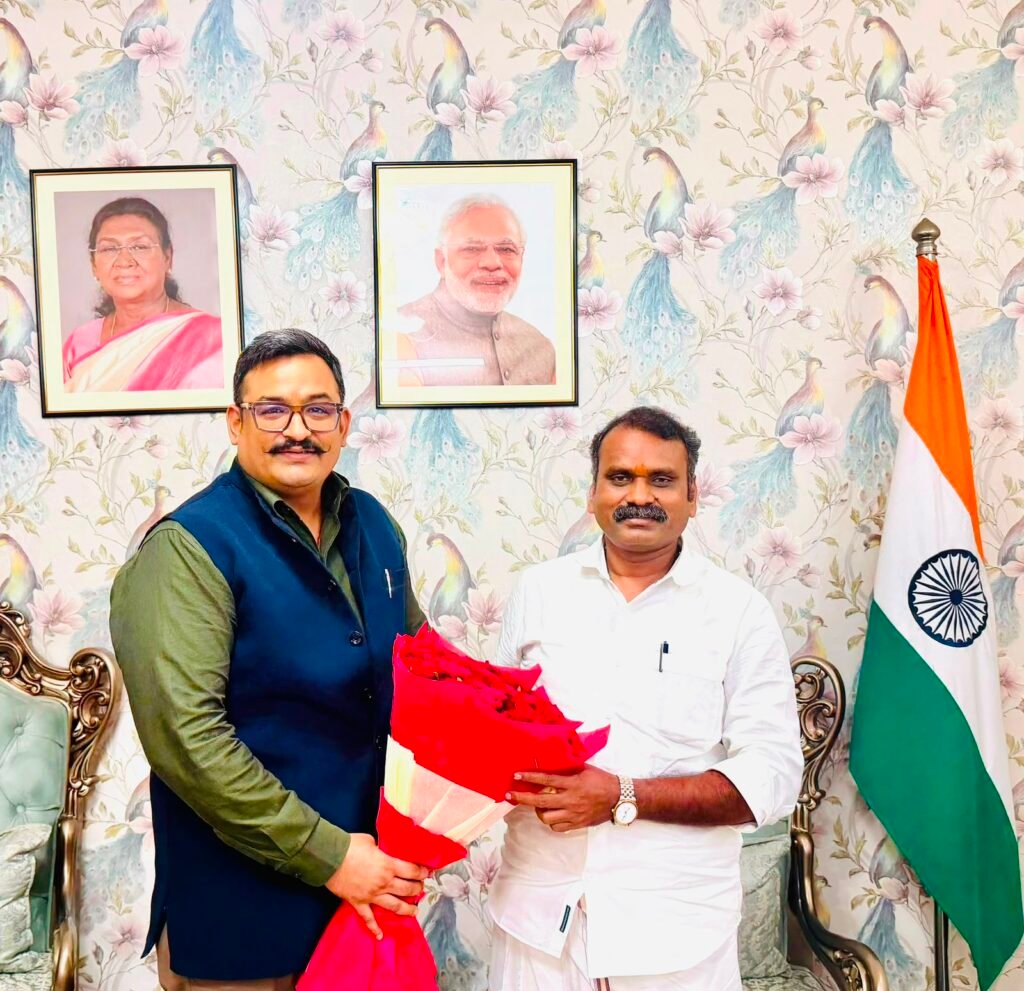
Dr. Vipin Gaur, the General Secretary of the Newspaper Association of India, sat down with Union Minister of State for Information and Broadcasting and Parliamentary Affairs, Dr. L. Murugan, for a courteous and open conversation. It wasn’t some stiff formal event. It was a proper discussion where both sides talked freely about the things that actually matter to Indian media right now. Dr. Gaur told the minister about the work his association has been doing across the country – the programmes they run, the efforts they make to stand up for newspapers and journalists, and the steps they’re taking to keep journalism ethical and responsible. He spoke about how digital media is growing so fast these days, how broadcasting needs better technology, and how the Indian film and entertainment world can become stronger on the world stage. They also talked about giving young people more chances in these fields and encouraging fresh ideas. What stood out was how Dr. Gaur appreciated the minister’s simple and humble way of working. He said Dr. Murugan’s quiet commitment to growing the information and broadcasting sector, keeping creative conversations alive, and making the media community stronger really comes through. That kind of approach makes people feel heard. They didn’t just stick to one topic. They exchanged thoughts on several important issues that are in the news these days, and the tone stayed positive throughout. At the end, Dr. Gaur shared a clear hope – that if the government, media institutions, and journalists’ organisations keep talking and working together, Indian media, journalism, and the creative industries will find a better direction. He believes this kind of steady cooperation will make responsible, trustworthy journalism even stronger. The Newspaper Association of India has been quietly doing a lot of groundwork – protecting journalists’ interests, supporting media education, helping young reporters build skills, and recognising good work at the national level. Meetings like this one give them a chance to share what’s happening on the ground and also hear the government’s side of things. It’s the kind of conversation that doesn’t make big headlines every day, but it matters. When people from the media side and the government side sit across a table and talk honestly about technology changes, digital growth, broadcasting upgrades, and how to keep public interest at the centre, something useful usually comes out of it. Dr. Gaur explained the association’s different initiatives in detail, and the minister listened. That simple exchange of information and ideas is how better understanding starts. Both sides seem to want the same basic things – a stronger, more professional media that serves people well and can hold its own internationally, especially in films and entertainment where so many young talents are looking for opportunities. In a time when everything is changing so quickly – from how news reaches us to how stories are told on screens – these calm, respectful conversations help everyone stay on the same page. No drama, no big speeches. Just two people who care about the media ecosystem sitting together and talking about what needs attention and how things can move forward. Dr. Gaur left the meeting feeling hopeful. He believes that continuous dialogue will give Indian journalism and the creative industries the fresh push they need. And honestly, that kind of quiet confidence is worth noting. The Newspaper Association of India will keep doing its work – supporting journalists, building skills, promoting ethical standards, and recognising people who do good reporting. And conversations like the one with Dr. Murugan help keep the door open so that practical issues can be discussed whenever they come up. That’s really the heart of it. A straightforward, respectful meeting in New Delhi where media and government talked about real concerns and shared a common wish for a stronger, more responsible Indian media landscape. Sources:Smart Vision Samachar, Ghaziabad edition, Thursday 30 July 2026
101-Year-Old Freedom Fighter Pandit Ram Kishan Joins Youth Protest at Jantar Mantar..
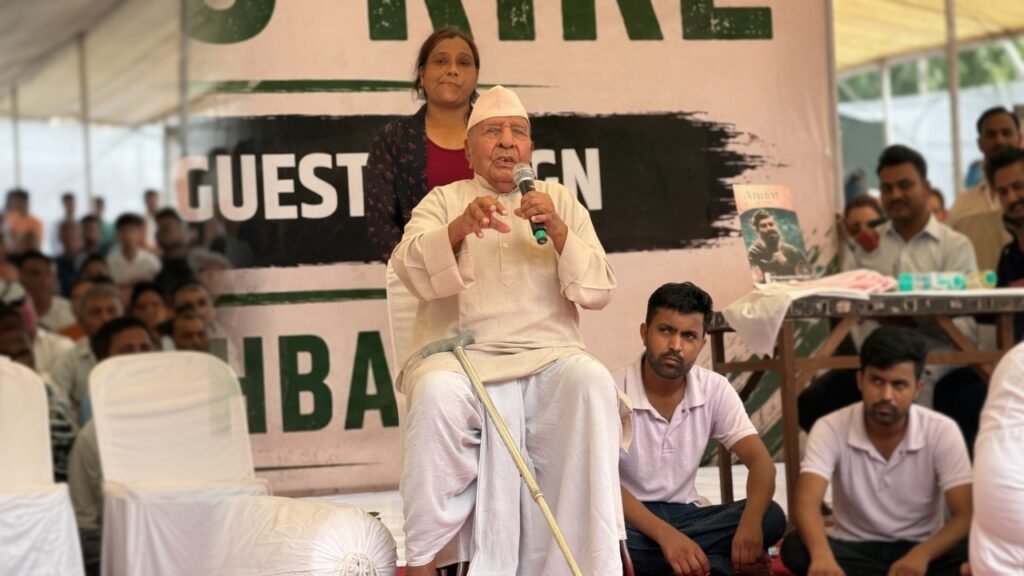
101-year-old freedom fighter and socialist leader Pandit Ram Kishan recently expressed his support for the future of youth by joining the CJP protest at Jantar Mantar in Delhi. Born in Bharatpur, Rajasthan, Pandit Ram Kishan is one of India’s oldest living freedom fighters. He participated in the Quit India Movement of 1942. Pandit Ram Kishan was honored with the title of Shatabdi Purush He subsequently became active in social work alongside the then socialist icon Dr. Ram Manohar Lohia. Pandit Ram Kishan continues to fight on the streets against major issues facing the country, such as recent exam rigging and the rights of youth. Pandit Ram Kishan was arrested several times while fighting for the rights of tribals, Dalits, and the poor. He was honored with the title of Shatabdi Purush (Person of the Century) in New Delhi for his invaluable contribution to the socialist movement. He was also elected to the Rajasthan Legislative Assembly four times in 1962, 1967, 1974, and 1990, and to the Lok Sabha once in 1977. He also led a long-running movement for water rights for local people in Bharatpur, Rajasthan.
Japanese Prime Minister Fumio Kishida to Visit India from July 1–3 for 16th India-Japan Annual Summit
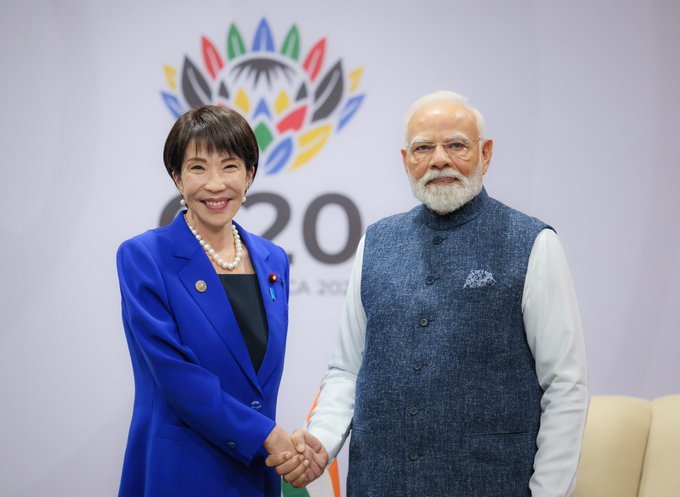
Japanese Prime Minister Fumio Kishida will visit India next month for a three-day trip. At the invitation of Indian Prime Minister Narendra Modi, he will arrive in New Delhi for his first official visit to India, scheduled from July 1 to July 3. During this visit, he will participate in the 16th India-Japan Annual Summit alongside Prime Minister Modi. According to the Indian Ministry of External Affairs, both sides will use this occasion to strengthen bilateral ties and discuss areas of mutual interest as well as global issues. Prime Minister Narendra Modi had visited Tokyo last year to attend the summit, during which he invited the Japanese Prime Minister to India for the summit. Following that invitation, the Japanese Prime Minister is now set to visit New Delhi for his first official trip to the country this coming July. The primary objective of this summit is to strengthen relations between the two nations, particularly in the areas of trade, investment, and defense partnerships. The 16th India-Japan Annual Summit will focus on the Special Strategic and Global Partnership, trade, defense cooperation, the Indo-Pacific region, and various global issues. During the visit, the entire spectrum of bilateral cooperation will be reviewed, and the two Prime Ministers will hold discussions on matters of mutual interest.