NDA MPs Protest Opposition Deadlock; Priyanka Gandhi, BJP Face Off Over Jharkhand Student Lathicharge…
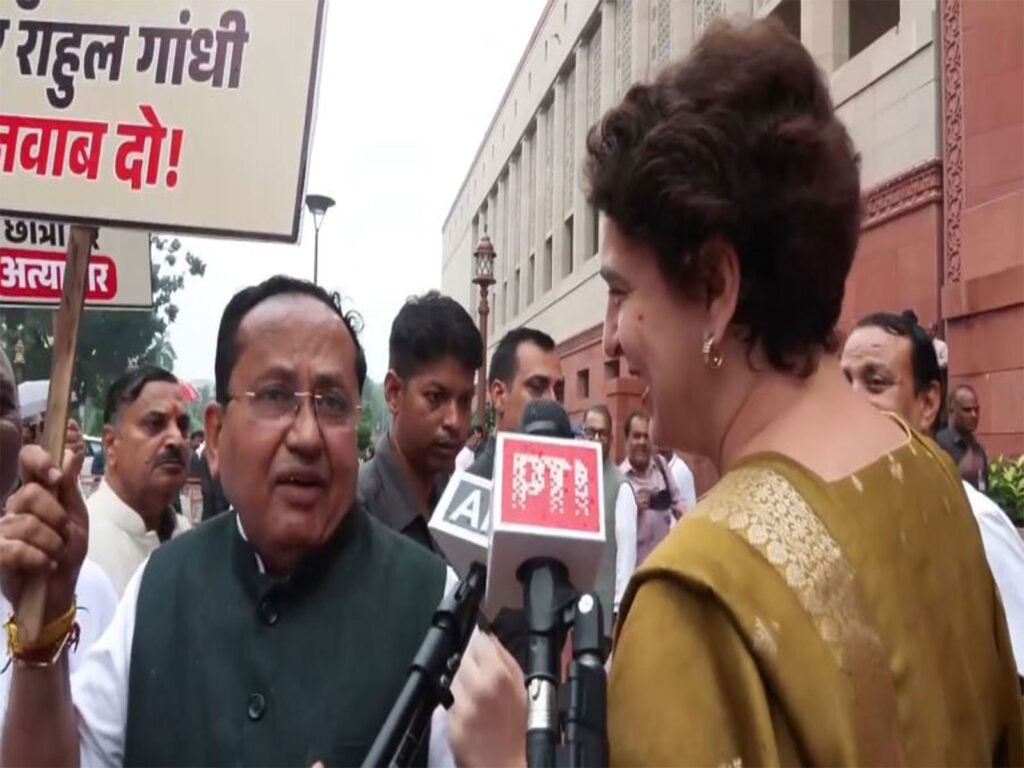
Today is the 17th day of the Monsoon Session, which began on July 20th, and not a single day has the House proceedings been smooth. Meanwhile, the opposition continues to create ruckus and raise slogans both inside and outside Parliament. On Tuesday, July 11th, National Democratic Alliance (NDA) MPs marched to Parliament to protest the opposition’s deadlock in both Houses of Parliament. This is due to the ongoing confrontation between the government and the opposition over the recent student protests and police action against the protesters. Parliament proceedings have been repeatedly disrupted due to this issue. The opposition is continuously demanding answers from the government. The government has now proposed a debate on this issue, and the Home Minister will respond. Meanwhile, on Monday, NDA MPs also demanded answers from Congress MPs regarding the lathicharge and use of water cannons by Jharkhand Police against protesting candidates taking the JPSC and JSSC exams. BJP MP and Congress MP faced off BJP MP Mukesh Dalal and Congress MP Priyanka Gandhi Vadra from Wayanad, Kerala, faced off. As Priyanka was heading to Parliament, Dalal shouted “Shame on Rahul Gandhi, shame on you!” He also held posters reading “Rahul Gandhi, answer for the brutality against students in Jharkhand.” The BJP MP asked Priyanka Gandhi when Rahul Gandhi would visit Jharkhand. Priyanka replied that she had met and interacted with the children of Jharkhand. With that, she moved on. Priyanka Gandhi also took a jab at the protests by NDA MPs, saying, “This is the first time I’ve seen MPs from the ruling party protesting. At least we forced them to do so.” Rajya Sabha member Tarun Chugh accused Gandhi of adopting double standards. He said, “This is a case of double standards. Rahul Gandhi is running away from the House and remaining silent on the lathicharge on students in Jharkhand. The country is watching.” BJP MP Sakshi Maharaj said that the entire opposition does not want any kind of discussion. As far as the issue related to students is concerned, they have one policy for Jantar Mantar and a completely different policy for Jharkhand. BJP MP Sanjay Jaiswal said that we are ready for discussion, but Rahul Gandhi is not. He has stalled the proceedings of the Lok Sabha. The Home Minister is ready to answer. BJP MP Manoj Tiwari said that Amit Shah will answer, Rahul Gandhi should not run away, Rahul Gandhi should be ashamed, so much brutality has been done to the students in Jharkhand. NCPI MP Rachna Banerjee said that everyone is demanding answers from them (the opposition). They will have to answer.
A high-level task force has been formed for exam reforms, headed by technology expert Nandan Nilekani.
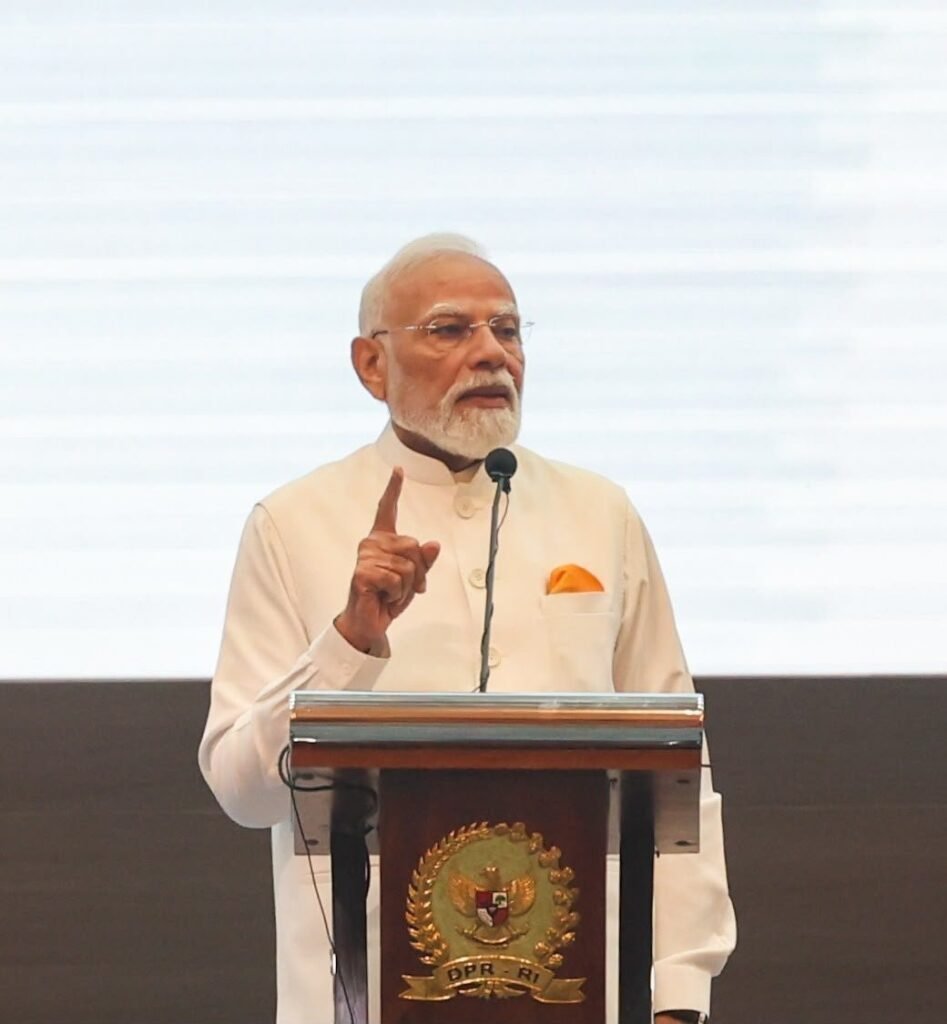
The ongoing Jantar Mantar protest by students in Delhi over the NEET-UG exam paper leak, Prime Minister Modi once again took to social media to make an important announcement regarding the future of students. He announced the formation of a high-level task force on exam reforms, to be led by world-renowned technology expert Nandan Nilekani. On Sunday, July 26th, Prime Minister Modi once again shared a video on his Instagram account, stating, “The government is continuously taking various steps for the future of students. Those who compromised their future are in jail. We have already established fast-track courts. Work is underway to introduce a new law in Parliament, which will include stringent legal provisions. But we also have to look to the future. Our examination system must be reliable and transparent, and it must maximize the use of technology.” Task force will focus on examination reforms Keeping these considerations in mind, we have decided to form a high-level task force under the leadership of world-renowned technology expert Nandan Nilekani. This task force will focus on examination reforms. Based on the report, steps will be taken as soon as possible to ensure the credibility of upcoming examinations. To further improve, improve, and secure the National Testing Agency’s examinations, the central government has formed a multidisciplinary group of domain experts. This high-powered task force will primarily prepare a blueprint for major structural reforms in the system from the perspective of modern technology.” He also stated, This special committee includes top leaders from across the country, including technology expert Nandan Neel, former ISRO Chairman S. Somnath, former Intelligence Bureau Director Tapan Deka, IIT Chennai Director V. Kamkoti, former Education Secretary Anita Agarwal, and logistics expert Amritlal Meena. Nandan Neel is an Indian entrepreneur, having founded the country’s leading IT company, Infosys. He served as the first Chairman of the Unique Identification Authority of India, where he played a key role in the successful implementation of India’s ambitious Aadhaar scheme. He also led the key technology committee, TAGUP (Technology Advisory Group for Unique Projects), within the Ministry of Finance, Government of India. This task force, headed by him, is expected to promote biometric authentication, digital security, computer-based training, and other modern technologies in examinations, thereby preventing incidents like paper leaks.
From Monk to Chief Minister, The Journey of Yogi Adityanath
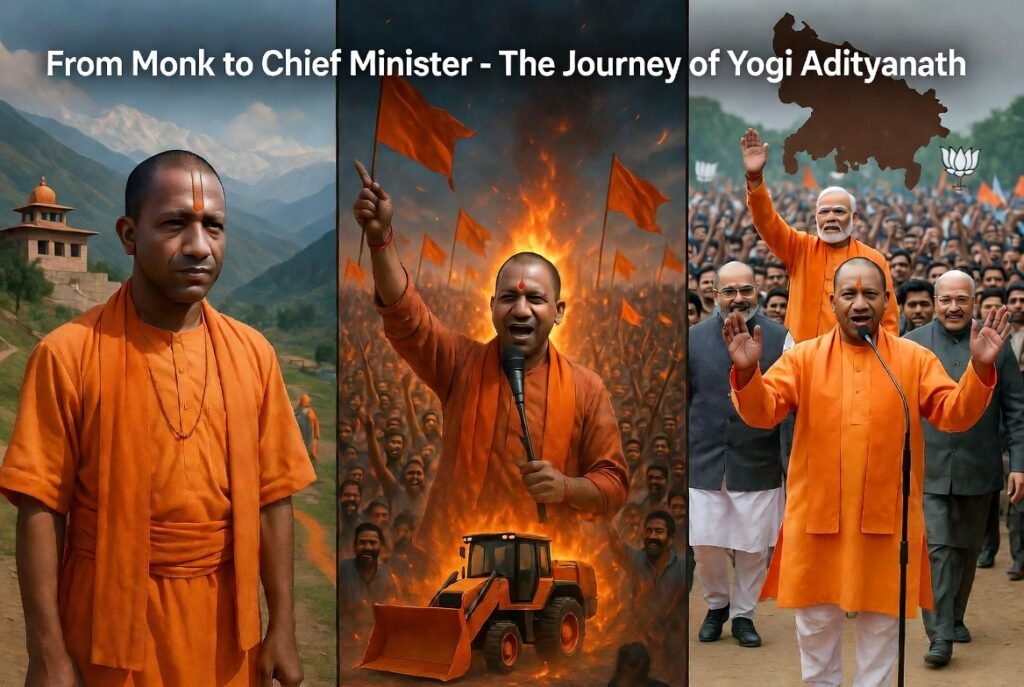
The political journey of Yogi Adityanath stands out in India’s public life for its unique combination of religious commitment and administrative leadership. Yogi Adityanath was Born on 5 June 1972 in the remote village of Panchur, Pauri Garhwal as Ajay Singh Bisht, his early years were shaped by a simple lifestyle, education, and a growing inclination toward spirituality. Spiritual Transformation A major shift in his life came when he moved to Gorakhpur and became associated with the Gorakhnath Math. Under the guidance of Mahant Avaidyanath, he adopted monastic life and took on the name Yogi Adityanath. This transition laid the foundation for his future role as both a spiritual and public figure. His entry into electoral politics marked the beginning of a long-standing association with the Gorakhpur constituency. Elected as a Member of Parliament at a relatively young age, he built a reputation as a leader with a strong local connect and a clear ideological voice. Rise To Leadership In 2017, his political career reached a defining moment when he was sworn in as the Chief Minister of Uttar Pradesh. Since then, his administration has emphasized governance issues such as law enforcement, infrastructure growth, and policy implementation. His approach has often been described as firm and result-oriented. At the same time, his tenure has also witnessed debates and criticism over various decisions and public statements, reflecting the broader dynamics of democratic politics. Supporters view his leadership as decisive and transformative, while critics continue to question aspects of his governance. From his early days in Uttarakhand to leading India’s most populous state, Yogi Adityanath’s journey represents a distinctive intersection of faith and politics, continuing to influence the state’s evolving political narrative.