PM Modi Inaugurates International Conference Organized by NGT, Highlights India’s Leadership in Environmental Protection…
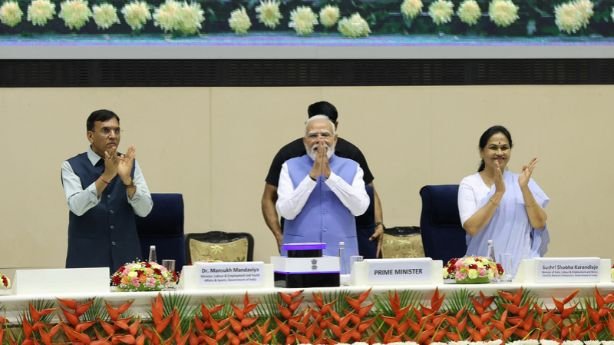
Prime Minister Narendra Modi inaugurated a two-day international conference on “The Future of Environment and Climate Dynamics,” organized by the National Green Tribunal (NGT) at Vigyan Bhawan in New Delhi on September 19, 2026. Chief Justice of India (CJI) Justice Surya Kant, Union Environment Minister Bhupendra Yadav, Attorney General R. Venkataramani, and NGT Chairperson Justice Prakash Srivastava also attended the inaugural session.Eminent judges and judicial representatives from 17 countries are participating in this conference. Its main objective is to discuss global environmental and climate challenges, identify shortcomings in policy formulation and implementation, and strengthen environmental governance.The two-day event (September 19 and 20) is also preparing a strategic roadmap on four specific themes:The main focus is on… Addressing the event, PM Modi said that for centuries, India has guided the world on matters related to nature and the environment. Drawing on this ideological commitment and cultural experiences, India is now offering solutions to modern climate challenges and calling for collective global action. I am pleased that this NGT conference is furthering that mission. The Prime Minister said that we have presented our traditions and their true strengths to the world. With this vision, we launched the book “Convenient Action: Continuity for Change” during the COP21 Summit in Paris. We are bringing the world together and setting new standards for environmental protection. Whether it’s the concept of “One Sun, One World, One Grid” or the International Solar Alliance, CDRI, Initiatives like the Global Biofuel Alliance, the International Big Cat Alliance, and Mission LiFE (Lifestyle for the Environment) all demonstrate India’s dedicated commitment to climate and the environment. PM Modi said that in the last 12 years, India has made extraordinary progress in every area related to the environment. We have placed great emphasis on renewable energy, which has played a vital role in environmental protection. India is the only G20 country to have fulfilled all the commitments made at the COP21 Summit in Paris ahead of schedule. This reflects India’s strength.
Nationwide ‘Aashirwad Ka Diya’ Illuminates India on PM Modi’s 76th Birthday; 2,100 Lamps Light Yamuna Banks…
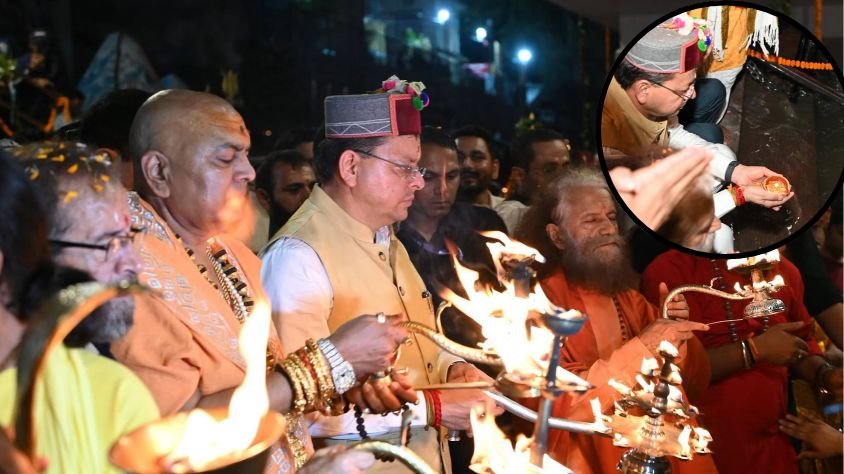
On the occasion of Prime Minister Narendra Modi‘s 76th birthday (September 17, 2026), a grand festival of lights was organized on the banks of the Yamuna in Haripur Kalsi, Vikasnagar (Dehradun), Uttarakhand, as part of the nationwide “Aashirwad Ka Diya” campaign. On this auspicious occasion, a total of 2,100 earthen lamps were lit on the banks of the Yamuna River, illuminating the entire river. During this festival of lights, the crowds prayed for Prime Minister Narendra Modi’s good health, long life, and the nation’s prosperity. Uttarakhand Chief Minister Pushkar Singh Dhami also visited Haripur Kalsi and presented significant gifts of spiritual and cultural development to the region. On this occasion, CM Dhami organized the “Aashirwad Ka Diya” program along with the Yamuna Aarti on the sacred banks of the Yamuna River. He also performed a grand aarti of the Yamuna River along with saints and a large number of devotees present there. He also inaugurated the newly constructed Harighat and unveiled a magnificent statue of Yamuna. Chief Minister Pushkar Singh Dhami said that Kalsi is a land of history, faith, and rich cultural traditions. Events like the unveiling of the statue of Mother Yamuna, the inauguration of Harighat, and the Yamuna Aarti will further strengthen the region’s spiritual identity. The laying of the foundation stone of the Mother Yamuna Krishna Temple is also an important step towards Kalsi’s religious and cultural development. In addition to the Yamuna banks, several other historical and religious sites across the country were illuminated under the “Aashirwad Ka Diya” program to mark Prime Minister Narendra Modi’s 76th birthday. A historic 2.5 million earthen lamps were lit from the famous Ramghat of the Shipra River to Mahakal Lok in Ujjain, Madhya Pradesh, illuminating the entire city. A total of 8.8 million diyas were lit in the Prime Minister’s home state of Gujarat, including over 1 million in Surat alone. In addition, 76 large diyas were lit at the iconic Red Fort in Delhi, the national capital, and a special prayer and festival of lights was organized at the Hazrat Nizamuddin Auliya Dargah. Nearly 1.1 million diyas were lit in Bihar, with over 1.5 million in Patna alone. The “Seva Sankalp Abhiyan 2026” was organized across the country to commemorate Prime Minister Narendra Modi’s 76th birthday and his 25 years in public life. This campaign is considered a special one because Narendra Modi was first sworn in as Chief Minister of Gujarat on October 7, 2001. Since then, he has been completing 25 consecutive years of service to the nation in the highest public office (as Chief Minister and Prime Minister). This campaign is being run through public service in various parts of the country for a full month, from September 17 to October 17.
PM Modi’s 76th birthday today, BJP to launch ‘Sankalp Seva Abhiyan’; grand Deepotsav to be held in Ujjain…
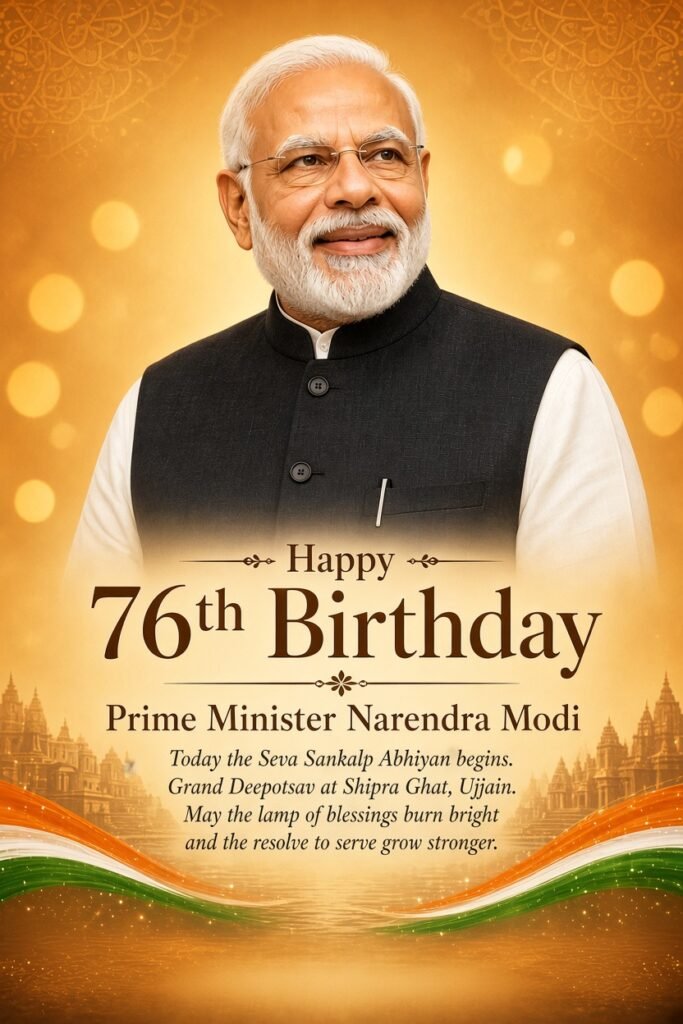
Prime Minister Narendra Modi is celebrating his 76th birthday today, September 17, 2026. To mark this occasion, the Bharatiya Janata Party is organizing numerous public service and social programs across the country. The BJP has launched a month-long “Seva Sankalp Abhiyan” from September 17 to October 17 to mark the PM’s birthday and his 25 years in public life. This campaign includes blood donation camps, health checkups, cleanliness drives, tree plantation, and other public welfare activities. A special festival of lights is being organized in Ujjain, Madhya Pradesh, to mark the PM’s birthday. More than 2.5 million earthen lamps will be lit on the banks of the Shipra River and in the Mahakal Lok Kshetra. The event has been named “Aashirwad Ka Diya.” The entire region has been divided into sectors and sub-sectors, and thousands of volunteers have been assigned responsibilities. According to the administration, preparations have been made to keep the event “zero-waste” and to focus on cleanliness and waste management. Various events are also being held in other parts of the country to mark the PM’s birthday. In Gujarat, under the “Aashirwad No Divdo” program, plans are underway to light over 8.8 million diyas at over 18,500 locations. Additionally, events such as tree plantation, cow service, and bike rides are also being organized. A bike ride from Vadnagar to Varanasi is also being organized in Gujarat, marking the completion of 25 years of Modi’s public life. Leaders from various political parties, including President Draupadi Murmu, have extended their greetings to PM Modi on his birthday. According to the BJP, the “Seva Sankalp Abhiyan” focuses primarily on public participation and public service. Health camps, blood donation, cleanliness, tree planting, and awareness activities related to government schemes are also being organized in Delhi, Uttarakhand, Maharashtra, and several other states.
PM Modi Completes 25 Years of Continuous Governance; Nationwide ‘Seva Sankalp Abhiyan’ to Be Launched from Sept 17–Oct 17…
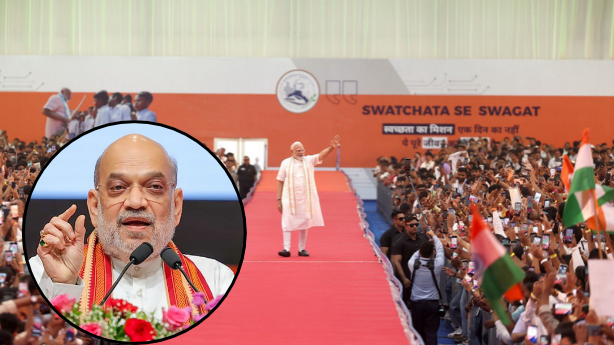
Prime Minister Narendra Modi is completing 25 years of governance and public service. Consequently, the ‘Seva Sankalp Abhiyan’ will be launched across the country from September 17 to October 17, 2026. Union Home Minister Amit Shah made this announcement during a press conference in Mumbai on Sunday, September 13, to mark the completion of 25 years of Prime Minister Narendra Modi’s public life (as Chief Minister of Gujarat and Prime Minister of the country). Amit Shah Says PM Modi Transformed India’s Governance From Paralysis to Action Amit Shah said that upon assuming the reins of the country in 2014, Prime Minister Narendra Modi declared himself the ‘Pradhan Sevak’ from the Red Fort. He never considered himself a ruler, but always worked as a servant of the people. Addressing a press conference, Union Home Minister Amit Shah stated that Prime Minister Narendra Modi has transformed India from a state of “policy paralysis” and weak decision-making to a culture of decisive governance and action. He emphasized that before 2014, the country’s governance system was plagued by coalition constraints and indecisive mistakes, which PM Modi’s strong leadership has completely transformed. During the conference, Amit Shah announced that with the support of the Bharatiya Janata Party, its allies, the entire NDA family, various organizations, and the people of the country, a nationwide “Seva Sankalp Abhiyan” will be launched from September 17 to October 17, 2026. This campaign is being organized to mark Prime Minister Narendra Modi’s 25 years in public life. Amit Shah noted that September 17 is Prime Minister Narendra Modi’s birthday. The BJP has been celebrating his birthday as “Seva Saptah” (Service Week), first in Gujarat and later across the country, from September 17 to October 2. However, this year’s campaign holds special significance, as Narendra Modi will complete 25 consecutive years as Chief Minister and Prime Minister on October 7, 2026. He said that there are very few leaders in the country who have achieved such a long record of continuous public service both as Chief Minister of a state and Prime Minister of the country. The Home Minister stated that the Seva Sankalp Abhiyan will be launched in every state and union territory of the country. Under this campaign, the public will be reached at every district, Lok Sabha constituency, Assembly constituency, and booth level. He said that Prime Minister Modi has always presented himself to the nation as the “Pradhan Sevak” (Chief Servant) and his entire political career has been dedicated to public service. Amit Shah said that the Modi government has used constitutional powers to ensure the welfare of the poor, build a strong economy, strengthen national security, and address long-standing problems. He said that the country is moving forward with the goal of a developed India by 2047, and Prime Minister Modi has strengthened this resolve among the people. He said that between 2014 and 2026, the country’s politics has seen a major change. Evils like corruption, casteism, and nepotism have now been replaced by performance-based politics. Shah claimed that for the first time in the last 12 years, the country has experienced a strong and clear foreign policy, in which India’s interests have been given top priority. Amit Shah said that before 2014, India was counted among the “Fragile Five” economies, but today the country is among the top five economies in the world. He said that according to the recently released first quarter data, India is at the forefront among major economies with a GDP growth rate of 7.8 percent.
BRICS Summit 2026: Putin arrives in Delhi, will hold important talks with PM Modi on defense and strategic issues…
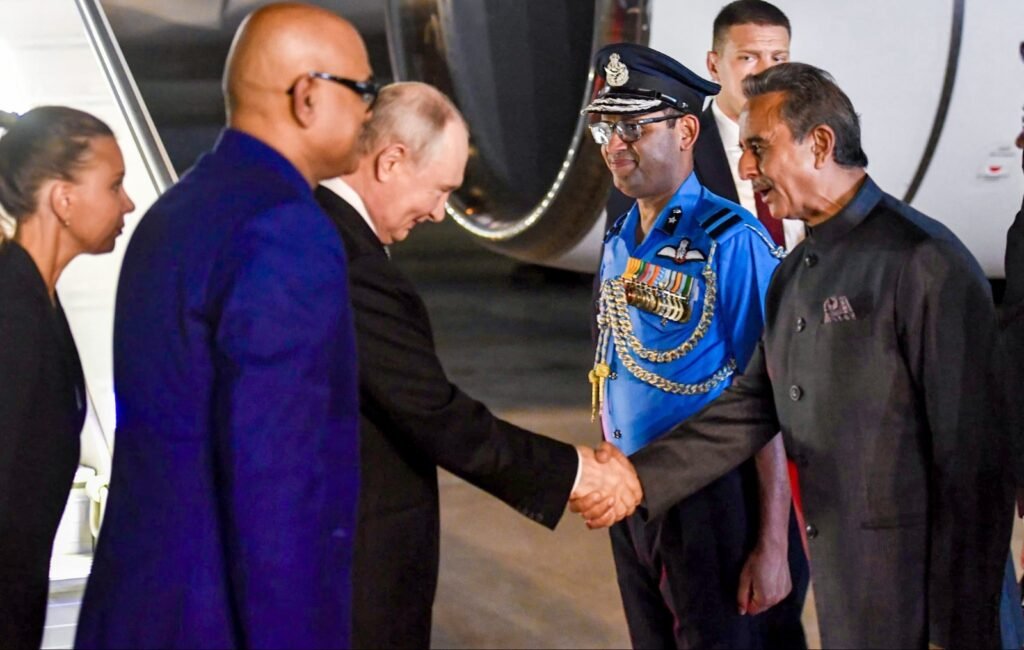
BRICS Summit 2026: Putin arrives in Delhi: Russian President Vladimir Putin arrived in New Delhi early Friday morning to participate in the BRICS Summit 2026. He was welcomed at Palam Airport by Union Minister of State for External Affairs Kirti Vardhan Singh. Following Putin’s arrival in India, all eyes are now on his crucial bilateral meeting with Prime Minister Narendra Modi. The two leaders are expected to discuss a number of important issues, including defense cooperation, trade, economic relations, and energy. The Ministry of External Affairs has underscored the long-standing and strong relationship between India and Russia. Welcoming Putin in a social media post, Ministry of External Affairs spokesperson Randhir Jaiswal described the partnership between the two countries as multifaceted and long-term. Issues such as strategic trade, cross-border payment systems, and energy security are also expected to be central to Putin’s visit. The two sides are also expected to discuss ongoing geopolitical tensions in Eastern Europe and West Asia. According to the Kremlin, Putin will address the plenary session of the BRICS Business Forum on September 11th. This forum brings together leading business representatives from BRICS countries. He will then hold a bilateral meeting with Prime Minister Modi. Putin’s program also includes a visit to the “Innoprom India” industrial trade fair, organized by the Ministries of Industry and Trade of Russia and India. The BRICS summit, chaired by India, is expected to discuss issues such as trade, digital technology, finance, energy security, and reforms in global governance. Topics such as strong global supply chains, trade in national currencies, cross-border payment systems, MSME development, and artificial intelligence will also be high on the agenda. Member countries are also expected to discuss climate change, development finance, and the expansion of the New Development Bank.
PM Modi at SCO Summit in Bishkek: Holds Talks with Putin & Xi, Calls for Zero Tolerance on Terrorism and Peace Through Dialogue…
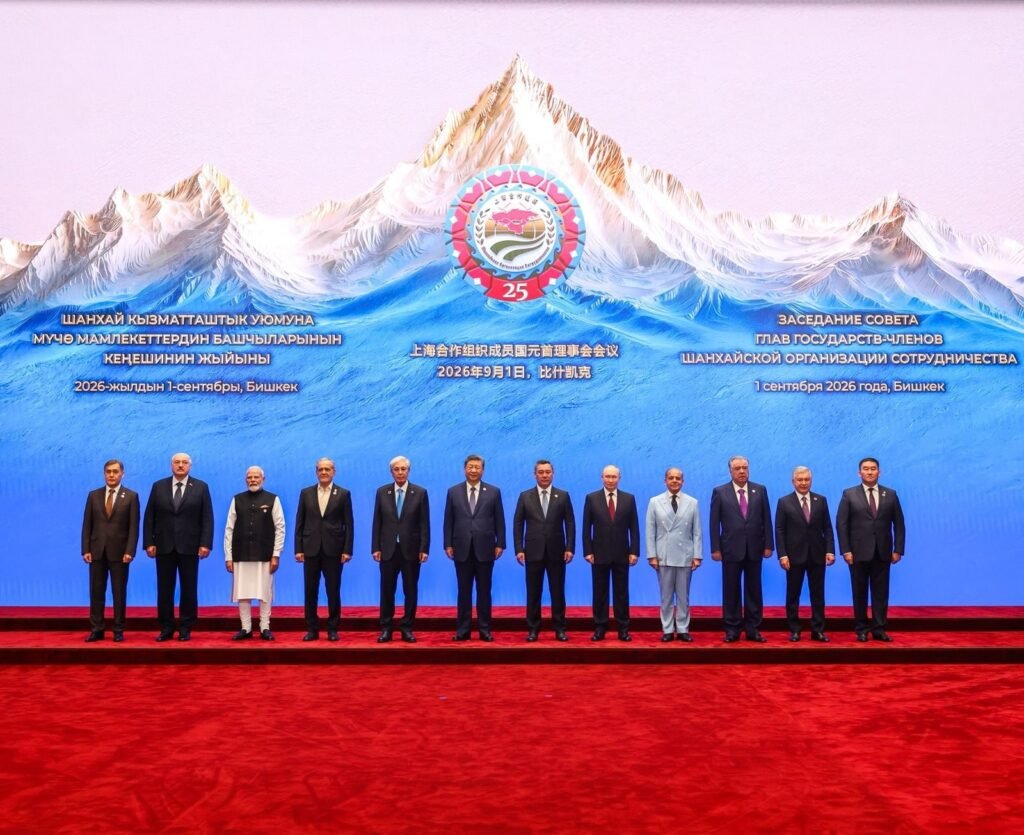
Prime Minister Narendra Modi has arrived in Bishkek, the capital of Kyrgyzstan, to participate in the 26th Shanghai Cooperation Organization (SCO) Summit. Several leaders of the organization, including Chinese President Xi Jinping, Russian President Vladimir Putin, and Pakistani Prime Minister Shahbaz Sharif, attended the SCO Summit. On the sidelines of the summit, PM Modi held important bilateral meetings and discussions with Russian President Vladimir Putin, Chinese President Xi Jinping, and Iranian President Masoud Pezeshkian. During the meetings, PM Modi reiterated that India has always been a supporter of peace and that all issues and problems should be resolved through dialogue and diplomacy. The summit is discussing key global issues such as regional security, counter-terrorism, trade, economic cooperation, and enhanced connectivity. India is expanding cooperation with major Eurasian powers while maintaining its national priorities and strategic autonomy amid external pressures. During the summit, Prime Minister Narendra Modi stated that India supports all efforts that connect markets, facilitate trade, and open new avenues for development. However, it is also essential that such efforts respect the sovereignty and territorial integrity of all countries, which is also the core spirit of the SCO Charter. He stated that connectivity will expand in the future, with emphasis on roads, railways, and air corridors, simplifying customs procedures, promoting digital documentation, and making logistics networks more efficient. Zero Tolerance on Terrorism Cracking down on terrorism, PM Modi appealed to member countries to dismantle the entire ecosystem of terrorism. He stated that terrorist funding, recruitment, radicalization, and their safe havens must be completely eliminated. Without naming Pakistan at the summit, PM Modi delivered a strong message regarding terrorism. He stated that there should be no room for double standards on this serious issue. The Prime Minister said that countries that use terrorism as a tool of their policy and provide shelter and support to terrorists should be given a clear message that terrorism cannot become a strategic weapon for anyone. Referring to Ukraine and other global crises, the Prime Minister said that wars and conflicts can never be resolved on the battlefield. The only way to resolve any dispute is through dialogue and diplomacy. He also appealed to SCO countries to use their shared geography to transform it into shared opportunities, rather than becoming embroiled in border disputes, thereby strengthening global trade, maritime trade, and supply chains.
India Rushes 10 Tons of Relief Aid to Flood-Hit Nepal as Death Toll Crosses 160…
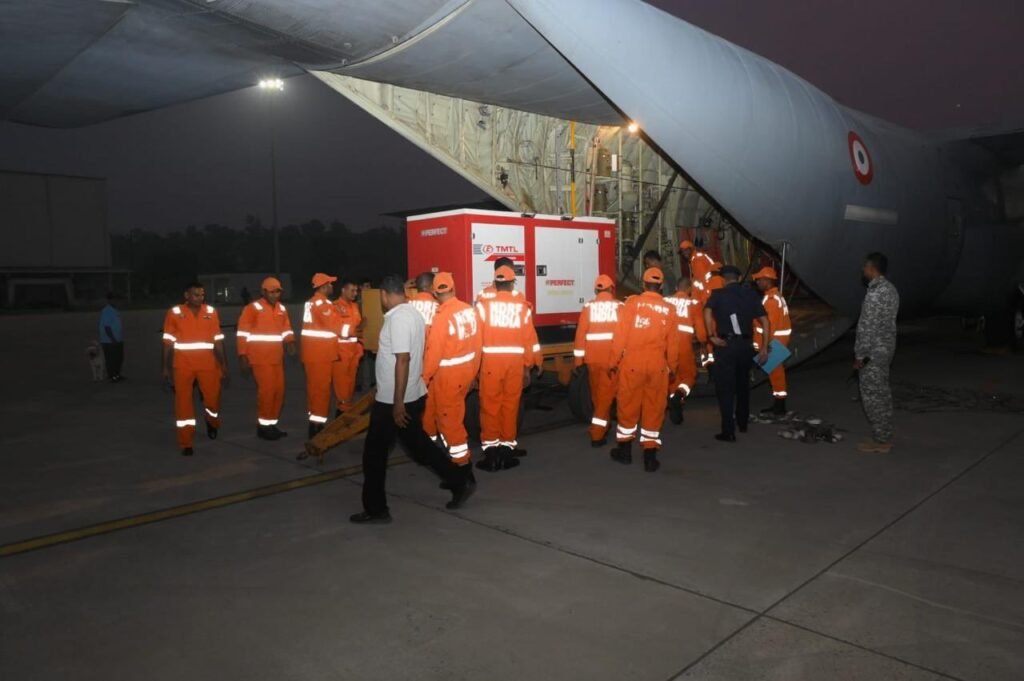
The devastating floods in Nepal have wreaked havoc everywhere, with scenes of devastation visible everywhere. More than 160 people have died so far in this devastating flood. More than 800 are reported missing. 133 Indian tourists are also missing since the disaster. As Nepal’s neighbor, India is fulfilling its duty during this difficult time. India is providing all possible assistance to Nepal. PM Modi assured Nepal of all possible support during this difficult time. External Affairs Minister S. Jaishankar informed on the social media platform ‘X’ that India has sent 10 tons of humanitarian aid and disaster relief (HADR) material along with essential medicines to Nepal. Following a conversation with Nepal’s Prime Minister Balen Shah, PM Modi also wrote on social media, “The people of India stand firmly with our brothers and sisters in Nepal in this hour of crisis. India is fully prepared to provide all possible humanitarian assistance to Nepal.” Our teams are continuously coordinating with each other for rescue and relief operations. Meanwhile, India has sent the first consignment of relief material to Nepal by an Indian Air Force aircraft. The relief material includes tents, blankets, hygiene kits, solar lamps, and medicines.The Indian Air Force shared a post on the social media platform (X) informing about the aid being sent to neighboring Nepal. The IAF wrote in its post that in response to the devastating floods in Nepal, #IAF has rapidly deployed a C-130J aircraft carrying 10 tons of essential relief material and medical supplies.The relief supplies will be delivered through additional air efforts by C-17 and C-130 aircraft, with helicopters deployed for rescue and evacuation operations.
Modi, Sitharaman, Jaishankar, Goyal & Doval Lead 3 Week Global Outreach Before BRICS 2026…
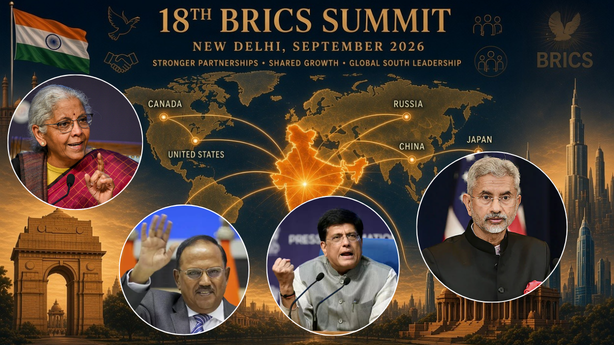
India has intensified diplomatic engagements and bilateral meetings with major global powers to strengthen its position on the global stage ahead of the BRICS Summit. The primary objective is to safeguard its national interests in multilateral forums and maintain balance in the global order. Ahead of the 18th BRICS Summit, scheduled to be held in New Delhi in September 2026, the Indian government has launched a major diplomatic push. Four of India’s most prominent officials and ministers are visiting five key countries to strengthen India’s national interests ahead of the summit. Prime Minister Narendra Modi, along with his three ministers Nirmala Sitharaman, S. Jaishankar, Piyush Goyal, and National Security Advisor (NSA) Ajit Doval is leading a major diplomatic campaign. These diplomatic meetings will last for three weeks, concluding in the second week of September, immediately following the BRICS Summit in New Delhi. Finance Minister Nirmala Sitharaman is on a highly important official visit to Canada and the United States from August 25 to September 2, 2026. This visit, taking place just before the BRICS Summit, is considered strategically important for India’s economic diplomacy. Finance Minister Nirmala Sitharaman’s visit to Canada and the United States prioritizes four key agendas: investor meetings, interactions with corporate leaders, strengthening economic ties, and G20 financial discussions. As part of this diplomatic mission, External Affairs Minister Dr. S. Jaishankar recently held a crucial meeting with Russian President Vladimir Putin and Foreign Minister Sergey Lavrov in Moscow. Key areas of economic cooperation, energy and fertilizers, technology and defense were discussed amid preparations for the upcoming Modi-Putin meeting. Commerce Minister Piyush Goyal is also visiting Japan with a large delegation of 200 Indian business leaders and veterans. The main objective of this visit is to enhance India-Japan bilateral trade and attract significant Japanese investment in India’s infrastructure, high-tech manufacturing, semiconductor, and next-generation industries. National Security Advisor (NSA) Ajit Doval is in Beijing, the capital of China, for the 25th round of India-China Special Representatives’ Dialogue. The main objective of this high-level strategic meeting is to find a lasting solution to the long-standing border issues between the two countries and effectively manage the current tensions along the Line of Actual Control (LAC).
Xi Jinping May Visit India for BRICS Summit on September 2026, With 400 Member Delegation..
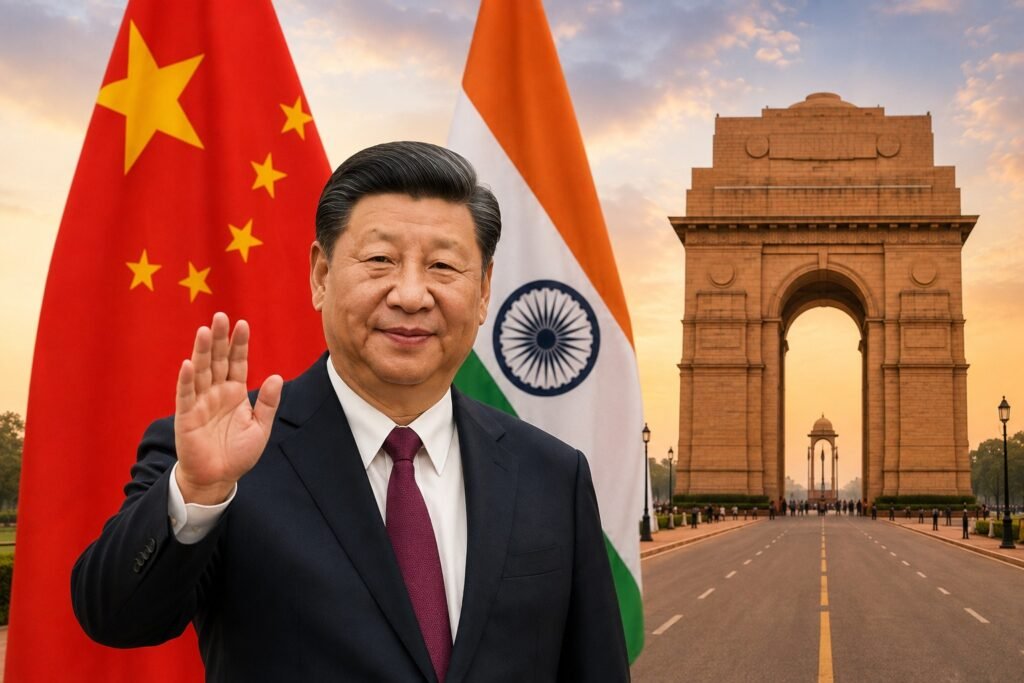
Chinese President Xi Jinping may visit India next month on September 12 and 13, 2026 to attend the BRICS summit in New Delhi, accompanied by a large delegation of approximately 400 officials. Although Xi Jinping’s visit has not yet been officially confirmed, sources indicate that Chinese officials are busy finalizing arrangements regarding hotels and security. It is worth noting that this visit by the Chinese President is taking place after a gap of seven years. He last visited India in October 2019 for the second informal summit with Prime Minister Narendra Modi in Mahabalipuram (Mamallapuram), near Chennai. Sources claim that this time, a massive delegation of around 400 Chinese officials could accompany Xi Jinping to India. This would be a significantly larger contingent compared to 2019, the number of officials accompanying Xi to India in 2019 was fewer than 200. Xi Jinping’s potential visit to India could prove crucial for efforts to improve relations between the two nations following the border clashes of 2020. Violent clashes between the troops of both countries occurred in the Galwan Valley of Eastern Ladakh during May and June of 2020. Twenty Indian soldiers and four Chinese soldiers lost their lives in the Galwan Valley clash. Subsequently, a standoff persisted between the armies of both nations for nearly four years. Relations between the two countries hit rock bottom, and heavy military deployments were made along the border. Notably, Xi Jinping did not visit India when the country hosted the G20 summit in New Delhi in 2023, instead, Chinese Premier Li Qiang attended the summit on his behalf. However, the first formal bilateral meeting between PM Modi and Xi Jinping took place during the BRICS summit in Kazan, Russia, in October 2024. Following this, both countries reached an agreement regarding patrolling along the LAC. According to sources, officials from India and China might use the BRICS summit to address long-standing differences concerning the border and regional security, as well as to explore avenues for enhancing mutual cooperation. However, the final plan for Xi’s visit and the agenda for a potential bilateral meeting with Prime Minister Narendra Modi have not yet been finalized. Therefore, it remains unclear which issues would be discussed in detail should the two leaders meet.
NTA Scraps Three UGC-NET Papers Over Spelling Mistakes, Wrong Names & Repeated Questions; Rahul Gandhi Attacks Modi Govt..
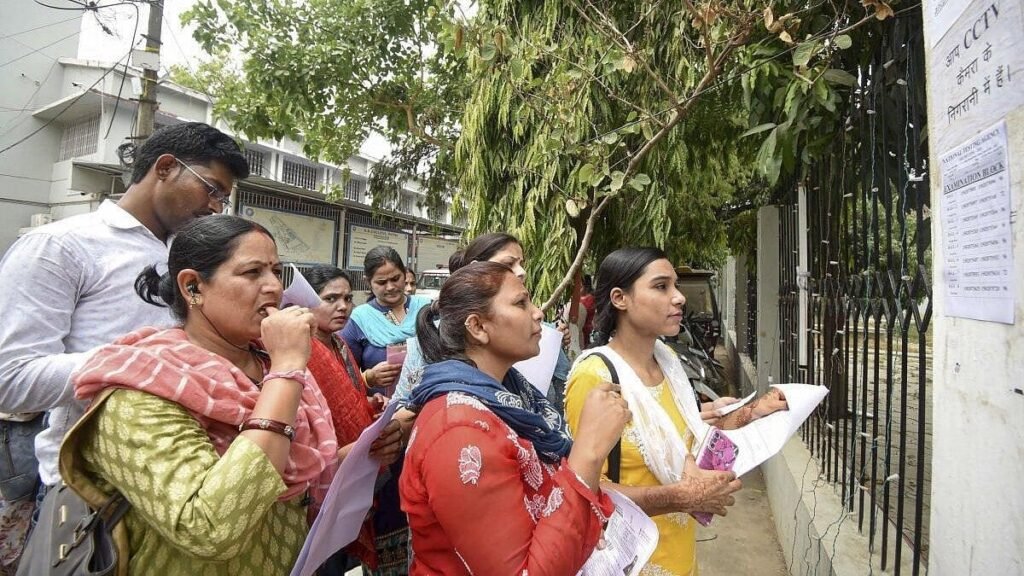
The National Testing Agency (NTA) has admitted to significant irregularities in the UGC-NET June 2026 exam question paper. Serious allegations surfaced, including numerous spelling mistakes, strange names of thinkers, and blatant copying of old questions from previous years. Following this, the NTA has cancelled the English, Commerce, and Sociology exam papers. This decision was made by the NTA based on the report of an audit committee formed after complaints from candidates and experts regarding serious irregularities in the question papers. The NTA will conduct re-exams for these three affected subjects in September 2026. The NTA has released a new exam schedule for the re-exams. Candidates will not be charged any additional examination fees for re-exams. Here is the re-exam schedule: According to a report in the Indian Express, on Sunday, August 16, the NTA released the provisional answer keys for 84 subjects for the UGC-NET June 2026. However, the answer keys for some papers were withheld. Following this, the NTA issued a separate notice in the evening. It stated that a major decision had been made regarding English, Commerce, and Sociology. According to the NTA, the committee formed to review these three papers found several errors. These included factual errors, typos, and translation errors. The committee found the names of several prominent scholars misspelled in the question paper. The names of some books were also incorrect. Furthermore, some questions contained language errors. Grammar errors were also found in several places. Gender and number mismatches were also found. There were also punctuation errors. Moreover, non-standard terms were used for concepts for which pre-established and commonly used terms exist. It was also discovered that many questions had already been asked in previous exams. Following these discrepancies, the committee recommended that the NTA re-examine the three subjects. Rahul Gandhi launched a scathing attack on PM Modi Meanwhile, Congress MP Rahul Gandhi launched a scathing attack on PM Modi and the National Testing Agency (NTA) over the decision to re-examine the UGC-NET exam in three subjects due to errors in the question papers. Congress leader Rahul Gandhi wrote on the social media platform X, “Modi ji, look what your NTA has done again.” The UGC-NET exams for Sociology, English, and Commerce were held between June 22 and 30. After nearly two months, the NTA canceled all three exams because they had prepared incorrect question papers and re-asked old questions. Rahul Gandhi said, “Thousands of candidates who prepared diligently for years, filled out forms, paid fees, and traveled to far-flung exam centers will now have to do it all again in September. The NTA makes mistakes, but the students of the country suffer the consequences. I said this in Kota, Dehradun, and Prayagraj, and I will continue to say it. This is no longer an education system. It has become just a money-and-labor-sucking machine. It takes away your money, your years, your mental health, and your self-confidence, and gives you nothing in return, not even a job. The NTA is still not answering the real question. Were these papers leaked before the exams?”