PM Modi Completes 25 Years of Continuous Governance; Nationwide ‘Seva Sankalp Abhiyan’ to Be Launched from Sept 17–Oct 17…
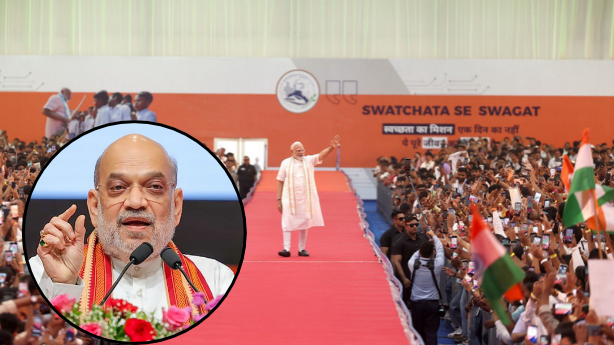
Prime Minister Narendra Modi is completing 25 years of governance and public service. Consequently, the ‘Seva Sankalp Abhiyan’ will be launched across the country from September 17 to October 17, 2026. Union Home Minister Amit Shah made this announcement during a press conference in Mumbai on Sunday, September 13, to mark the completion of 25 years of Prime Minister Narendra Modi’s public life (as Chief Minister of Gujarat and Prime Minister of the country). Amit Shah Says PM Modi Transformed India’s Governance From Paralysis to Action Amit Shah said that upon assuming the reins of the country in 2014, Prime Minister Narendra Modi declared himself the ‘Pradhan Sevak’ from the Red Fort. He never considered himself a ruler, but always worked as a servant of the people. Addressing a press conference, Union Home Minister Amit Shah stated that Prime Minister Narendra Modi has transformed India from a state of “policy paralysis” and weak decision-making to a culture of decisive governance and action. He emphasized that before 2014, the country’s governance system was plagued by coalition constraints and indecisive mistakes, which PM Modi’s strong leadership has completely transformed. During the conference, Amit Shah announced that with the support of the Bharatiya Janata Party, its allies, the entire NDA family, various organizations, and the people of the country, a nationwide “Seva Sankalp Abhiyan” will be launched from September 17 to October 17, 2026. This campaign is being organized to mark Prime Minister Narendra Modi’s 25 years in public life. Amit Shah noted that September 17 is Prime Minister Narendra Modi’s birthday. The BJP has been celebrating his birthday as “Seva Saptah” (Service Week), first in Gujarat and later across the country, from September 17 to October 2. However, this year’s campaign holds special significance, as Narendra Modi will complete 25 consecutive years as Chief Minister and Prime Minister on October 7, 2026. He said that there are very few leaders in the country who have achieved such a long record of continuous public service both as Chief Minister of a state and Prime Minister of the country. The Home Minister stated that the Seva Sankalp Abhiyan will be launched in every state and union territory of the country. Under this campaign, the public will be reached at every district, Lok Sabha constituency, Assembly constituency, and booth level. He said that Prime Minister Modi has always presented himself to the nation as the “Pradhan Sevak” (Chief Servant) and his entire political career has been dedicated to public service. Amit Shah said that the Modi government has used constitutional powers to ensure the welfare of the poor, build a strong economy, strengthen national security, and address long-standing problems. He said that the country is moving forward with the goal of a developed India by 2047, and Prime Minister Modi has strengthened this resolve among the people. He said that between 2014 and 2026, the country’s politics has seen a major change. Evils like corruption, casteism, and nepotism have now been replaced by performance-based politics. Shah claimed that for the first time in the last 12 years, the country has experienced a strong and clear foreign policy, in which India’s interests have been given top priority. Amit Shah said that before 2014, India was counted among the “Fragile Five” economies, but today the country is among the top five economies in the world. He said that according to the recently released first quarter data, India is at the forefront among major economies with a GDP growth rate of 7.8 percent.
Bapugram Land Dispute : Residents Warn of Assembly Election Boycott if Govt Fails to Act…
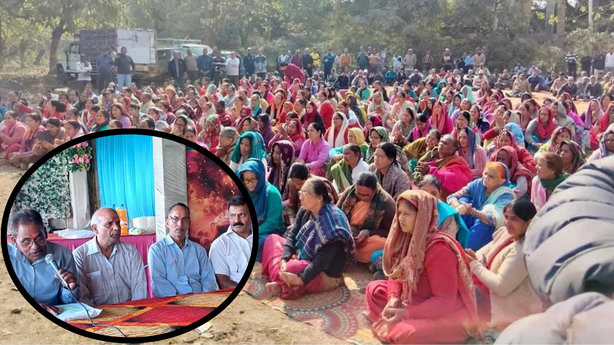
The anger of local residents over the forest land dispute in Bapugram (Rishikesh) has once again intensified. Those who have long been fighting for their land rights and future are now demanding decisive action from the government. Expressing displeasure with the government’s attitude, the Bapugram Bachao Sangharsh Samiti has warned of further intensifying the agitation. The committee stated categorically that if the state government does not make a strong and effective representation in court on behalf of the local residents, thousands of people in the area will be forced to completely boycott the upcoming assembly elections. Claim of a populated area before 1908 At a press conference held at a wedding point in 20 Bigha, committee convener Ramesh Jugalan, while recounting the history of Bapugram, stated that it is not a newly settled area. According to him, Bapugram has been a populated area since before 1908. In 1950, due to the efforts of Meera Behen, the area was given the status of an ideal village. Subsequently, Bapugram was declared a revenue village and later included within the municipal corporation limits. The committee states that despite being involved in the development and administrative system of the region, forest land disputes have posed a serious threat to the homes, livelihoods, and futures of thousands of families living there. 15,000 Families and Approximately 70,000 People Affected According to the committee, land disputes related to Bapugram, Bindukhatta, and Bagga-54 are having a widespread impact. The committee claims that these cases affect approximately 15,000 families and approximately 70,000 people. Local residents say that despite living in the area for a long time and establishing their own homes, the lack of resolution of the land dispute has left them in a state of constant confusion. The committee has demanded that the government strongly present the case in court, considering the plight of the affected families, so that they can find relief regarding their future. Questions also raised about the functioning of the high-level committee During the press conference, committee officials also raised questions about the functioning of the high-level government committee formed during the state government’s cabinet meeting. The committee stated that while the government has formed a committee chaired by the Chief Secretary, the affected people have not yet been adequately involved in the process. The committee demanded that the government make public the number of meetings held by the Chief Secretary and the decisions taken in these meetings in the interest of the affected families. It also demanded that committee representatives be included in the committee to establish direct communication with the local people. Demand for a concrete solution, not assurances The Bapugram Bachao Sangharsh Samiti states that the local people are no longer satisfied with mere assurances. They demand a concrete and just solution that will alleviate the crisis looming over their homes, livelihoods, and future. The committee demanded that the government resolve the matter quickly and ensure effective advocacy on behalf of the local residents in court. The committee warned that if the government does not take the matter seriously and make a strong case, the movement will be escalated to a larger scale. A decision to boycott the upcoming assembly elections may also be taken. Following this stance of the committee, the forest land dispute of Bapugram is once again in the headlines and now the eyes of the local people are fixed on the next action of the government.
ECI Announces By-Polls for 5 Assembly Seats & Nagaon Lok Sabha Seat on October 6…
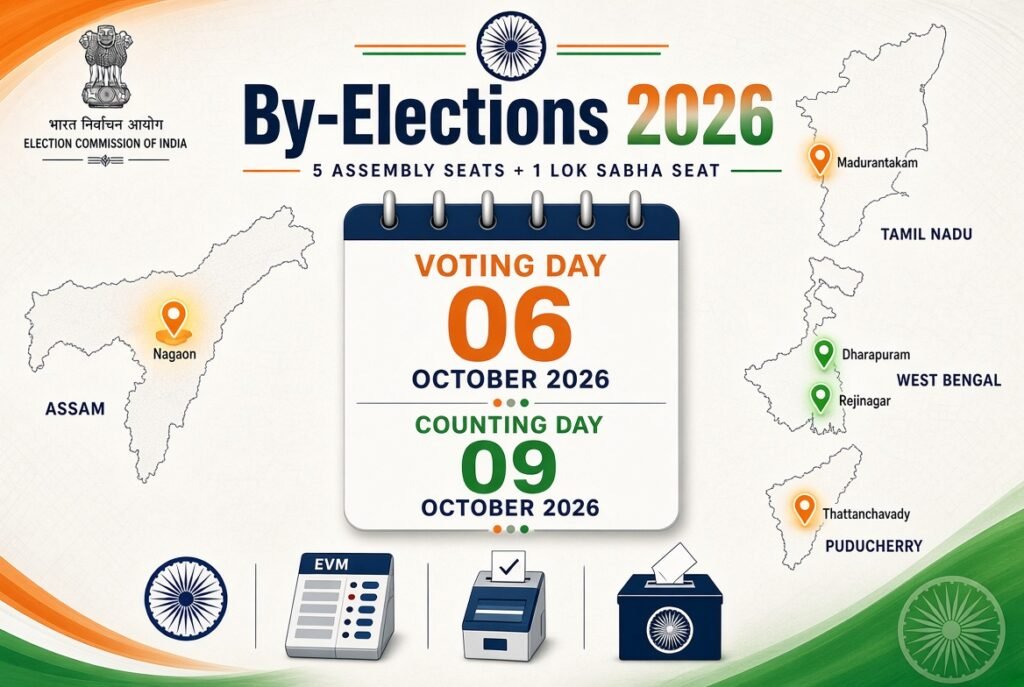
The Election Commission of India (ECI) has officially announced the dates for by-elections to five assembly seats and one Lok Sabha seat in four states and union territories. The Election Commission (ECI) has announced the election schedule for vacant assembly seats in Tamil Nadu, Puducherry, and West Bengal, and one parliamentary seat in Assam. Voting will take place in the Madurantakam and Dharapuram assembly seats in Tamil Nadu, Thattanchavady in Puducherry, and Rejinagar and Nandigram assembly seats in West Bengal. Voting will also take place in the Nagaon Lok Sabha seat in Assam. According to a notification issued by the Election Commission, voting for all these seats will take place on October 6, 2026, with counting of votes taking place on October 9, 2026. These by-elections are being held following the resignation of MLAs and MPs. According to the official schedule released by the Commission, the formal gazette notification for the elections will be issued on September 9, 2026. The deadline for filing nomination papers is September 16, after which scrutiny of nominations will take place on September 17. Candidates can withdraw their nominations until September 19. The complete election schedule is as follows: Prior to the elections, the Election Commission also notified the schedule for the final publication of voter rolls in the respective constituencies. It should be noted that the final voter list for the Nagaon parliamentary seat in Assam was released on February 10, while for the Thattanchavady assembly seat in Puducherry, it was released on February 14. In Tamil Nadu, the final voter list for the Madurantakam (SC) and Dharapuram (SC) assembly seats was released on February 23. These MLAs resigned MP Pradyut Bordoloi resigned from the Nagaon Lok Sabha seat in Assam, necessitating a by-election. Representatives from five other assembly seats have also resigned. Chief Minister Suvendu Adhikari resigned from Nandigram in West Bengal. Humayun Kabir resigned from the Rejinagar seat in Murshidabad district. MLA Maragatham Kumaravel resigned from the Madurantakam seat in Tamil Nadu, and P. Satyabhama from Dharapuram. MLA N. Rangasamy resigned from the Thattanchavady seat in Puducherry. The Election Commission has directed the Chief Electoral Officers of the respective states to ensure free, fair, and peaceful elections. Adequate availability of Electronic Voting Machines (EVMs) and VVPATs (VVPATs) has been ensured. Orders have also been issued to ensure strict security arrangements in sensitive areas.
Congress to March to Uttarakhand CM’s Residence on Sept 7 Over ‘Purification’ of Kharge Rally Stage…
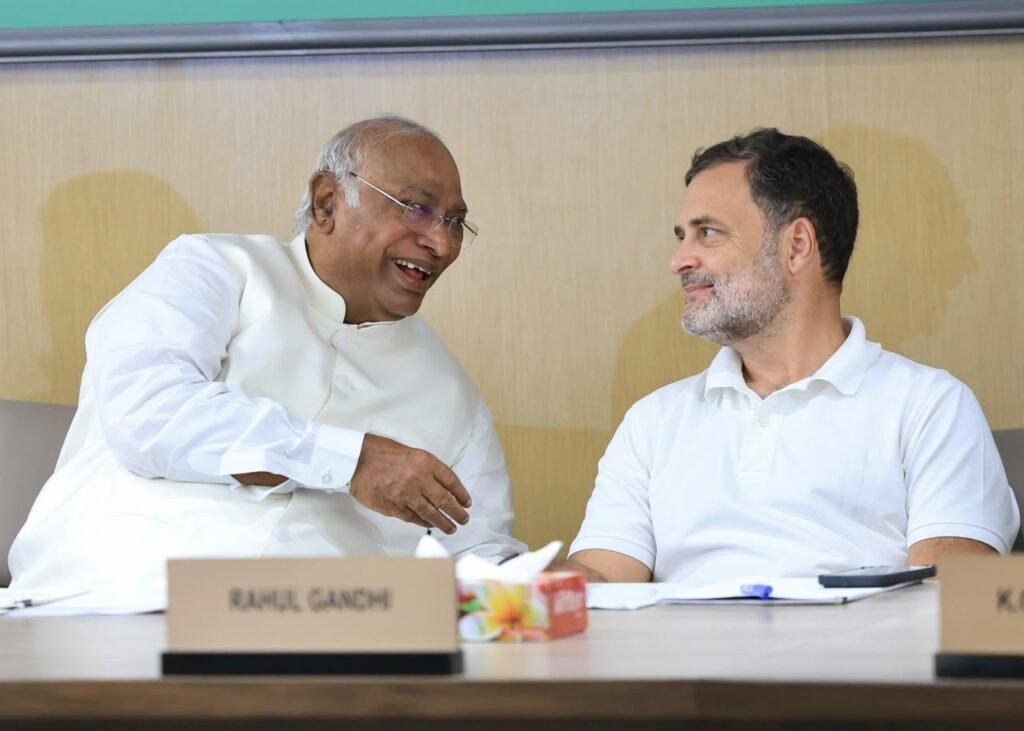
The controversy that erupted after Congress National President Mallikarjun Kharge’s rally in Haldwani has now escalated into a political movement. Congress has begun preparations to increase pressure on the government on this issue. As a result, the Congress Party is planning to march to the Chief Minister’s residence in the state capital, Dehradun, on September 7th, 2026. Lok Sabha Leader of the Opposition Rahul Gandhi and Congress General Secretary Priyanka Gandhi are also expected to participate in this major political protest. The primary reason for this controversy is a large Congress Party public meeting held on August 8th, 2026, at the Ramlila Maidan in Haldwani, Uttarakhand, addressed by Congress National President Mallikarjun Kharge. Two days after the rally, on August 10, 2026, individuals associated with some Hindu organizations (allegedly Shri Ram Sena) sprinkled Ganga water on the stage and grounds amid chanting of Vedic mantras and performed a “havan” (sacrifice). Photos and videos of this incident went viral on social media. The Congress party has taken this incident to be extremely serious and has directly labeled it an act of “caste discrimination and untouchability.” Mallikarjun Kharge belongs to the Scheduled Caste (Dalit) community. The Congress alleges that Kharge’s presence alone was the reason for the “purification” of the grounds, reflecting a feudal and casteist mindset. Mallikarjun Kharge himself raised the issue in the Rajya Sabha, calling it an act of untouchability and demanding the arrest of the perpetrators. Rahul Gandhi, the Leader of the Opposition in the Lok Sabha, also strongly criticized the incident, calling it against the Constitution and human values. Meanwhile, the Congress party alleges that the police have not yet filed an FIR against those responsible for the purification incident. Furthermore, the Congress party is demanding the cancellation of the cases filed against Rahul Gandhi. The Congress party will now march to the Chief Minister’s residence on September 7th to protest the purification incident. State Congress leaders have begun preparations to make the march a success. According to party sources, Rahul Gandhi and other national leaders may also participate in the rally. However, the Congress party has not yet formally announced this.State Congress President Ganesh Godiyal stated that party workers from across the state will march to the Chief Minister’s residence on September 7th. The Congress party will continue to fight the purification issue to the last minute. He added that no schedule for Rahul Gandhi’s arrival at the rally has been finalized.
Giorgia Meloni Sets Record as Italy’s Longest-Serving Post-War Prime Minister, PM Modi Congratulates
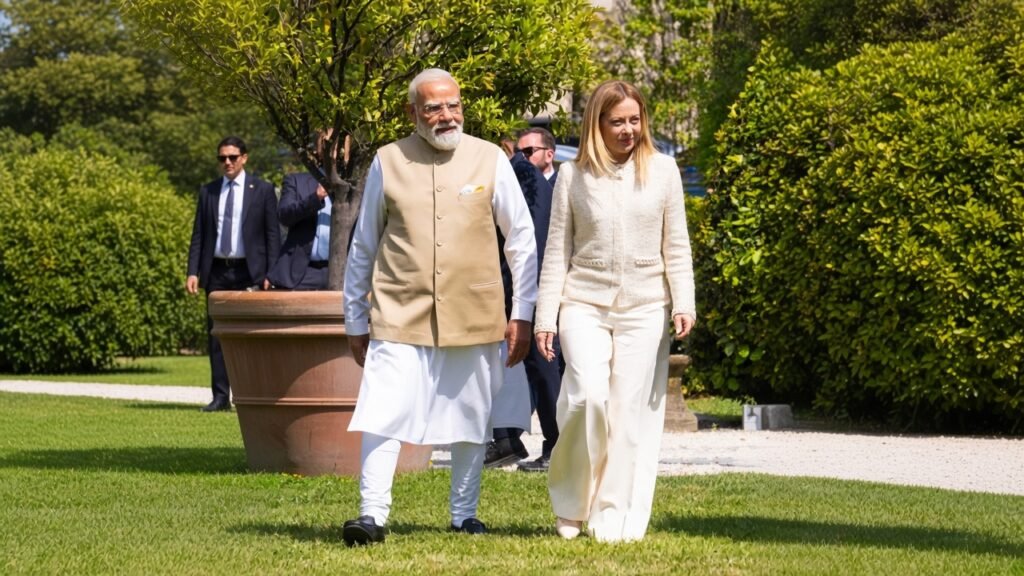
Giorgia Meloni, Italy’s Prime Minister since World War II, has set a historic record by becoming the country’s longest-serving Prime Minister. Meloni assumed office as Italy’s first female Prime Minister on October 22, 2022, and on September 4, 2026, her government completed 1,413 consecutive days in office. For this significant achievement, Indian Prime Minister Narendra Modi extended special congratulations to her on the social media platform X. Prime Minister Narendra Modi wrote on X, “Congratulations to my friend Prime Minister Meloni on becoming the longest-serving Prime Minister in post-war Italian history. This milestone reflects the Italian people’s confidence in her leadership. Their friendship has played a vital role in strengthening the India-Italy strategic partnership.” Following this, Prime Minister Meloni thanked PM Modi and wrote that the relationship between India and Italy is stronger than ever. The two countries will continue to work together to develop the India-Middle East-Europe Economic Corridor (IMEC) and enhance the bilateral strategic partnership. Italy has a long history of political instability over the past 80 years, with 68 governments formed during this period, and the average tenure of a government has been only 13 to 14 months. In such circumstances, the nearly four-year tenure of Meloni’s coalition government is considered a significant achievement.Georgia Meloni has broken the record set by former Prime Minister Silvio Berlusconi’s second government. Berlusconi’s cabinet was in power for 1,412 consecutive days between 2001 and 2005, while Meloni has surpassed this record by one day.To mark this historic record, Giorgio Meloni’s right-wing party ‘Brothers of Italy’ (FdI) organised a huge rally and celebration in the southern Italian city of Bari, attended by thousands of supporters.
CJP Workers Protest Outside Delhi’s Parliament Street Police Station Demanding Justice in Sanjay Kumar Assault Case…
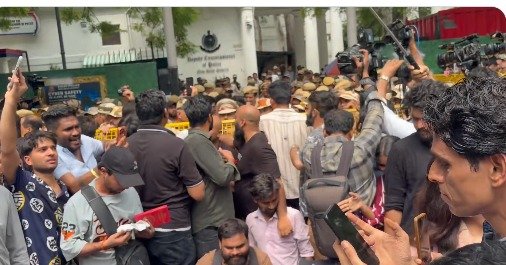
Cockroach Janata Party (CJP) workers arrived in large numbers to protest at the Parliament Street police station in Delhi today, Friday (September 4, 2026). Workers and senior leaders of the youth organization, Cockroach Janata Party (CJP), have been protesting and raising slogans against the Delhi Police outside the Parliament Street police station since morning. CJP leader Saurav Das, along with other members, has reached the Parliament Street police station, demanding justice for Sanjay and Nishu. Meanwhile, Nishu, Chandrashekhar Azad, Saurav Das, and Ashutosh Ranka have reached the DCP’s office. This protest is related to the attack on Sanjay Kumar, the father of Nishu Azad, a young woman who participated in the protest at Jantar Mantar. Sanjay Kumar was allegedly attacked by a young man named Swatantra Bhardwaj. The CJP alleges that the Delhi Police has not taken any action against him. Several other leaders, including the CJP, are protesting outside the Parliament Street police station in Delhi. In fact, the issue reignited when the accused, Swatantra Bhardwaj, openly confessed to the attack on the father of a CJP worker in a podcast. He stated that he did not go to jail even after the attack because he had connections with political figures. Nishu also posted a video on the matter, appealing to Rahul Gandhi for help. Following this, Rahul Gandhi assured Nishu of his support. In his post, Rahul Gandhi wrote, “Nishu, there’s no need to panic. I am with you. It’s clear that you were targeted because you speak out for the rights of your community and students. Amit Shah’s Delhi Police, on the one hand, commit inhumane brutality against students. On the other hand, the criminal who beheaded a Dalit girl’s father roams freely. PM Modi, Home Minister Amit Shah, why are you and your party members protecting such a criminal? Will action still be taken, or will you continue to protect someone?” Nishu, your fight is not alone. We will not stop until justice is served. Jai Bhim. Jai Constitution.” Delhi Police, meanwhile, issued a statement on the matter, dismissing the social media claims as rumors. Police say that according to doctors at RML Hospital, Sanjay Kumar suffered minor injuries caused by a bracelet. Reports of a crack in his head are baseless. According to the police, the accused (Suraj Kumar and Swatantra Bhardwaj) have been questioned, and a charge sheet will soon be filed in court in this case. The police also completely rejected allegations of political interference.
TMC Camac Street Office Vandalized in Early Morning Attack; Abhishek Banerjee Blames BJP, Party Calls it Staged Drama..
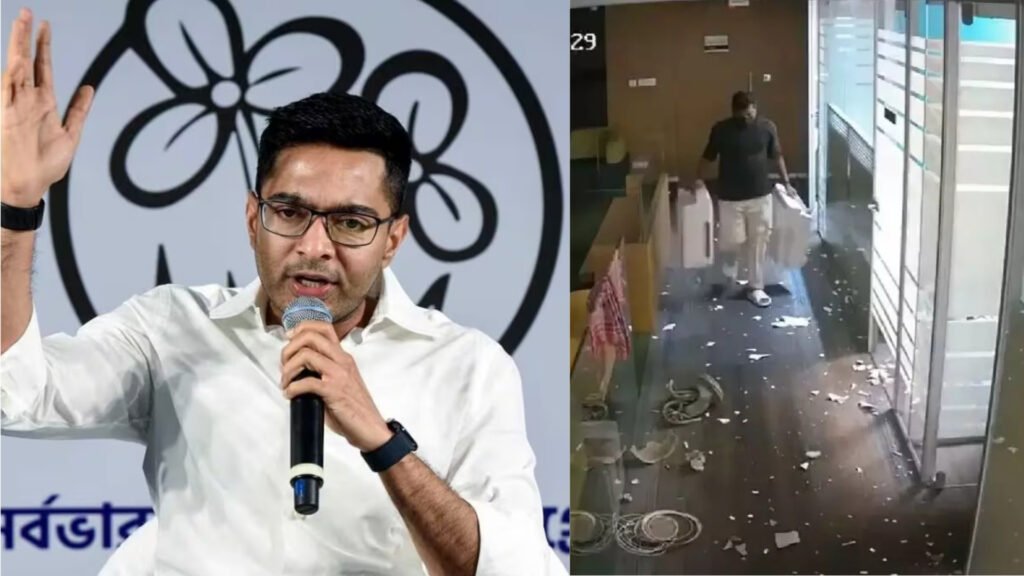
The Trinamool Congress (TMC) office on Camac Street in Kolkata was attacked and vandalized by armed men at around 4:30 a.m. on Thursday, September 3, 2026. The incident has heated up the political atmosphere in West Bengal. TMC MP and National General Secretary Abhishek Banerjee has made serious allegations that Bharatiya Janata Party (BJP) workers were behind the attack. Banerjee also shared CCTV footage on his social media account (X), showing masked men vandalizing the office and taking away electronic items. He released the CCTV footage and stated that the attackers arrived around 4:30 a.m. on Thursday. He further claimed that the armed attackers assaulted employees, snatched phones, broke furniture, scattered items throughout the office, and damaged electronic equipment. TMC leaders alleged that TMC employees and lawyers informed the police via phone and email at the time of the incident and for approximately two hours, but no action was taken for approximately two hours. Abhishek Banerjee wrote on his social media account (X) that we demand the immediate arrest of everyone involved in this attack. We also demand an investigation into who planned, organized, and directed this violence, and why the police failed to take action despite repeated information. No political party or group of armed goons can be above the law. If people can enter a political party office with weapons at 4:30 in the morning, attack people, and vandalize property, even when the police are not present, what is the rule of law left in West Bengal? Enough is enough. Arrest the culprits. Fix accountability. Take action now. He further wrote that this is what the BJP did to my party office early this morning. Will the Governor of West Bengal take action? Will the Union Home Minister take action? Will the PMO take action? Or will they simply continue to ignore it? It’s time for the judiciary, especially the Calcutta High Court, to take serious cognizance of this situation and take steps to maintain the rule of law in West Bengal. And a direct question to Suvendu Adhikari: Why are you so afraid of the Trinamool Congress and me that you have to resort to such intimidation tactics? BJP responds strongly to allegations The Bharatiya Janata Party (BJP) has strongly retorted to the allegations of vandalism at the Trinamool Congress (TMC) office, calling it a “staged drama” by the TMC. BJP MLA Sajal Ghosh said that the entire incident was staged by the TMC itself. He added that the BJP had no involvement in the incident. The TMC currently has no political issues left, so they are only doing this to remain in the limelight. BJP leaders have also questioned the timing of the incident. Sajal Ghosh asked, “What were TMC workers doing in that office so early in the morning (at 4:30 am)?” Kolkata Police have launched an investigation into the matter and detained six people from the scene. CCTV footage is also being examined.
PM Modi at SCO Summit in Bishkek: Holds Talks with Putin & Xi, Calls for Zero Tolerance on Terrorism and Peace Through Dialogue…
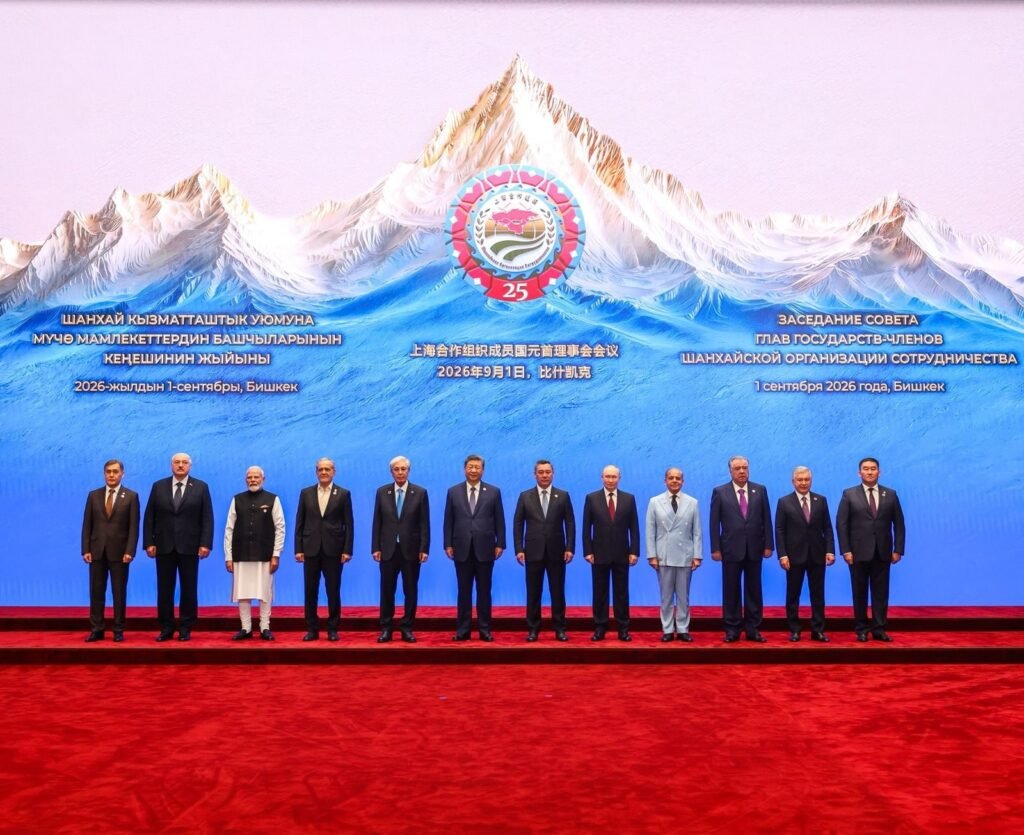
Prime Minister Narendra Modi has arrived in Bishkek, the capital of Kyrgyzstan, to participate in the 26th Shanghai Cooperation Organization (SCO) Summit. Several leaders of the organization, including Chinese President Xi Jinping, Russian President Vladimir Putin, and Pakistani Prime Minister Shahbaz Sharif, attended the SCO Summit. On the sidelines of the summit, PM Modi held important bilateral meetings and discussions with Russian President Vladimir Putin, Chinese President Xi Jinping, and Iranian President Masoud Pezeshkian. During the meetings, PM Modi reiterated that India has always been a supporter of peace and that all issues and problems should be resolved through dialogue and diplomacy. The summit is discussing key global issues such as regional security, counter-terrorism, trade, economic cooperation, and enhanced connectivity. India is expanding cooperation with major Eurasian powers while maintaining its national priorities and strategic autonomy amid external pressures. During the summit, Prime Minister Narendra Modi stated that India supports all efforts that connect markets, facilitate trade, and open new avenues for development. However, it is also essential that such efforts respect the sovereignty and territorial integrity of all countries, which is also the core spirit of the SCO Charter. He stated that connectivity will expand in the future, with emphasis on roads, railways, and air corridors, simplifying customs procedures, promoting digital documentation, and making logistics networks more efficient. Zero Tolerance on Terrorism Cracking down on terrorism, PM Modi appealed to member countries to dismantle the entire ecosystem of terrorism. He stated that terrorist funding, recruitment, radicalization, and their safe havens must be completely eliminated. Without naming Pakistan at the summit, PM Modi delivered a strong message regarding terrorism. He stated that there should be no room for double standards on this serious issue. The Prime Minister said that countries that use terrorism as a tool of their policy and provide shelter and support to terrorists should be given a clear message that terrorism cannot become a strategic weapon for anyone. Referring to Ukraine and other global crises, the Prime Minister said that wars and conflicts can never be resolved on the battlefield. The only way to resolve any dispute is through dialogue and diplomacy. He also appealed to SCO countries to use their shared geography to transform it into shared opportunities, rather than becoming embroiled in border disputes, thereby strengthening global trade, maritime trade, and supply chains.
Trump Claims U.S. Secures Majority Control of Venezuela’s 65 Billion-Barrel Oil Reserves in Historic Deal…
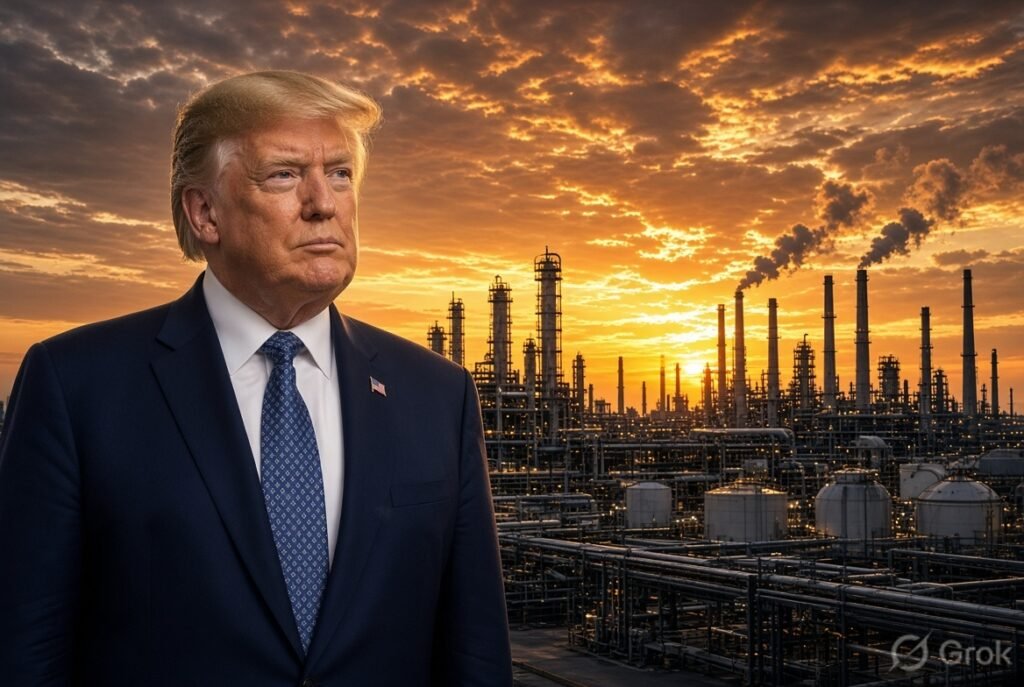
US President Donald Trump announced a major, historic agreement with Venezuela on Friday, August 28th. Trump announced the largest oil deal in history with Venezuela, information about which was shared in a social media post. Under this agreement, the US will gain majority control over Venezuela’s proven crude oil reserves of over 65 billion barrels. Trump claims that this historic transaction will more than double US oil reserves and significantly increase US oil supplies. Announcing the agreement on social media, Donald Trump wrote, “The United States has just reached the largest oil deal in world history with the country of Venezuela.” The US President stated that this agreement was negotiated between Secretary of State Marco Rubio, Secretary of Defense Pete Hegseth, and Venezuela’s Acting President Delcy Rodriguez. Trump wrote on Truth Social, “At my behest, Secretary of State Marco Rubio and Secretary of War Pete Hegseth, in collaboration with Venezuela’s highly respected interim President Delcy Rodriguez and in partnership with private companies, have secured majority control for the United States over 65 billion barrels of proven oil reserves in Venezuela. This agreement cost the US no American taxpayer money.” He stated that the agreement is highly beneficial to America’s energy supply and claimed that it will more than double US oil reserves and help lower gas prices. Venezuela’s interim President Delcy Rodriguez welcomed the agreement, saying it will generate significant revenue for the country’s treasury. Venezuela’s interim President Delcy Rodriguez stated that the country wants to utilize its vast oil reserves to become a major energy producer, create jobs, increase workers’ incomes, and improve living standards. He added, “In this way, Venezuela is ushering in a new era of recovery, growth, production, security, and prosperity for its people.” “ How the deal will work Under this deal, the US will form a new private company in collaboration with an unnamed private operator to develop 17 strategic Venezuelan oil fields (primarily in the Orinoco Belt and Lake Maracaibo). Effectively, 55% of this company’s total oil production will be directly under US control. Venezuela says these projects could generate approximately $100 billion in private investment and generate over $209 billion in tax revenue for Caracas. This agreement was reached after intensive negotiations between US Secretary of State Marco Rubio, Defense Secretary Pete Hegseth, and Venezuela’s interim President Delcy Rodriguez. This political change comes after the US military operation in January that ousted and arrested former Venezuelan President Nicolas Maduro, after which Venezuela amended its oil laws to encourage foreign investment.
BJP Announces New Spokespersons, Ravindra Jugran and Shadab Shams Among Appointees
The Bharatiya Janata Party (BJP) has expanded its team of state spokespersons in Uttarakhand, giving new responsibilities to eight party leaders. Ravindra Jugran and Shadab Shams are among the prominent names included in the expanded team. Eight Leaders Appointed as State Spokespersons The appointments were made with the approval of Uttarakhand BJP state president Mahendra Bhatt. Along with Jugran and Shams, Rajesh Shukla, Suresh Tiwari, Anukriti Gusain, Vishwajeet Negi, Satyaveer Chauhan and Manoj Jakmola have also been appointed as state spokespersons. The expanded team includes leaders from different parts of Uttarakhand, with the BJP aiming to strengthen its communication network and present the party’s position more effectively on political and public issues. Focus on Stronger Public Communication BJP state media in-charge Manveer Singh Chauhan said the spokesperson team has been expanded on the directions of the state president. The newly appointed leaders will be responsible for communicating the party’s policies, government initiatives and responses to political developments. The move is also being viewed as an effort to strengthen the BJP’s media outreach across the state and ensure a quicker response to issues raised by the opposition. Ravindra Jugran and Shadab Shams Get Key Responsibilities The inclusion of Ravindra Jugran and Shadab Shams gives the party’s Dehradun-based media team experienced political voices. Both leaders have been active in Uttarakhand politics and have previously remained involved in public and political issues. The new appointments are focused on organisational and media responsibilities and should not be interpreted as an indication of electoral ticket decisions. BJP Steps Up Preparations Ahead of 2027 With the 2027 Uttarakhand Assembly elections approaching, political activity in the state is expected to intensify. The BJP’s expanded spokesperson team is likely to play an important role in taking the party’s message to the public and responding to political developments. The new appointments underline the party’s focus on strengthening its communication strategy at both the state and local levels.