
US imposes 10% duty on Indian goods, India likely to lose $11 billion in textile exports…
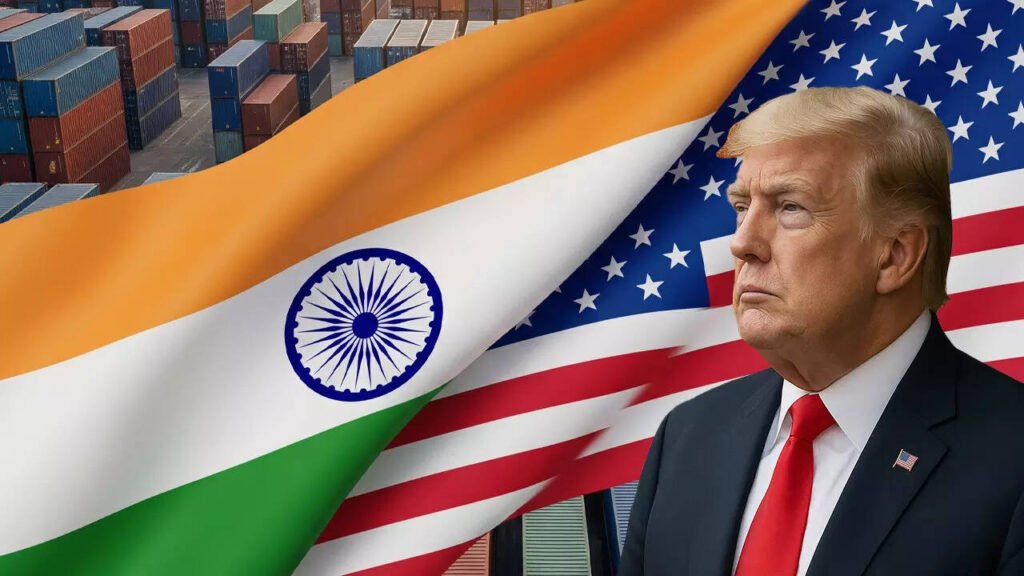
US President Donald Trump is once again in the news for imposing a 10% import duty on goods coming from 17 countries, including India. This decision is expected to make Indian products more expensive in the US market. However, Indian exporters say that we should not only look at the 10% tax, but also consider the tax rates imposed on our rival countries. FIEO : Matter of relief for India Ralhan, President of the exporter organization FIEO, said that it is a matter of relief for India that India has been placed in a lower slab of 10% than other countries. In contrast, India’s major competitors, such as China, Vietnam, Thailand, Turkey, UAE, Brazil, and South Africa, have been taxed at 12.5%. This will put India in a better position than many countries in the global market. India’s direct competitors, such as Pakistan and Sri Lanka, have also been taxed at 10% in textiles, leather, and footwear. Therefore, Indian exporters’ presence in these sectors will not be weakened, as competitors will also have to pay the same tax in the US. FIEO advised traders to carefully study US regulations for their products without panicking. Even though India has been placed in a lower tax bracket, a major crisis is looming for the textile industry. The US has granted a special exemption to India’s neighbor and biggest competitor, Bangladesh, as well as Cambodia, Indonesia, and Malaysia, allowing them to sell their goods in the US without additional tax if they purchase cotton from the US for textile production. India is out of the list of special tax exemptions According to the think tank minister, India has been excluded from this special tax exemption list. Ashwin Chandra, president of CITI, a major textile industry body, expressed deep concern over this, saying that raising the issue of forced labor as a reason for taxation is unfortunate and risks damaging the reputation of Indian products. The biggest problem is that countries like Bangladesh, which previously purchased large quantities of cotton and yarn from India for textile production, may now, due to tax exemptions from the US, begin purchasing cotton from the US instead of India, potentially causing significant losses to Indian cotton farmers and cotton mills. Potential $11 billion in losses The US is the world’s largest market for the Indian textile industry. India exports approximately $11 billion worth of textiles and finished garments to the US annually. Experts believe that the new US policy could lead many US companies to shift orders from India to countries like Cambodia or Bangladesh. While the Indian government is working to manage this situation, Commerce and Industry Minister Piyush Goyal had previously expressed hope that India would also reach a trade agreement with the US at a concessional rate for textiles made using American yarn and cotton. But Indian exporters hope that the government will soon find a positive solution to this problem through dialogue.
From UAE Energy Deals to Europe Strategic Pacts: PM Modi Concludes High-Impact Five-Nation Diplomatic Tour..
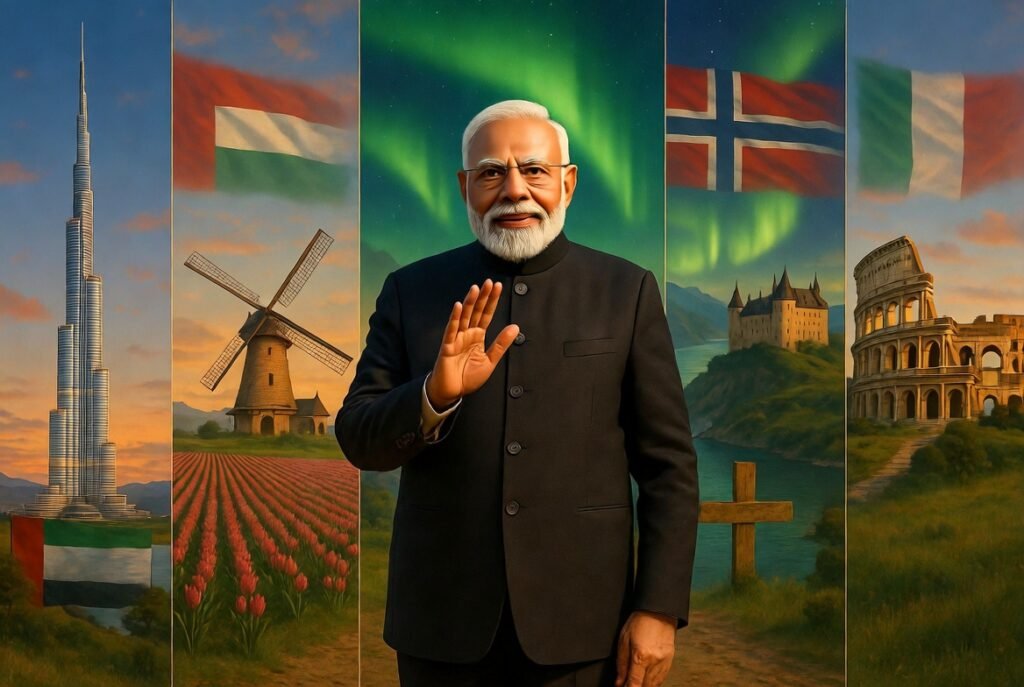
PM Narendra Modi returned to India after concluding his five-nation tour, including the UAE, the Netherlands, Sweden, Norway, and Italy. This visit focused on addressing energy security amid the Middle East crisis. The tour also focused on a strategic partnership in energy security, technology, and climate action, with agreements signed to enhance relations between the two countries. PM Modi’s first stop in the UAE was where the two countries signed agreements to secure long-term LPG supplies, expand crude oil storage facilities, and allow ADNOC to potentially increase its crude oil storage capacity in India by 30 million barrels. On his second visit, PM Modi arrived in the Netherlands, where his visit focused on technology and cultural diplomacy. During this visit, ASML and Tata Electronics signed a major deal to supply advanced lithography tools for a planned $11 billion semiconductor manufacturing fabrication plant in Dholera, Gujarat. PM Modi also visited the famous Afsluitdijk Dam to study Dutch flood control, water management, and renewable energy infrastructure. The Netherlands officially returned 11th-century Chola dynasty copper plates to India at a ceremony attended by PM Modi. In Sweden, PM Modi’s visit aimed to strengthen bilateral ties and elevate India-Sweden relations to a formal strategic partnership. The two countries adopted the India-Sweden Joint Action Plan (2026–2030), agreeing on a shared goal of doubling trade and investment over the next five years. India and Sweden also agreed to enhance their cooperation on space, innovation, emerging technologies, and the green transition. In Norway, the fourth country of his visit, PM Modi held talks with Norwegian PM Jonas Gahr Støre, where they officially elevated the relationship to a “Green Strategic Partnership,” focusing on the green energy transition, the blue economy, climate action, and Arctic cooperation. PM Modi also participated in the third India-Nordic Summit, which aimed to enhance trade, investment, and technological cooperation with northern European countries. PM Modi also met with the leaders of Denmark, Finland, Iceland, Sweden, and Norway in Oslo to forge a joint front on Arctic strategy and maritime security. In the final leg of his five-nation tour, Modi traveled to Italy, where he met with Italian Prime Minister Giorgio Meloni and President Sergio Mattarella. During PM Modi’s visit, India and Italy adopted a joint declaration to strengthen their partnership, including an annual Heads-of-Government Summit and a target of reaching $23.2 billion in bilateral trade by 2029.Agreements were also signed on maritime transport, agriculture, higher education, essential minerals, museum cooperation and the fight against economic and financial crime.
Middle East on Edge, Drone Strike Near UAE Nuclear Plant Sparks Global Alarm
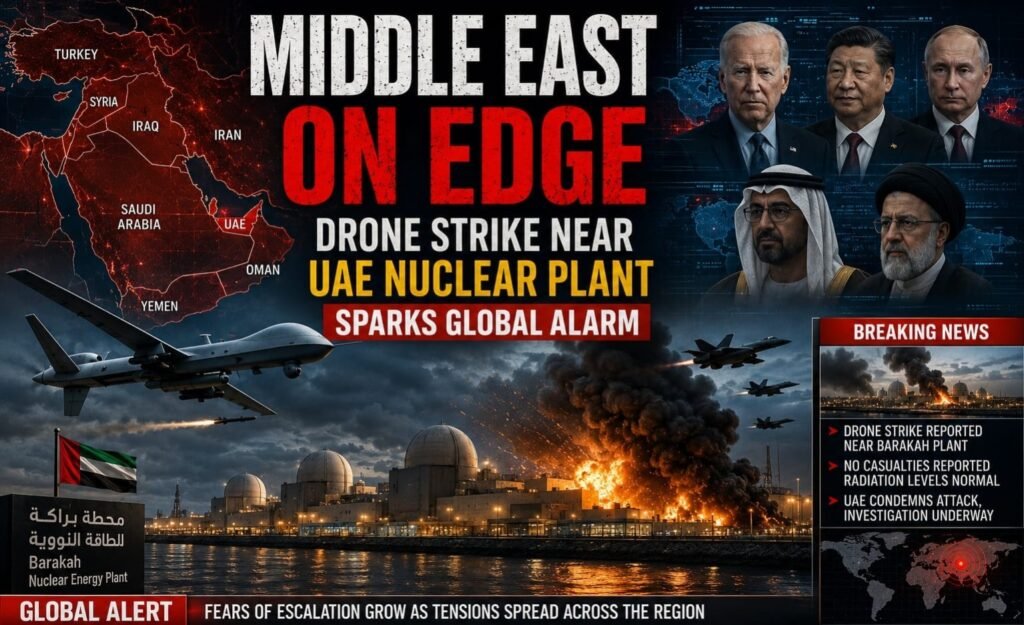
Tensions in the Middle East appear to be reaching a dangerous level after a drone attack and fire incident near the UAE’s Barakah Nuclear Energy Plant raised concerns across the Gulf region. At the same time, US President Donald Trump issued a strong warning to Iran, saying that time is running out for a peace agreement with Washington. After returning from China, Trump also held a high-level meeting with security officials. The attack came at a time when efforts by the United States and Israel to ease tensions with Iran had stalled, increasing fears over regional security in the Gulf. The UAE has not blamed any country for the attack so far. According to the UAE Defence Ministry, investigations are currently underway. Officials stated that air defence systems intercepted two drones mid-air, while a third drone struck a power generator located near the nuclear plant. The ministry added that the drone approached from the western border, though no further details have been released. According to Abu Dhabi media reports, the drone targeted a power generator situated outside the plant’s secure internal zone. The International Atomic Energy Agency (IAEA) said the attack triggered a fire near the facility, forcing the reactor to temporarily operate on emergency diesel generators.
UAE Exit Weakens OPEC as Oil Markets Face New Uncertainty
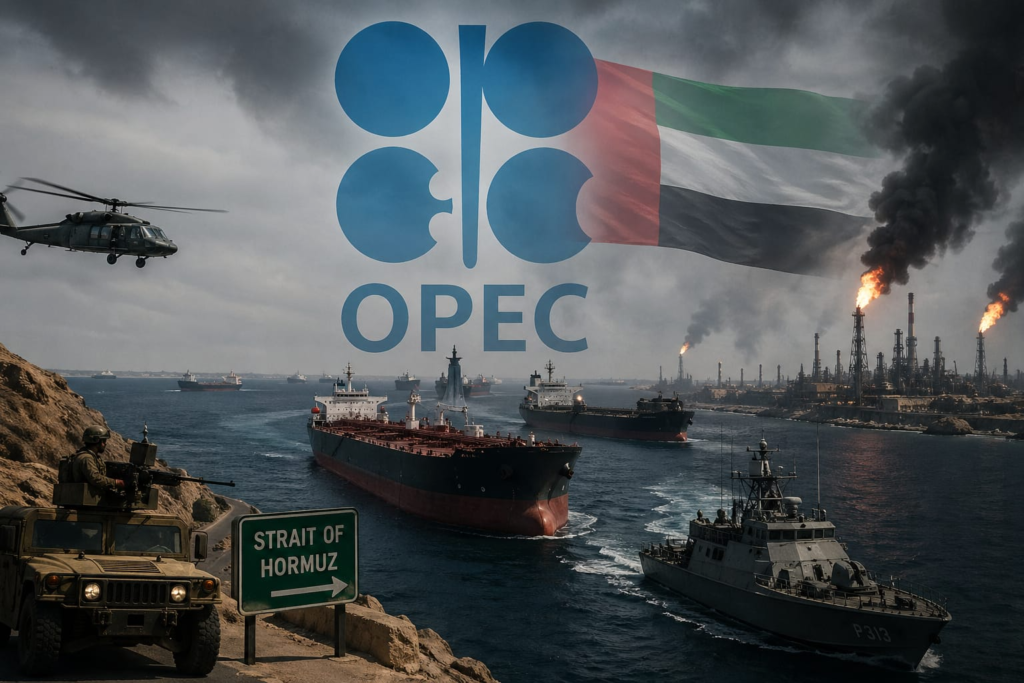
The Organization of the Petroleum Exporting Countries (OPEC) is set to feel structurally weaker without the United Arab Emirates, one of its largest and most disciplined producers, after more than five decades of membership. The UAE’s departure comes at a moment when the cartel’s influence over global oil markets has already been eroded by rising U.S. output and internal tensions among its members. Why the UAE left Analysts say the UAE wants to free itself from OPEC’s production quotas to ramp up output beyond the roughly 3–3.5 million barrels per day it was allowed under the group’s rules. As the fourth‑largest producer in OPEC, the UAE accounted for about 3 percent of global crude supply and close to 11–15 percent of OPEC capacity, so its exit diminishes the group’s spare production cushion. Regional tensions and the Strait of Hormuz The decision is also shaped by heightened friction in the Persian Gulf, including missile and drone attacks linked to Iran that have disrupted shipping through the Strait of Hormuz. That chokepoint has effectively become more constrained, raising doubts about the reliability of Gulf supplies and shifting market attention away from the UAE’s formal exit in the short term. What this means for OPEC and prices Without the UAE, OPEC’s core producing trio will largely be Saudi Arabia, Iraq, and Iran—a mix that may struggle to maintain unified policy, especially if Saudi Arabia seeks to defend its market share through price pressure. Some experts warn the move could weaken OPEC+’s ability to stabilize prices, while others note that Saudi Arabia has already been relying on alliances with Russia and other non‑OPEC producers to keep the group relevant. Long‑term uncertainty Historically, the oil market was dominated by a handful of Western majors known as the “Seven Sisters,” which later evolved into companies such as Shell, Chevron, ExxonMobil, and BP. Just as the industry adapted to that earlier shift, OPEC may adjust again—but the UAE’s exit adds new uncertainty about how much real control the cartel will retain over global oil flows in the coming years.