
UCC Expansion Continues: West Bengal Prepares to Table Uniform Civil Code Bill Amid Political Debate
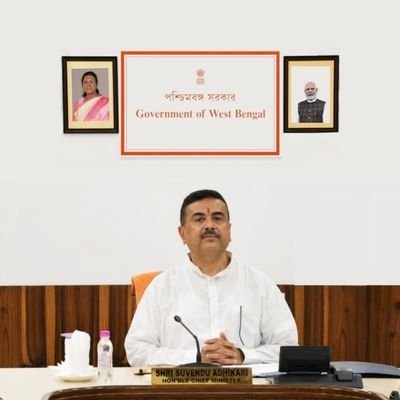
After Uttarakhand, Assam, and Gujarat, the Uniform Civil Code (UCC) is now set to be implemented in West Bengal as well. The West Bengal government is preparing to table the UCC Bill in the Legislative Assembly on June 29, 2026. Under this law, regulations concerning marriage, divorce, inheritance, and adoption will be uniform for all citizens. Key aspects of the UCC in West Bengal include the process of establishing legal timelines. Chief Minister Suvendu Adhikari announced that the UCC Bill would be introduced during the Assembly’s current budget session. Notably, the West Bengal government will follow the roadmap adopted by Uttarakhand, Assam, and Gujarat; a committee headed by a retired judge will be constituted for the UCC. It is worth noting that implementing the UCC in West Bengal was a key promise in the BJP’s election manifesto, in which the party pledged to enforce the UCC within six months of forming the state government. While this move is garnering support from Muslim women, it is also facing stiff opposition from the opposition parties, including the Trinamool Congress and the Congress. They argue that personal laws specific to certain religions are linked to cultural and religious identities, and that the UCC would effectively strip various religions of their distinct cultural identities.
Assam’s New Uniform Civil Code Proposes Strict Registration Rules and Penalties Across the State..

Assam’s Parliamentary Affairs Minister, Atul Bora, introduced the Uniform Civil Code (Assam) Bill, 2026, in the state assembly. The bill reportedly establishes a uniform age for marriage at 21 years for men and 18 years for women. It also prohibits polygamy and mandates registration for those in live-in relationships. Different regulatory mechanisms and penalties have been implemented across the state for this bill. Key regulations include requiring couples in live-in relationships to register their partnership within one month, and any child born to a registered live-in couple will be legally legitimate. The bill mandates registration of all divorce cases Minors entering into such relationships will face prosecution, and if either partner is already married, the partnership will be considered valid. The bill mandates registration of all divorce cases, whether a ceremony or order, within 60 days of marriage and divorce. Scheduled Tribe communities and their traditional customs are exempt from this law. Those who disobey this legal proposal will be punished with imprisonment of up to 3 months and a fine of ₹10,000. Those who conceal facts upon declaration will be punished with imprisonment of up to 3 months and a fine of ₹25,000. Failure to register a marriage or divorce within 7 days will result in a fine of ₹10,000. Forging documents during registration will result in imprisonment of up to 3 months and a fine of ₹25,000..