
US House Set to Vote on Bill Authorizing 100% Tariffs on India, China & Others Buying Russian Oil…
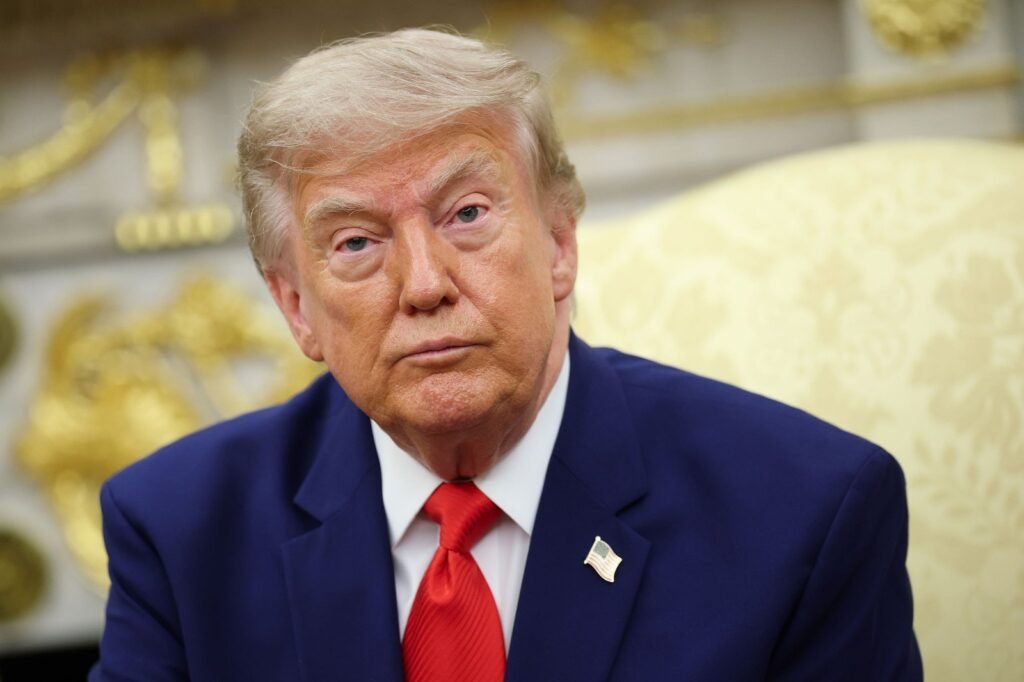
The United States is once again preparing to impose tariffs on several countries, including India and China. The US House of Representatives is set to vote on the Russia Sanctions Bill. This bill authorizes President Donald Trump to impose tariffs of up to 100% on countries that purchase oil from Russia. Tomorrow, Thursday, September 17, 2026, a bill is scheduled to be introduced in the US House of Representatives, which includes provisions for imposing 100% tariffs on several countries, including India and China, for purchasing oil from Russia. This bipartisan bill, called the ‘Lindsey O. Graham Sanctioning Russia and Iran Act of 2026’, gives US President Donald Trump broad authority to impose heavy tariffs on major countries that purchase large quantities of oil and gas from Russia. This bill primarily includes India and China. The US Senate passed it on August 7 by a vote of 86-11. It now awaits passage by the House of Representatives. Only after this can it be sent to the President for signature. The amended bill proposes to include China, India, Turkey, Azerbaijan, Hungary, the Slovak Republic, the UAE, Singapore, Kazakhstan, and the Kyrgyz Republic as countries subject to 100% tariffs. The bill cleared a key procedural hurdle in the US House of Representatives on Tuesday evening. The proposal advanced by a narrow margin of 214-211 after two Democratic lawmakers switched sides and voted with the Republicans. A final vote is expected in the House today (Thursday, September 17, 2026). It will then be sent for the President’s signature.
India Officially Maps 27 Strategic Sites in Arunachal Pradesh to Counter China’s Claims..
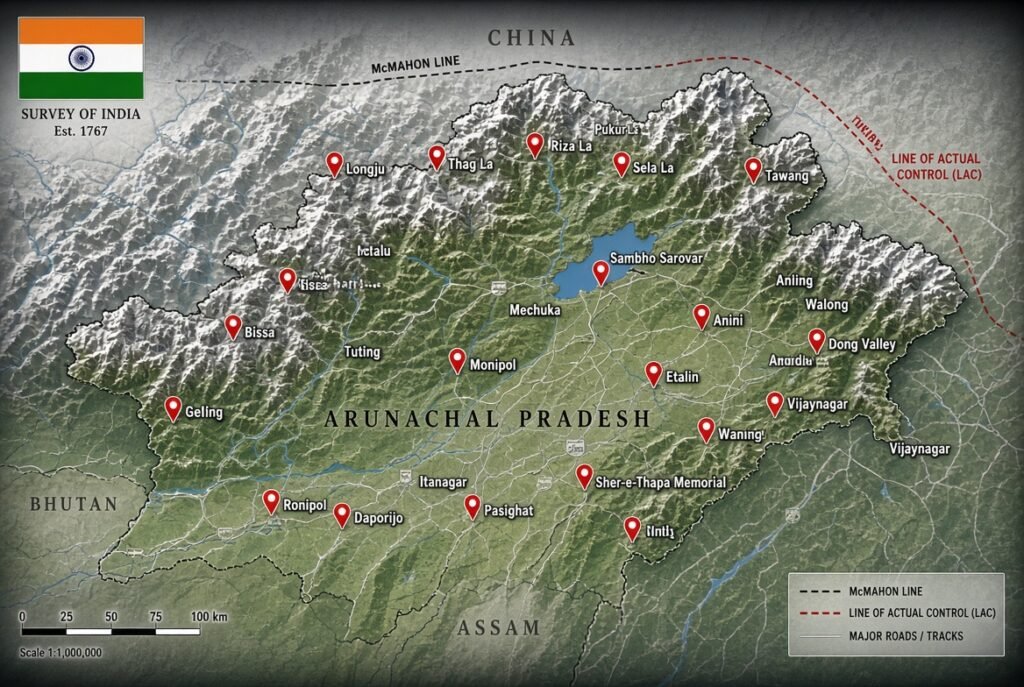
India has formally recognized 27 locations and geographical features in Arunachal Pradesh on the Survey of India’s official map, strengthening its territorial claims amid ongoing infrastructure development along the India-China border. The Indian government’s decision is seen as a response to China’s claim that Arunachal Pradesh is part of China. The Home Ministry shared this information on Friday. The list includes strategic locations such as Longju, Maja, and Bissa; mountain passes such as Thag La, Zo La, Riza La, and Pukur La; the high-altitude lake Sambho Sarovar; and the Sher-e-Thapa Memorial. Home Ministry officials stated that the move is aimed at ensuring a proper and definitive recognition of Arunachal Pradesh and responding to China’s repeated attempts to rename places in the region. Analysis of satellite imagery by independent monitors shows that China is building roads, camps, and other infrastructure near Jari in the disputed area. The area where India is changing the names of 27 places falls under the Indian-administered territory under the McMohan Line, but it was under Chinese control since 1959. Both these developments highlight the ongoing dispute related to infrastructure and maps on the Line of Actual Control (LAC), on which India says that such attempts at changing names and construction work cannot change the reality on the ground.
Shifting Global Power Dynamics Raise Tensions Among Major Nations
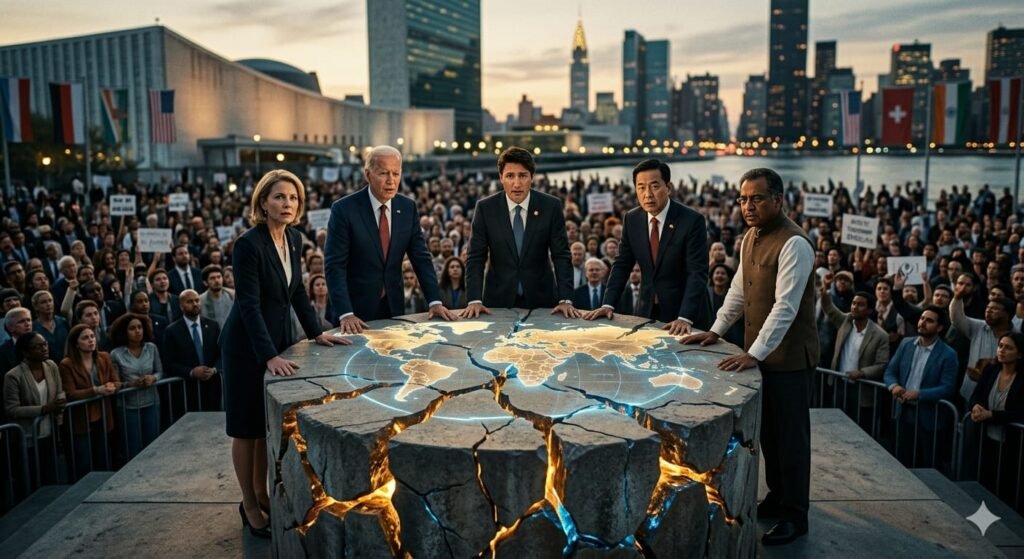
The relationship between global power and countries are changing significantly. According to Expert, the power of Western countries does not remain same as earlier they have been dealing with new challenges. key changes increase tension between US and China over Ukraine, tension between America and China increase after disruption’s, deep economic associate between China and America, and large problem created by middle East crisis are also included in it. America and Cuba conflict has increased pressure. America thinking about pressurizing Cuba by its policies, and considered Havana’s action a threat to national security. It also affect the flow of fuel supply. Through diplomatic influence, Washington offered economic and infrastructure help in exchange for important domestic changes. However, the situation remained tense because of severe fuel shortages and widespread power cuts in India. It talks about America’s current policies and new changes along with government discussion about relation between countries. Despite restrictions from Western countries China and Russia made decisions in the Beijing meeting to strengthen their cooperation and friendship. Bilateral relation between both the countries accelerate and crossed 200 billion dollar.This is mainly based on the demand for oil and gas, and depends on economic growth and GDP growth. To understand how these geopolitical changes are affecting markets and corporate strategies, you can look at further information. The clashes between US, Israel and Iran distrupting global energy routes especially around Strait of Hormuz.These conflicts are forcing big countries to change their plans and the Middle East is becoming more unstable because of energy problems and political changes.
Middle East on Edge, Drone Strike Near UAE Nuclear Plant Sparks Global Alarm
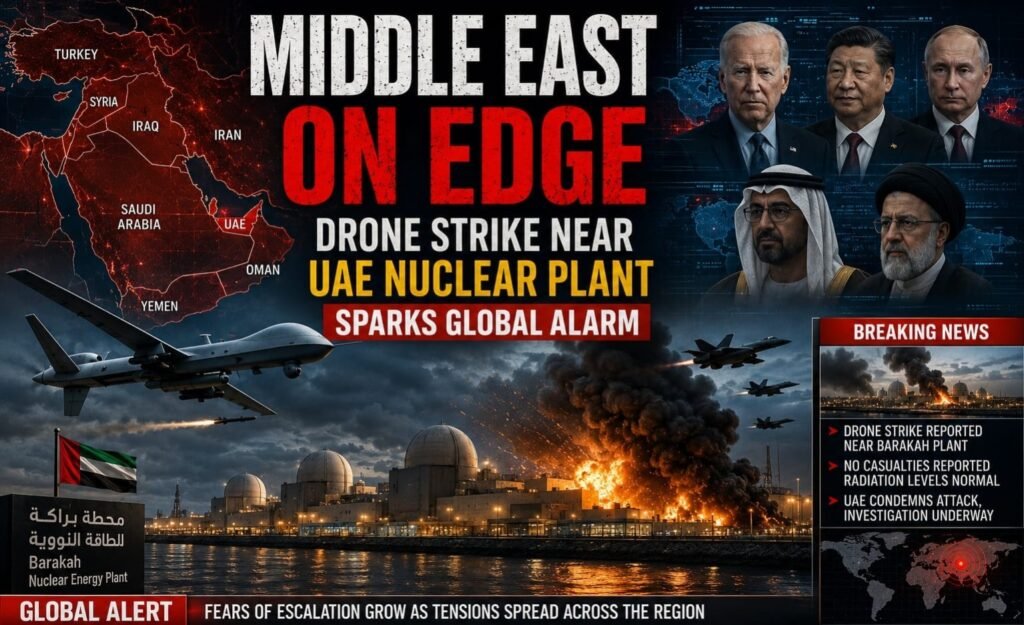
Tensions in the Middle East appear to be reaching a dangerous level after a drone attack and fire incident near the UAE’s Barakah Nuclear Energy Plant raised concerns across the Gulf region. At the same time, US President Donald Trump issued a strong warning to Iran, saying that time is running out for a peace agreement with Washington. After returning from China, Trump also held a high-level meeting with security officials. The attack came at a time when efforts by the United States and Israel to ease tensions with Iran had stalled, increasing fears over regional security in the Gulf. The UAE has not blamed any country for the attack so far. According to the UAE Defence Ministry, investigations are currently underway. Officials stated that air defence systems intercepted two drones mid-air, while a third drone struck a power generator located near the nuclear plant. The ministry added that the drone approached from the western border, though no further details have been released. According to Abu Dhabi media reports, the drone targeted a power generator situated outside the plant’s secure internal zone. The International Atomic Energy Agency (IAEA) said the attack triggered a fire near the facility, forcing the reactor to temporarily operate on emergency diesel generators.