Why Were Two Senior Delhi Officers Transferred? AAP Seeks Clarity From Government…
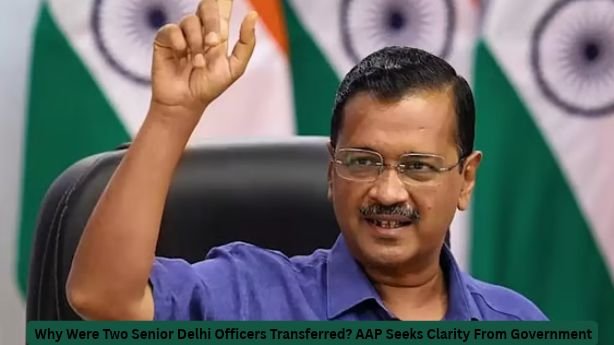
AAP protests the transfer of 2 senior IAS officers from Delhi to Arunachal AAP protested the transfer of two senior IAS officers from Delhi to Arunachal Pradesh which was the third such transfer by the administration in the national capital in 15 days. The two officers are Neeraj Semwal (IAS 2003-batch), who was holding the post of Secretary-cum-Divisional Commissioner, Revenue Department, Delhi and Ravi Jha (IAS 2011-batch), Deputy Commissioner, New Delhi. Both have been transferred to the Arunachal Pradesh cadre of the AGMUT cadre. The orders for the transfer was by the MHA on September 19, 2026, it is reported. The order also transferred two IPS officers-Vikramjit Singh and Abhishek Dhania-to Arunachal Pradesh. Bhatradwaj sought a reply from Chief Minister Rekha Gupta over the transfers. Amar Ujala, which published his remarks, also carried his separate queries on the Delhi Police ACB Joint Commissioner Vikramjit Singh transfer. None of the reports, though, establish that the transfers were made on account of any investigation or offense. The transfers orders, by the way, are part of various postings of AGMUT officers on cadre. Additional bureaucracy-focused reports, meanwhile, have characterised the move as part of officer postings on a continued basis within the cadre.
V4 Nations’ Big Announcement: India Must Get Permanent UNSC Seat; Slovakia FM Extends Strong Support..
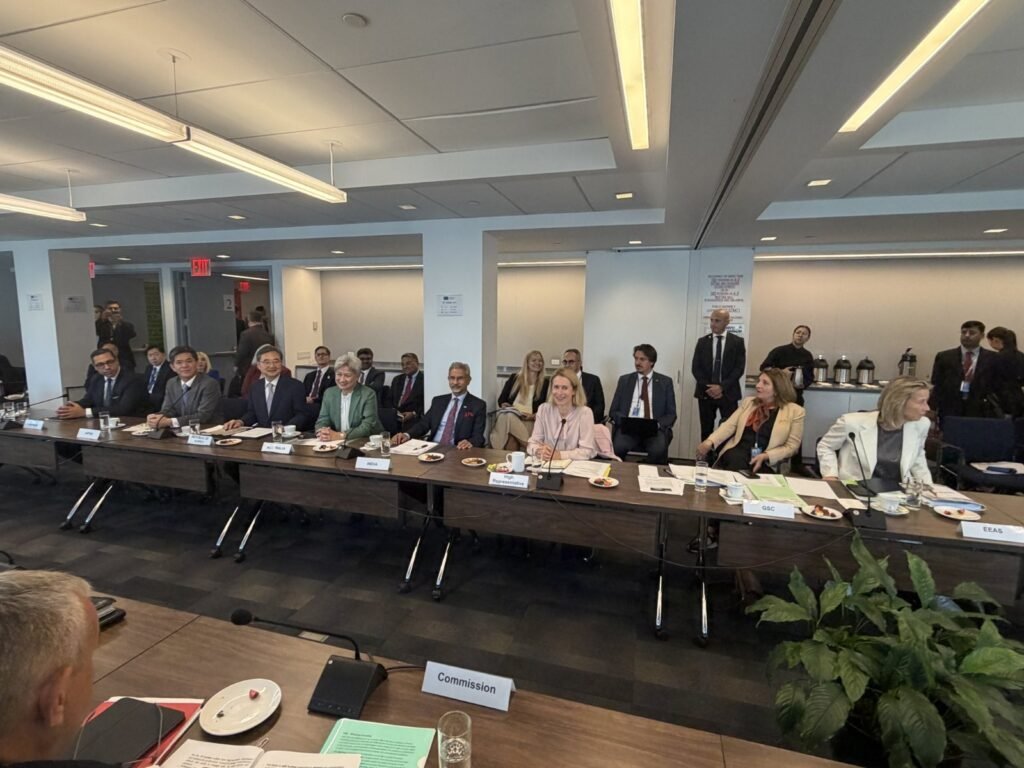
At the 81st Session of the United Nations General Assembly (UNGA), India held its first Foreign Minister-level meeting with the powerful Visegrad Group (V4) of Central Europe. Following this historic ‘V4+India’ dialogue, the four European countries of the Visegrad Group have openly and strongly supported India’s bid for permanent membership in the United Nations Security Council (UNSC). The high-level meeting, held in New York, was attended by Dr. S. Jaishankar along with the following Deputy Prime Ministers and Foreign Ministers of the Visegrad Group: Radosław Sikorski, Deputy Prime Minister and Foreign Minister of Poland, Dr. Aneta Orbán, Deputy Prime Minister and Foreign Minister of Hungary, Juraj Blanár, Minister of Foreign and European Affairs of Slovakia, and the Deputy Prime Minister and Foreign Minister of the Czech Republic (Czechia). The group agreed to hold annual meetings, launch a business forum, and enhance ties in technology, defense, culture, and education, while Slovakia expressed its firm support for India’s bid for a UN Security Council seat. India’s Foreign Minister, Dr. S. Jaishankar, described the meeting as “a new, historic opportunity” and a highly meaningful one. Slovakia’s Foreign Minister, Juraj Blanár, who currently chairs the Visegrad Group, issued a significant statement after the meeting, stating that the four (V4) countries fully agree that India is an important part of the Global South. As an emerging superpower in the Indo-Pacific region, India must be at the UN Security Council table as a permanent member. This meeting is being considered a major diplomatic victory for India’s “Europe policy.” The Visegrad Group countries are strong industrialized economies and possess excellent innovation and technology talent. At a time when India is leading a global campaign for reforms and its permanent seat in the UNSC, this combined support from these four important European countries further strengthens India’s global stature.
CJP Issues 10-Day Ultimatum to Dhami Govt Over Closure of 826 Schools, Threatens Protest & Minister’s Resignation..
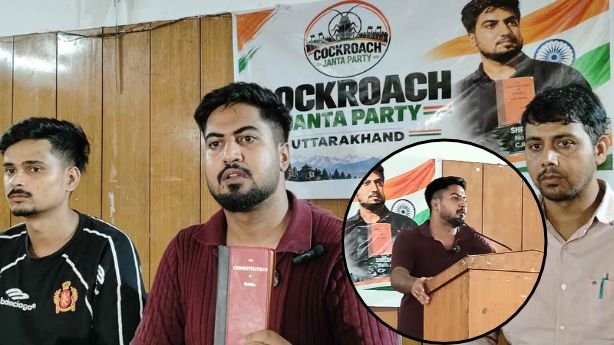
The Cockroach Janata Party (CJP) has entered Uttarakhand under its “Fix the Schools Campaign.” Following this, the CJP has launched a campaign against the Dhami government regarding the government education system in Uttarakhand. The CJP has demanded answers from the government regarding the closure of 826 government schools in the state. Regarding the shortage of teachers, dilapidated buildings, and lack of basic facilities in government schools, the CJP has issued a 10-day ultimatum to the government. It has also warned of a peaceful protest after October 2nd if clarification is not received. The protest will demand the resignation of Education Minister Dr. Dhan Singh Rawat. The party’s North Zone convenor, Shrestha Singh, and other officials have raised several serious questions against the Dhami government in Dehradun. In a press conference held in Dehradun on Sunday, Shrestha Singh Kheda, North Zone convenor of the Cockroach Janata Party, stated that the party’s Save the Schools campaign will be widely implemented in Uttarakhand as well. Following the protest at Jantar Mantar in Delhi, the CJP is now preparing to corner the Uttarakhand government over issues related to the state of government schools and the education system. Kheda questioned why 826 primary schools were closed in Uttarakhand, the reasons behind these closures, and what arrangements have been made for the education of the children studying there. The CJP North Zone convener claimed that many government schools in the state lack teachers for crucial subjects like mathematics and physics. He also claimed that 270 schools lack drinking water. He stated that 826 primary schools have been closed in Uttarakhand in the last five years, while teacher vacancies remain unfilled. He said that instead of simply presenting statistics, the government should publicly release a clear report detailing the state of the closed schools, their causes, and the impact on children. Shrestha Singh announced that if the government does not provide an explanation for the closed schools, Education Minister Dhan Singh Rawat’s resignation may be demanded within 10 days. He said a complete report should be released on the 826 closed government schools. He demanded that school-wise enrollment, teacher numbers, facilities, reasons for closure, population surrounding the school, and distance to the nearest alternative school be made public. Furthermore, the CJP demanded the release of the Uttarakhand Education Road Map within 10 days, detailing district-wise deadlines for providing teachers, drinking water, toilets, safe buildings, electricity, and other basic amenities. The CJP also demanded that students in government schools be provided with basic transportation facilities, especially in hilly and inaccessible areas, such as safe school buses, minibuses, or other regular transportation arrangements. The Cockroach Janata Party has made it clear that if a response is not received within 10 days, they will resort to peaceful protests.
PM Modi Inaugurates International Conference Organized by NGT, Highlights India’s Leadership in Environmental Protection…
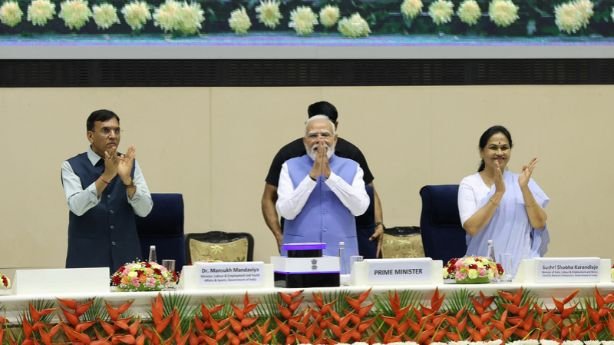
Prime Minister Narendra Modi inaugurated a two-day international conference on “The Future of Environment and Climate Dynamics,” organized by the National Green Tribunal (NGT) at Vigyan Bhawan in New Delhi on September 19, 2026. Chief Justice of India (CJI) Justice Surya Kant, Union Environment Minister Bhupendra Yadav, Attorney General R. Venkataramani, and NGT Chairperson Justice Prakash Srivastava also attended the inaugural session.Eminent judges and judicial representatives from 17 countries are participating in this conference. Its main objective is to discuss global environmental and climate challenges, identify shortcomings in policy formulation and implementation, and strengthen environmental governance.The two-day event (September 19 and 20) is also preparing a strategic roadmap on four specific themes:The main focus is on… Addressing the event, PM Modi said that for centuries, India has guided the world on matters related to nature and the environment. Drawing on this ideological commitment and cultural experiences, India is now offering solutions to modern climate challenges and calling for collective global action. I am pleased that this NGT conference is furthering that mission. The Prime Minister said that we have presented our traditions and their true strengths to the world. With this vision, we launched the book “Convenient Action: Continuity for Change” during the COP21 Summit in Paris. We are bringing the world together and setting new standards for environmental protection. Whether it’s the concept of “One Sun, One World, One Grid” or the International Solar Alliance, CDRI, Initiatives like the Global Biofuel Alliance, the International Big Cat Alliance, and Mission LiFE (Lifestyle for the Environment) all demonstrate India’s dedicated commitment to climate and the environment. PM Modi said that in the last 12 years, India has made extraordinary progress in every area related to the environment. We have placed great emphasis on renewable energy, which has played a vital role in environmental protection. India is the only G20 country to have fulfilled all the commitments made at the COP21 Summit in Paris ahead of schedule. This reflects India’s strength.
EC Freezes TMC’s ‘Flowers & Grass’ Symbol Amid Split; Mamata Faction Gets ‘Football Player’…
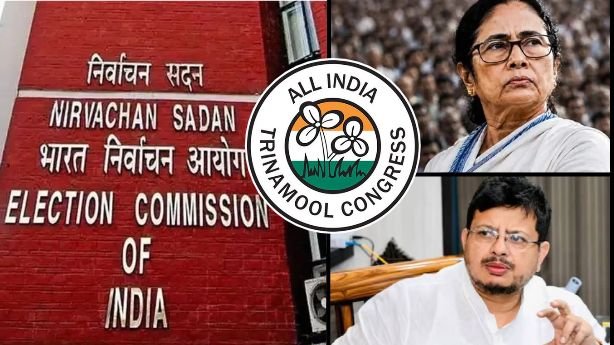
There is currently a major uproar in West Bengal regarding Mamata Banerjee’s party. Following a major decision by the Election Commission on September 18, 2026, the political landscape within Mamata Banerjee’s party has become increasingly heated. The Election Commission of India (ECI) issued a major decision on Friday, September 18, 2026, following an internal dispute and split within Mamata Banerjee’s party, the All India Trinamool Congress (TMC). The Election Commission has completely frozen the party’s original name and traditional ‘Flowers & Grass’ election symbol. By-elections are scheduled for two seats (Nandigram and Rajnagar) in West Bengal on October 6th. Just before the upcoming by-elections, the Election Commission has temporarily frozen the party’s original name and traditional “Flowers and Grass” election symbol, citing the ongoing dispute between the two factions of the All India Trinamool Congress (TMC). In its place, the Election Commission has allocated new names and symbols to both the Mamata Banerjee faction and the rebel faction. Following this, the Mamata Banerjee faction has been given the new name “Mamata All India Trinamool Congress” and the election symbol “Football Player.” This symbol is considered very special for Mamata, who has raised the slogan “Khela Hobe” in Bengal. The rebel faction (Ritabrata Banerjee/Arup Roy faction) has been allocated the name “Democratic Trinamool Congress” and the election symbol “Envelope.” Mamata Expresses Displeasure over ECI decision Mamata Banerjee has expressed strong displeasure over the Election Commission’s decision to freeze her 28-year-old traditional symbol and name. She has challenged this decision in the Supreme Court and filed two petitions in the court. The petitions argue that the Election Commission completely ignored the party’s grassroots and organizational structure and relied on the statements of rebel MLAs who themselves are facing disqualification proceedings under the anti-defection law. Mamata Banerjee, reacting to this entire incident, has stated that she will not bow down to anyone and will vigorously fight this political and legal battle.
Nationwide ‘Aashirwad Ka Diya’ Illuminates India on PM Modi’s 76th Birthday; 2,100 Lamps Light Yamuna Banks…
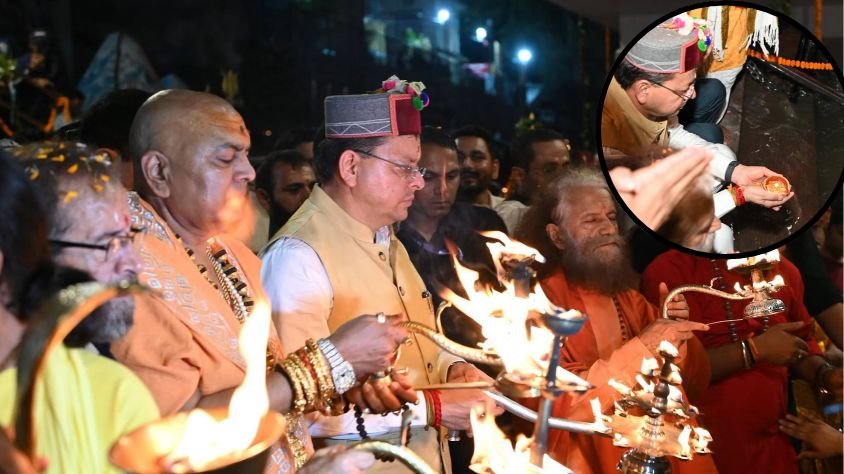
On the occasion of Prime Minister Narendra Modi‘s 76th birthday (September 17, 2026), a grand festival of lights was organized on the banks of the Yamuna in Haripur Kalsi, Vikasnagar (Dehradun), Uttarakhand, as part of the nationwide “Aashirwad Ka Diya” campaign. On this auspicious occasion, a total of 2,100 earthen lamps were lit on the banks of the Yamuna River, illuminating the entire river. During this festival of lights, the crowds prayed for Prime Minister Narendra Modi’s good health, long life, and the nation’s prosperity. Uttarakhand Chief Minister Pushkar Singh Dhami also visited Haripur Kalsi and presented significant gifts of spiritual and cultural development to the region. On this occasion, CM Dhami organized the “Aashirwad Ka Diya” program along with the Yamuna Aarti on the sacred banks of the Yamuna River. He also performed a grand aarti of the Yamuna River along with saints and a large number of devotees present there. He also inaugurated the newly constructed Harighat and unveiled a magnificent statue of Yamuna. Chief Minister Pushkar Singh Dhami said that Kalsi is a land of history, faith, and rich cultural traditions. Events like the unveiling of the statue of Mother Yamuna, the inauguration of Harighat, and the Yamuna Aarti will further strengthen the region’s spiritual identity. The laying of the foundation stone of the Mother Yamuna Krishna Temple is also an important step towards Kalsi’s religious and cultural development. In addition to the Yamuna banks, several other historical and religious sites across the country were illuminated under the “Aashirwad Ka Diya” program to mark Prime Minister Narendra Modi’s 76th birthday. A historic 2.5 million earthen lamps were lit from the famous Ramghat of the Shipra River to Mahakal Lok in Ujjain, Madhya Pradesh, illuminating the entire city. A total of 8.8 million diyas were lit in the Prime Minister’s home state of Gujarat, including over 1 million in Surat alone. In addition, 76 large diyas were lit at the iconic Red Fort in Delhi, the national capital, and a special prayer and festival of lights was organized at the Hazrat Nizamuddin Auliya Dargah. Nearly 1.1 million diyas were lit in Bihar, with over 1.5 million in Patna alone. The “Seva Sankalp Abhiyan 2026” was organized across the country to commemorate Prime Minister Narendra Modi’s 76th birthday and his 25 years in public life. This campaign is considered a special one because Narendra Modi was first sworn in as Chief Minister of Gujarat on October 7, 2001. Since then, he has been completing 25 consecutive years of service to the nation in the highest public office (as Chief Minister and Prime Minister). This campaign is being run through public service in various parts of the country for a full month, from September 17 to October 17.
PM Modi’s 76th birthday today, BJP to launch ‘Sankalp Seva Abhiyan’; grand Deepotsav to be held in Ujjain…
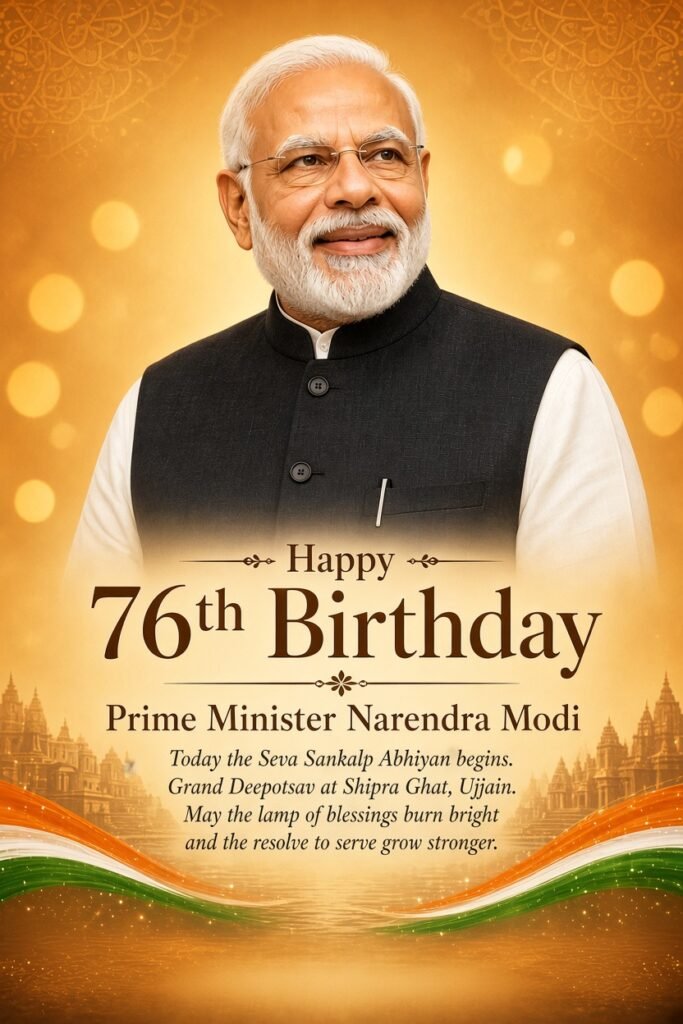
Prime Minister Narendra Modi is celebrating his 76th birthday today, September 17, 2026. To mark this occasion, the Bharatiya Janata Party is organizing numerous public service and social programs across the country. The BJP has launched a month-long “Seva Sankalp Abhiyan” from September 17 to October 17 to mark the PM’s birthday and his 25 years in public life. This campaign includes blood donation camps, health checkups, cleanliness drives, tree plantation, and other public welfare activities. A special festival of lights is being organized in Ujjain, Madhya Pradesh, to mark the PM’s birthday. More than 2.5 million earthen lamps will be lit on the banks of the Shipra River and in the Mahakal Lok Kshetra. The event has been named “Aashirwad Ka Diya.” The entire region has been divided into sectors and sub-sectors, and thousands of volunteers have been assigned responsibilities. According to the administration, preparations have been made to keep the event “zero-waste” and to focus on cleanliness and waste management. Various events are also being held in other parts of the country to mark the PM’s birthday. In Gujarat, under the “Aashirwad No Divdo” program, plans are underway to light over 8.8 million diyas at over 18,500 locations. Additionally, events such as tree plantation, cow service, and bike rides are also being organized. A bike ride from Vadnagar to Varanasi is also being organized in Gujarat, marking the completion of 25 years of Modi’s public life. Leaders from various political parties, including President Draupadi Murmu, have extended their greetings to PM Modi on his birthday. According to the BJP, the “Seva Sankalp Abhiyan” focuses primarily on public participation and public service. Health camps, blood donation, cleanliness, tree planting, and awareness activities related to government schemes are also being organized in Delhi, Uttarakhand, Maharashtra, and several other states.
US House Set to Vote on Bill Authorizing 100% Tariffs on India, China & Others Buying Russian Oil…
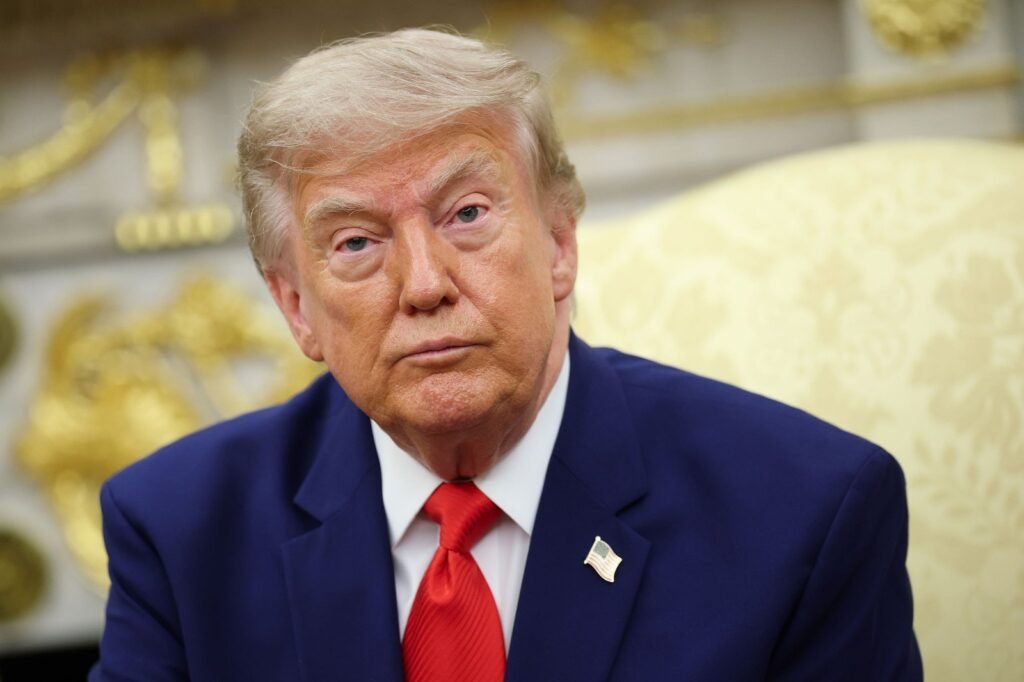
The United States is once again preparing to impose tariffs on several countries, including India and China. The US House of Representatives is set to vote on the Russia Sanctions Bill. This bill authorizes President Donald Trump to impose tariffs of up to 100% on countries that purchase oil from Russia. Tomorrow, Thursday, September 17, 2026, a bill is scheduled to be introduced in the US House of Representatives, which includes provisions for imposing 100% tariffs on several countries, including India and China, for purchasing oil from Russia. This bipartisan bill, called the ‘Lindsey O. Graham Sanctioning Russia and Iran Act of 2026’, gives US President Donald Trump broad authority to impose heavy tariffs on major countries that purchase large quantities of oil and gas from Russia. This bill primarily includes India and China. The US Senate passed it on August 7 by a vote of 86-11. It now awaits passage by the House of Representatives. Only after this can it be sent to the President for signature. The amended bill proposes to include China, India, Turkey, Azerbaijan, Hungary, the Slovak Republic, the UAE, Singapore, Kazakhstan, and the Kyrgyz Republic as countries subject to 100% tariffs. The bill cleared a key procedural hurdle in the US House of Representatives on Tuesday evening. The proposal advanced by a narrow margin of 214-211 after two Democratic lawmakers switched sides and voted with the Republicans. A final vote is expected in the House today (Thursday, September 17, 2026). It will then be sent for the President’s signature.
Adobe’s Next Chapter: Anil Chakravarthy to Take Over as CEO From Shantanu Narayen…
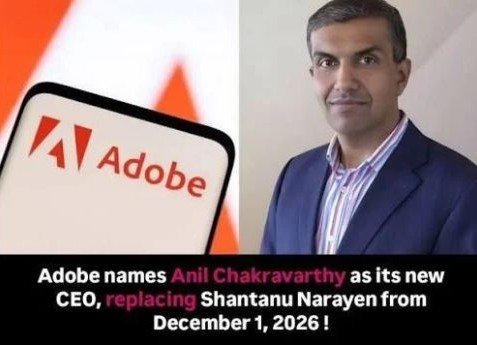
Adobe is set for a major leadership transition as Anil Chakravarthy prepares to take over as President and CEO on December 1, 2026. Chakravarthy, who has been with Adobe since 2020, will also join the company’s Board of Directors. Shantanu Narayen, who has led Adobe for more than 18 years, will step into the role of Executive Chair and continue to work with Chakravarthy during the transition. Adobe said its board unanimously selected Chakravarthy following a formal succession process led by Lead Independent Director Frank Calderoni. Chakravarthy has held several senior roles at Adobe and most recently served as President of the company’s Customer Experience Orchestration business and worldwide field operations. During his tenure, he has been closely involved in Adobe’s enterprise and AI strategy, including products such as Adobe CX Enterprise, GenStudio and Brand Visibility. He also helped expand Adobe Experience Platform and was involved in the integration of acquisitions including Workfront and Semrush. His experience puts him at the centre of Adobe’s push into generative and agentic AI across creativity, productivity and customer experience. Before joining Adobe, Chakravarthy was CEO of Informatica and previously held leadership positions at Symantec and VeriSign, along with a stint at McKinsey & Company. He holds a Bachelor of Technology in Computer Science and Engineering from the Institute of Technology, Varanasi, as well as a master’s degree and PhD from MIT. His combination of enterprise technology experience and knowledge of Adobe’s business is expected to play an important role as he takes charge of the company. The leadership change comes at a crucial time for Adobe as artificial intelligence reshapes the software industry and intensifies competition. Narayen’s move to Executive Chair is expected to provide continuity, while Chakravarthy will face the challenge of turning Adobe’s AI investments into sustained growth. His appointment signals that Adobe is choosing an experienced insider to lead the company through its next phase of transformation.
PM Modi Completes 25 Years of Continuous Governance; Nationwide ‘Seva Sankalp Abhiyan’ to Be Launched from Sept 17–Oct 17…
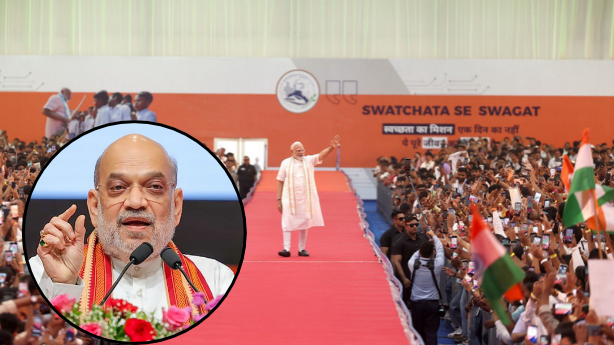
Prime Minister Narendra Modi is completing 25 years of governance and public service. Consequently, the ‘Seva Sankalp Abhiyan’ will be launched across the country from September 17 to October 17, 2026. Union Home Minister Amit Shah made this announcement during a press conference in Mumbai on Sunday, September 13, to mark the completion of 25 years of Prime Minister Narendra Modi’s public life (as Chief Minister of Gujarat and Prime Minister of the country). Amit Shah Says PM Modi Transformed India’s Governance From Paralysis to Action Amit Shah said that upon assuming the reins of the country in 2014, Prime Minister Narendra Modi declared himself the ‘Pradhan Sevak’ from the Red Fort. He never considered himself a ruler, but always worked as a servant of the people. Addressing a press conference, Union Home Minister Amit Shah stated that Prime Minister Narendra Modi has transformed India from a state of “policy paralysis” and weak decision-making to a culture of decisive governance and action. He emphasized that before 2014, the country’s governance system was plagued by coalition constraints and indecisive mistakes, which PM Modi’s strong leadership has completely transformed. During the conference, Amit Shah announced that with the support of the Bharatiya Janata Party, its allies, the entire NDA family, various organizations, and the people of the country, a nationwide “Seva Sankalp Abhiyan” will be launched from September 17 to October 17, 2026. This campaign is being organized to mark Prime Minister Narendra Modi’s 25 years in public life. Amit Shah noted that September 17 is Prime Minister Narendra Modi’s birthday. The BJP has been celebrating his birthday as “Seva Saptah” (Service Week), first in Gujarat and later across the country, from September 17 to October 2. However, this year’s campaign holds special significance, as Narendra Modi will complete 25 consecutive years as Chief Minister and Prime Minister on October 7, 2026. He said that there are very few leaders in the country who have achieved such a long record of continuous public service both as Chief Minister of a state and Prime Minister of the country. The Home Minister stated that the Seva Sankalp Abhiyan will be launched in every state and union territory of the country. Under this campaign, the public will be reached at every district, Lok Sabha constituency, Assembly constituency, and booth level. He said that Prime Minister Modi has always presented himself to the nation as the “Pradhan Sevak” (Chief Servant) and his entire political career has been dedicated to public service. Amit Shah said that the Modi government has used constitutional powers to ensure the welfare of the poor, build a strong economy, strengthen national security, and address long-standing problems. He said that the country is moving forward with the goal of a developed India by 2047, and Prime Minister Modi has strengthened this resolve among the people. He said that between 2014 and 2026, the country’s politics has seen a major change. Evils like corruption, casteism, and nepotism have now been replaced by performance-based politics. Shah claimed that for the first time in the last 12 years, the country has experienced a strong and clear foreign policy, in which India’s interests have been given top priority. Amit Shah said that before 2014, India was counted among the “Fragile Five” economies, but today the country is among the top five economies in the world. He said that according to the recently released first quarter data, India is at the forefront among major economies with a GDP growth rate of 7.8 percent.