
Japanese Prime Minister Fumio Kishida to Visit India from July 1–3 for 16th India-Japan Annual Summit
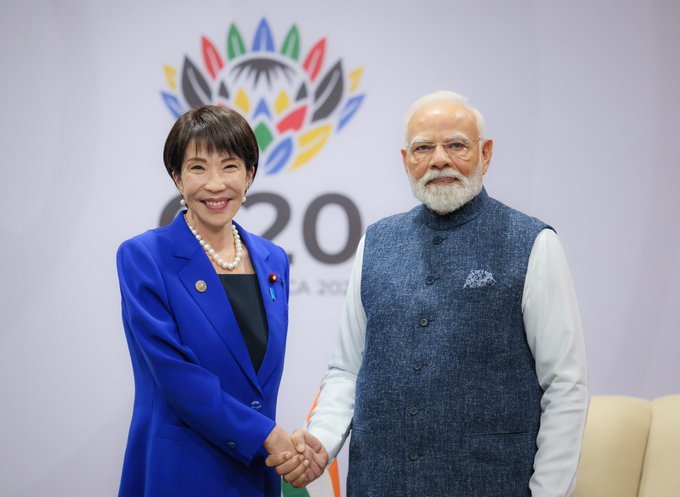
Japanese Prime Minister Fumio Kishida will visit India next month for a three-day trip. At the invitation of Indian Prime Minister Narendra Modi, he will arrive in New Delhi for his first official visit to India, scheduled from July 1 to July 3. During this visit, he will participate in the 16th India-Japan Annual Summit alongside Prime Minister Modi. According to the Indian Ministry of External Affairs, both sides will use this occasion to strengthen bilateral ties and discuss areas of mutual interest as well as global issues. Prime Minister Narendra Modi had visited Tokyo last year to attend the summit, during which he invited the Japanese Prime Minister to India for the summit. Following that invitation, the Japanese Prime Minister is now set to visit New Delhi for his first official trip to the country this coming July. The primary objective of this summit is to strengthen relations between the two nations, particularly in the areas of trade, investment, and defense partnerships. The 16th India-Japan Annual Summit will focus on the Special Strategic and Global Partnership, trade, defense cooperation, the Indo-Pacific region, and various global issues. During the visit, the entire spectrum of bilateral cooperation will be reviewed, and the two Prime Ministers will hold discussions on matters of mutual interest.
Ayodhya Ram Mandir Donation Row: Champat Rai, Trustee Anil Mishra Resign as SIT Probe Intensifies
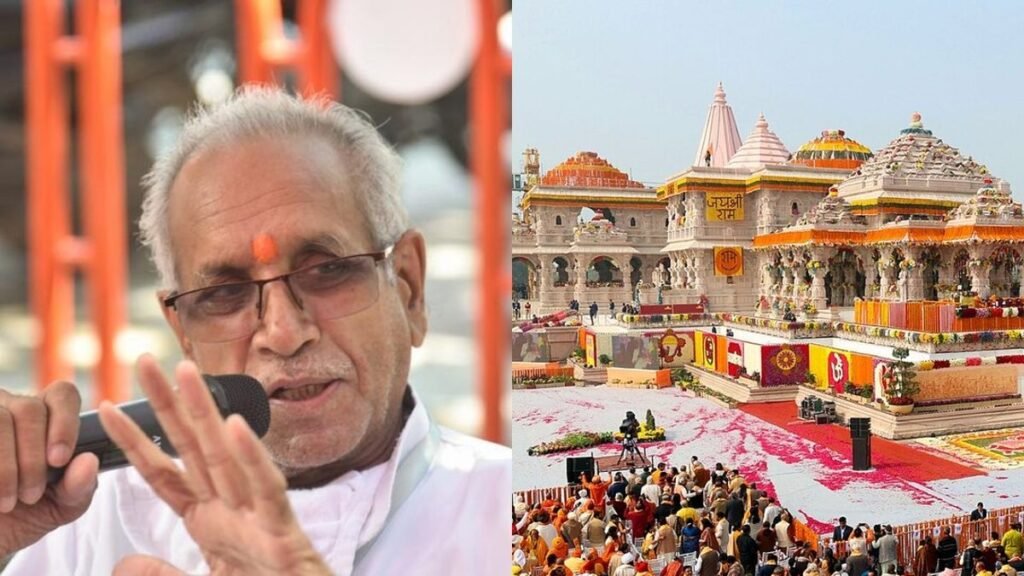
A case involving the alleged misappropriation of donations made by devotees at the Ram Mandir in Ayodhya has captured the nation’s attention. Questions regarding the management of donation funds at this temple—central to the faith of millions—have sparked a fresh debate on transparency and accountability. Amidst the intensifying investigation, Champat Rai, General Secretary of the Shri Ram Janmabhoomi Teerth Kshetra Trust, and Trustee Anil Mishra resigned from their respective posts on Friday. According to media reports, Champat Rai decided to step down on moral grounds. Prior to these resignations, a Special Investigation Team (SIT) constituted by the Uttar Pradesh government had submitted its preliminary investigation report. The report reportedly highlights several serious irregularities and administrative lapses concerning the collection, counting, record-keeping, and monitoring systems for donations and valuable offerings received at the temple. However, the investigation is ongoing, and final conclusions are yet to be reached. Based on the SIT’s preliminary report, the first FIR was registered at the Ram Janmabhoomi police station. The complaint was filed by Trust member Krishna Mohan, who had joined the Trust following the demise of former trustee Kameshwar Chaupal. The FIR alleges serious financial irregularities in the management of donations and offerings made by devotees. Within hours of the FIR being registered, the Uttar Pradesh Police arrested all eight individuals named in the case. The arrested accused include Avinash Shukla, Anukalp Mishra, Lavkush Mishra, Manish Kumar Yadav, Karunesh Pandey, Ramashankar Mishra, Subhash Srivastava, and Ramshankar Yadav (alias Tinnu). The police are interrogating the accused and examining documents and other evidence related to the case. The FIR includes charges of theft, criminal breach of trust, concealment of stolen property, criminal conspiracy, and various provisions of the Bharatiya Nyaya Sanhita (BNS), as well as the Prevention of Corruption Act. Investigative agencies are attempting to determine the extent of individual involvement in the alleged irregularities and identify the procedural lapses or malpractices that occurred in the management of donation funds. This matter is considered highly sensitive because the Ram Mandir in Ayodhya is a focal point of faith for millions of devotees. Every day, a large number of worshippers offer cash donations, gold, silver, and other valuables at the temple. Consequently, allegations regarding the misuse of donations have sparked public concern, intensifying demands for greater transparency and accountability in the temple trust’s financial operations. The investigation is currently underway, with agencies striving to uncover the full facts of the case. Only after the legal process concludes will it become clear how substantiated the allegations are, where the responsibility lies, and what further action will be taken.
Massive devastation in Venezuela, more than 10,000 people died, PM Modi expressed grief….
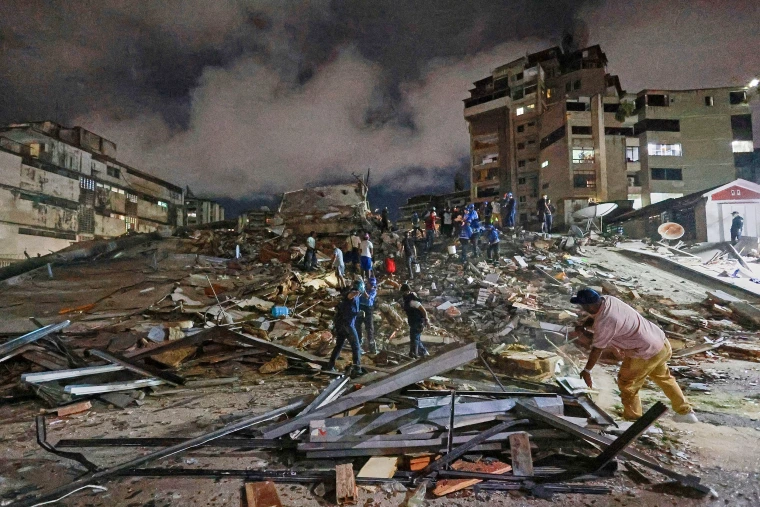
A 7.1 magnitude earthquake struck Venezuela on Wednesday, June 24, causing devastation across the region. The earthquake also destroyed several buildings in the capital, Caracas. Taking cognizance of the situation, President Rodriguez declared a state of emergency, closing the airport and activating relief and rescue operations. News agencies estimate the death toll is between 10,000 and 100,000. The tremor’s depth is estimated to be approximately 10 kilometers. At the time of the incident, dozens of people in the Venezuelan capital were seen escaping buildings and waiting on the street before returning to their offices and homes. Prime Minister Narendra Modi expressed deep sorrow over the earthquake and the devastation in Venezuela. He shared his condolences, writing on the social media platform, “I am deeply saddened by the devastation caused by the earthquake in Venezuela. On behalf of the Indian people, I extend my deepest condolences to the Government and people of Venezuela, and especially to the families who lost loved ones.” India is ready to provide all possible assistance. Meanwhile, news of a strong 6.9 magnitude earthquake struck Japan on Thursday, June 25th. However, it is a matter of relief that no tsunami warning has been issued. According to the Japan Meteorological Agency, strong tremors were felt near the populated region of northern Japan on Thursday, where the epicenter was reported to be at a depth of about 50 kilometers. The impact of the earthquake in Japan was felt most strongly in Hashkami. Locals reported that the tremor was strong but there was no significant damage. Tribes urged people to remain in open areas for the time being, as there is still a possibility of aftershocks. Just minutes after the first tremor, a second, more powerful 7.5 magnitude earthquake struck, with a depth of 10 kilometers.
Narmada Court Sentences AAP MLA Chaitar Vasava, Wife and 7 Others to 7 Years in Assault-Extortion Case
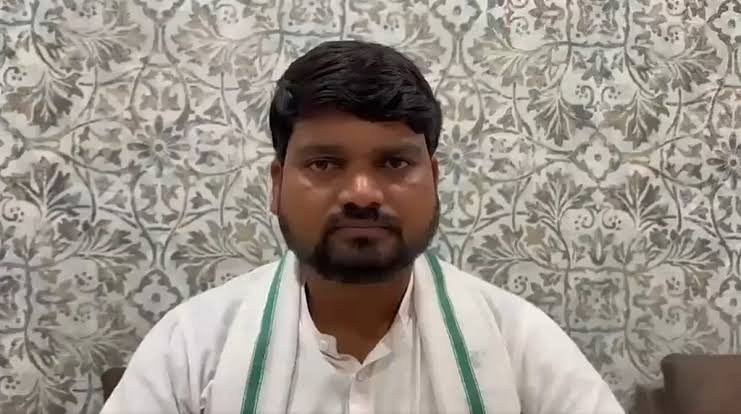
A Sessions Court in Narmada district has convicted AAP MLA Chaitar Vasava, his wife, and seven others in a case involving the alleged assault of Forest Department officials and extortion in 2023. The court sentenced all the accused to seven years in prison and imposed a fine of ₹25,000 on each. The verdict was delivered by Additional Sessions Judge A.V. Hirpara. The Aam Aadmi Party (AAP) has opposed the verdict. Gopal Rai, the party’s Gujarat in-charge, stated that AAP would organize support marches across the state starting June 26 to protest the decision. He said that party workers would stage demonstrations in every district to raise their voices in support of Chaitar Vasava. Gopal Rai alleged that the BJP is unsettled by Vasava’s growing popularity and that he has been targeted for political reasons. He claimed that the case is part of a conspiracy and that such politics cannot be accepted in a democracy. Rai added that, ultimately, the public would decide the truth. AAP has also made it clear that it will pursue all available legal avenues in this matter. Earlier, party national convener Arvind Kejriwal had also expressed support for Vasava, stating that the charges against him were false and that he had been politically framed due to his rising influence within the tribal community.
Kunal Shah Steps Up to Lead WhatsApp Globally…..
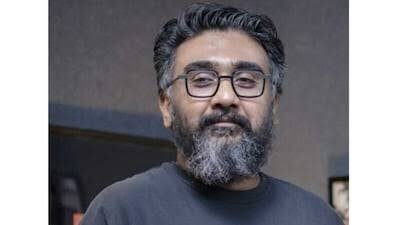
Meta has announced an investment of $900 million (approximately ₹8,550 crore) in Indian fintech startup CRED. This is one of Meta’s largest investments in India’s startup ecosystem. As part of this deal, CRED founder Kunal Shah will become WhatsApp’s global CEO. He will lead the messaging platform as Meta focuses more on innovation and growth in one of its largest markets. CRED founder Kunal Shah has officially been appointed WhatsApp’s new global head; he replaces Will Cathcart. This leadership change is part of a larger strategic plan, which also includes Meta’s $900 million investment in the Indian fintech company. Here are the key details and changes related to this major investment and leadership change: Leadership Transition: Kunal Shah will step down from his day-to-day role at CRED but will remain a shareholder. Miten Sampat has taken over as interim CEO. Investment: Meta Platforms is acquiring a minority stake in CRED (valuing the company at approximately $4.5 billion). This is expected to support the company’s growth as it prepares for a future IPO. WhatsApp’s Future: Meta CEO Mark Zuckerberg highlighted Kunal’s “builder mindset” and expressed hope that he will drive WhatsApp’s global growth and monetization potential.
End of an Era: Keir Starmer Quits as PM, Vows Smooth Transfer of Power Before Successor Takes Charge
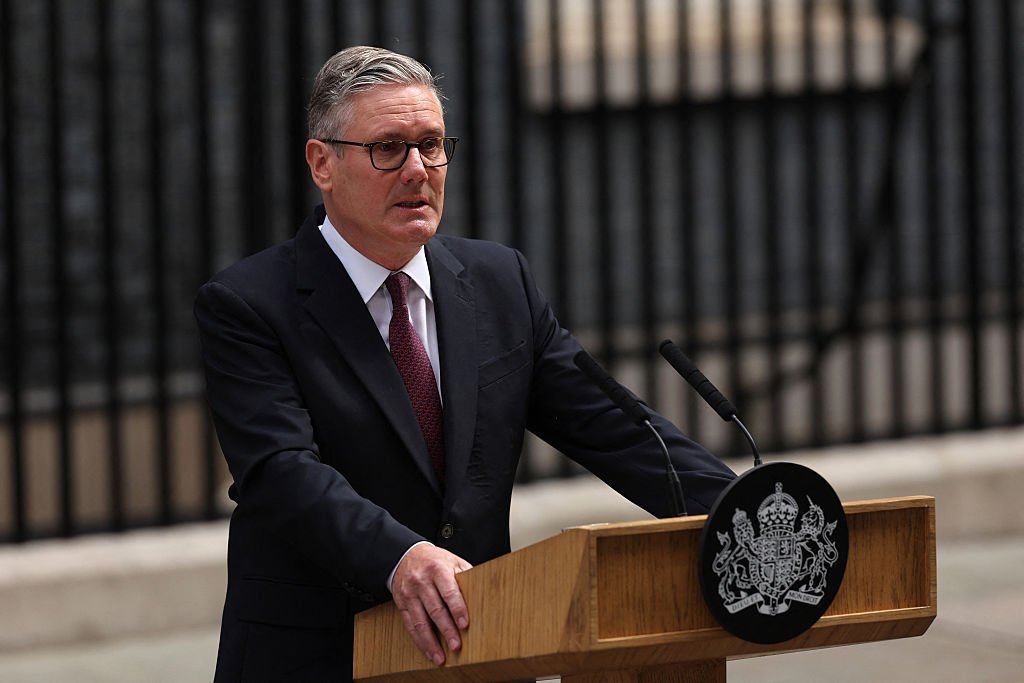
British Prime Minister Keir Starmer has announced his resignation as Prime Minister and leader of the Labour Party. He stated that he no longer commands sufficient support to lead the party into the next general election. Speaking to the media outside 10 Downing Street, Starmer revealed that he had informed King Charles III of his decision. He said he would remain in office until a new leader is chosen and oversee a smooth transition of power. The process to elect a new Labour Party leader will begin on July 9 and conclude before the parliamentary session starts in September. Thanking his colleagues, officials, and supporters, Starmer said that throughout his tenure, he had always prioritized Britain’s interests above all else.
“Italy Never Begs”: Meloni Releases Video Response After Trump’s Controversial Interview Remark
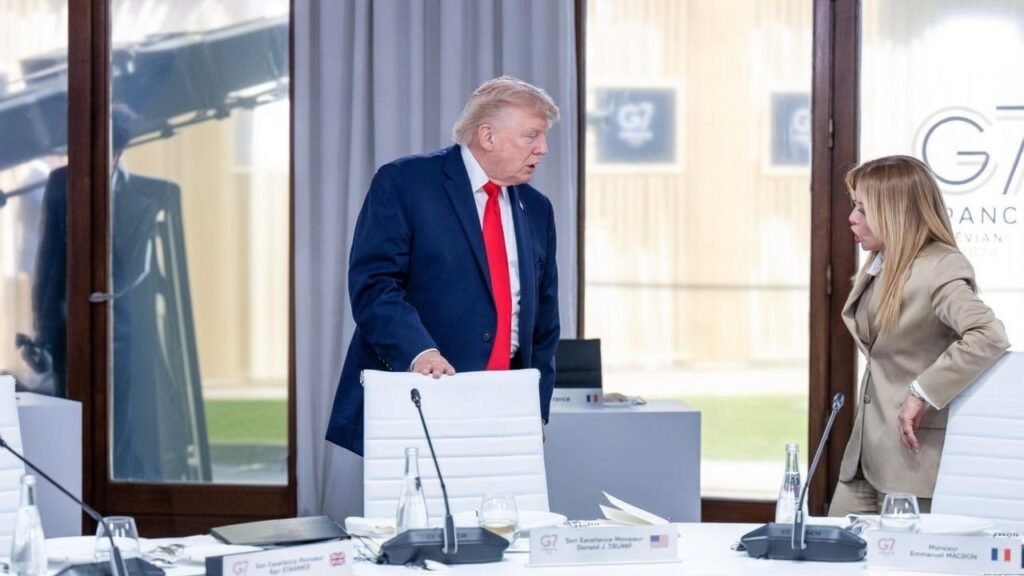
US President Donald Trump and Italian Prime Minister Giorgia Meloni are making headlines. A heated exchange has erupted between the two, leading the Italian Foreign Minister to cancel his visit to the US. This all began when US President Donald Trump made a controversial remark during an interview on Friday, claiming that Meloni had begged him for a photo during the G7 summit. Italian Prime Minister Giorgia Meloni also issued a strong statement regarding Trump’s claim. She released a video, saying, “I and my country, Italy, never beg.” The interview aired on the LA7 network. During the interview, the journalist questioned her about Ukraine. However, Trump brought up Meloni, and the conversation subsequently shifted to their meeting at the G7 summit. A video of the meeting also surfaced, showing Trump and Meloni having a serious discussion about the issue. According to LA7, Trump said that Meloni had begged him for a photo. Trump said he initially didn’t want to do it, but later felt sorry for Meloni and agreed to the photo. LA7 has posted a dubbed version of the interview online. In response, Meloni said in her video that she was responding to Trump’s claim because some things needed to be addressed immediately. She said Trump’s statement was completely fabricated. “I’m very surprised by this,” she said. “I don’t know why President Trump is behaving this way toward his ally,” she said, adding that this isn’t the first time something like this has happened. This was apparently a reference to an interview Trump gave to the Italian daily Corriere della Sera in April, in which he criticized Meloni for not supporting the US-Israel Iran war. Meloni did not publicly respond at the time. It’s worth noting that Italy and the US are considered to have good relations, but the situation appears to be deteriorating after this incident.
President Droupadi Murmu Turns 68: From Odisha’s Tribal Heartland to Rashtrapati Bhavan
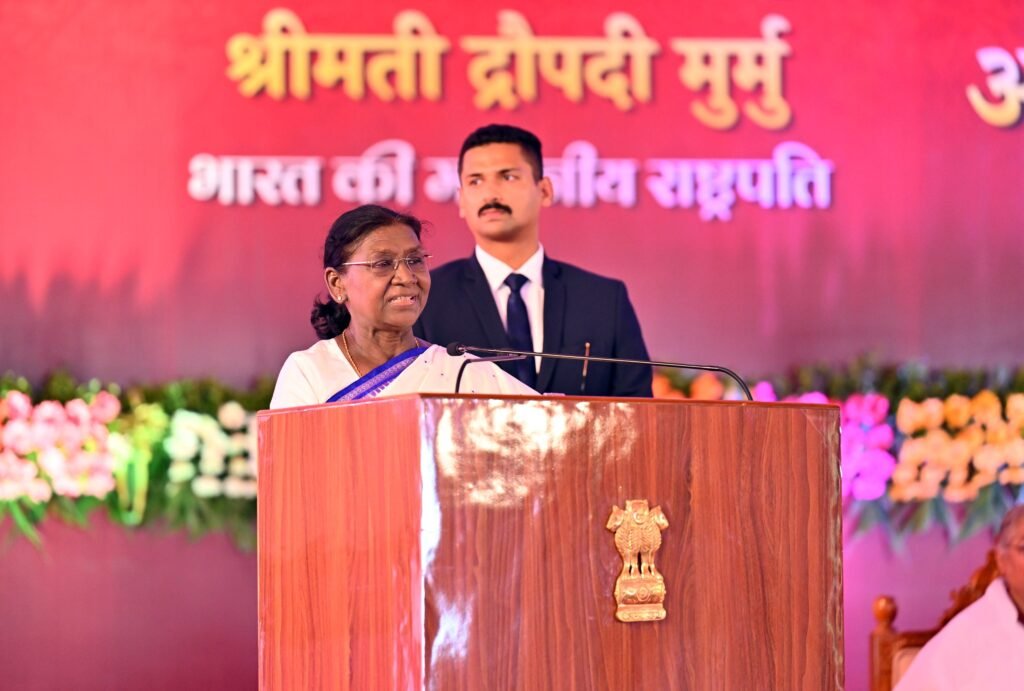
Today marks the birthday of India’s incumbent and 15th President, Droupadi Murmu. She was born on June 20, 1958, in Baidaposi village, located in the Mayurbhanj district of Odisha. Her father’s name was Biranchi Narayan Tudu. President Droupadi Murmu has also been a member of the Bharatiya Janata Party (BJP). She is the second woman to serve as the President of India, following former President Pratibha Patil. Additionally, she has been honored with the title of ‘Prabuddha Mahila Samrat’ (Enlightened Woman Empress) by the Prabuddha Samiti. President Droupadi Murmu is the second person from Odisha to hold the office of President and is the youngest President in the country’s history. Notably, she is the first President of India to have been born after the country gained independence. Prior to assuming the presidency, she served in various portfolios within the Odisha state government’s cabinet between 2000 and 2004 and also served as the 9th Governor of Jharkhand from 2015 to 2021. Both President Droupadi Murmu’s grandfather and father served as the village head (Pradhan). She was married to Shyam Charan Murmu, and they had two sons and a daughter. Tragically, her husband and both sons met with untimely deaths at different times; her daughter is married and resides in Bhubaneswar. Droupadi Murmu began her career as a teacher before gradually entering the field of politics. She embarked on her political journey in 1997 by winning the election for Councilor of the Rairangpur Nagar Panchayat. She served as the Vice President of the BJP’s Scheduled Tribes Morcha and was also a member of the National Executive of the BJP’s Tribal Morcha. She won the election twice—in 2000 and 2009—from the Rairangpur constituency in Odisha’s Mayurbhanj district on a BJP ticket, serving as a Member of the Legislative Assembly (MLA). In the coalition government formed by Naveen Patnaik’s Biju Janata Dal and the BJP in Odisha, Draupadi Murmu served as a minister—first for Commerce and Transport, and later for Fisheries and Animal Resources Development. In 2015, she became the ninth Governor of Jharkhand, succeeding Syed Ahmed; Virender Singh, the then Chief Justice of the Jharkhand High Court, administered the oath of office to her.
Major Setback for Uddhav Thackeray: 6 of 9 Shiv Sena UBT MPs Rebel
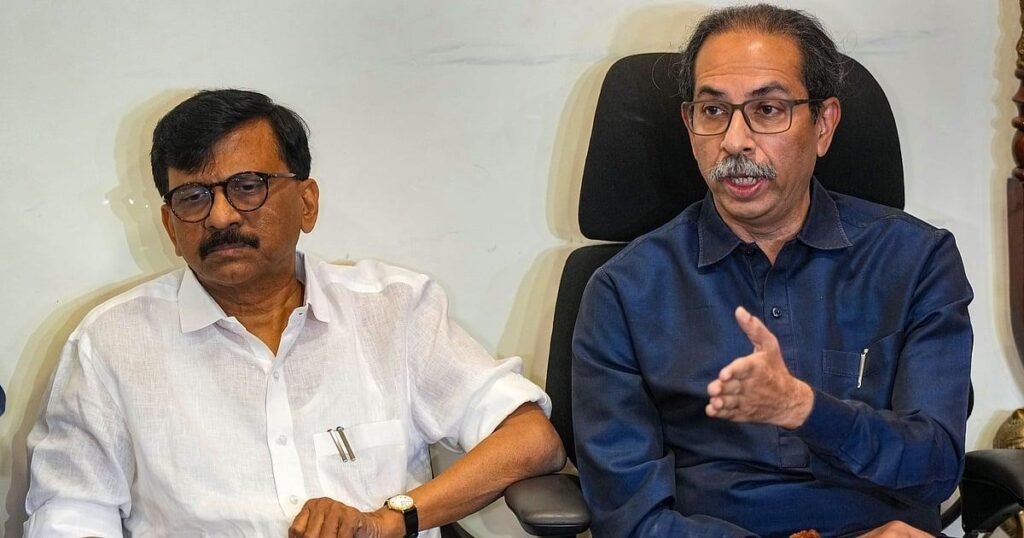
Shiv Sena (UBT) has suffered a major setback in Maharashtra politics. For the second time in four years, the Shiv Sena is facing rebellion. Six of the party’s out of nine Lok Sabha MPs (Sanjay Jadhav, Sanjay Deshmukh, Nagesh Patil, Bhausaheb Wakchaure, Sanjay Dina Patil, and Omraje Nimbalkar) have rebelled. Eknath Shinde had left the party in 2022, and now six Lok Sabha MPs have rebelled. Uddhav Thackeray called a parliamentary party meeting in Delhi on Thursday, June 18th. Only three of the nine MPs—Anil Desai, Arvind Sawant, and Rajbhau Vaze—attended the meeting. These rebel MPs are preparing to join the Eknath Shinde faction by submitting a letter to the Lok Sabha Speaker. Six MPs submitted a letter to Lok Sabha Speaker Om Birla Speaking to reporters after the meeting, MP Sanjay Raut stated that the six MPs’ absence from the meeting violated party directives and would be sought from them. A show-cause notice was also issued by the Shiv Sena (UBT) to the six MPs who were absent from the party meeting. According to reports, these six MPs submitted a letter to Lok Sabha Speaker Om Birla requesting recognition as a separate faction and hinting at joining the Shinde faction. The Shiv Sena was formed in 1966 by Balasaheb Thackeray. The Shiv Sena has split six times in its political history, and once again, six of Uddhav Thackeray’s nine Lok Sabha MPs are preparing to break away and join forces with Eknath Shinde. This is the second major rebellion in four years, following Eknath Shinde’s rebellion. After Eknath Shinde’s rebellion, Uddhav Thackeray somehow formed Shiv Sena UBT, but after 4 years, now 6 of his Lok Sabha MPs have rebelled, this is being considered a big blow to Uddhav Thackeray’s politics.
China Breaks Ground on Record,Breaking Hydropower Base in Tibet…
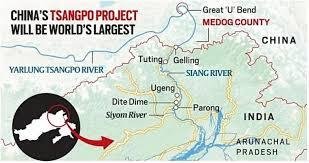
China’s decision to build the massive hydropower project on the Yarlung Tsangpo is significant because this river does not stay in China. It enters India through Arunachal Pradesh as the Siang, becomes the Brahmaputra River in Assam, and eventually flows into Arunachal Pradesh. Construction of the project officially began in 2025 and is expected to become the world’s largest hydropower development, generating roughly three times the electricity of the Three Gorges Dam. Why India is worried China sits upstream, giving it physical control over infrastructure that can influence river flows. Even if Beijing does not intend to cut off water, the ability to regulate releases gives it a strategic advantage during crises or periods of tension. Indian analysts worry that water could become another factor in the broader India-China rivalry. A major concern is not only reduced water flow but also sudden releases of water. If large volumes are discharged during heavy rainfall or emergencies, downstream regions in Arunachal Pradesh and Assam could face heightened flood risks. The Brahmaputra basin is already among the most flood-prone regions in the world. Although China says the project is primarily hydropower-oriented rather than a diversion scheme, Indian policymakers worry that dam operations could alter seasonal flows. Reduced water during dry months could affect agriculture, fisheries, river ecosystems, and local communities dependent on the river. The dam is being built in a geologically active part of the eastern Himalayas, an area prone to earthquakes, landslides, and fragile ecosystems. Environmental groups have warned that a project of this scale could affect biodiversity and sediment transport throughout the river basin. Probably not in the simplistic sense often portrayed on social media. The Brahmaputra receives enormous amounts of water from rainfall and tributaries inside India, especially in Arunachal Pradesh, Assam, and Bhutan. By the time the river reaches Assam, much of its flow comes from sources beyond Tibet. This limits China’s ability to completely control the river. Some experts therefore argue that fears of China shutting off the Brahmaputra are exaggerated. However, even partial control over timing, storage, and release of water can have important consequences for flood management, drought conditions, and regional security. That is where India’s concern is concentrated. How this could change Brahmaputra geopoliticsWater security becomes a national-security issue Traditionally, border disputes and military deployments dominated India-China tensions. The dam adds a new dimension: control of critical natural resources. Water security may increasingly be discussed alongside territorial security. India is accelerating its own dam projects India has explored large storage and hydropower projects in Arunachal Pradesh, including the proposed Upper Siang project, partly to create a buffer against any upstream manipulation and improve flood control. Bangladesh becomes an important stakeholder Because the Brahmaputra ultimately flows into Bangladesh, Dhaka also has an interest in any changes to river management. This could lead to greater regional diplomacy involving China, India, and Bangladesh over shared water resources. More pressure for data sharing and agreements Unlike some international rivers, the Brahmaputra lacks a comprehensive basin-wide water-sharing treaty among all riparian states. The mega dam may increase demands for transparency, hydrological data sharing, and formal mechanisms to manage disputes. Bottom line India’s concern is less about China literally stopping the Brahmaputra and more about China’s ability to influence the river’s timing, storage, and flow from an upstream position. The project introduces environmental, flood-management, and strategic uncertainties into an already sensitive border region. Whether it becomes a source of cooperation or tension will depend largely on transparency, data sharing, and how the dam is ultimately operated once it comes online in the 2030s.