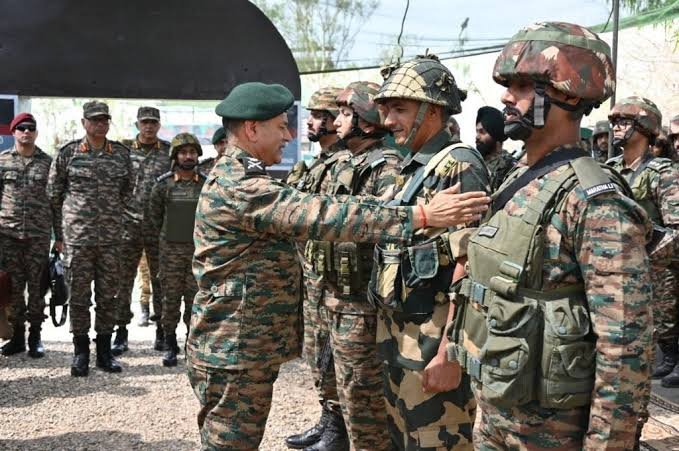
General Upendra Dwivedi, the 30th Chief of the Indian Army Staff, whose term ends today, June 30, 2026, has formally handed over the reins to General Dheeraj Seth. In an interview at the conclusion of his tenure, he spoke about the country’s security strategy, describing the Indian Army as fully capable of fighting multi-dimensional warfare on the front lines.
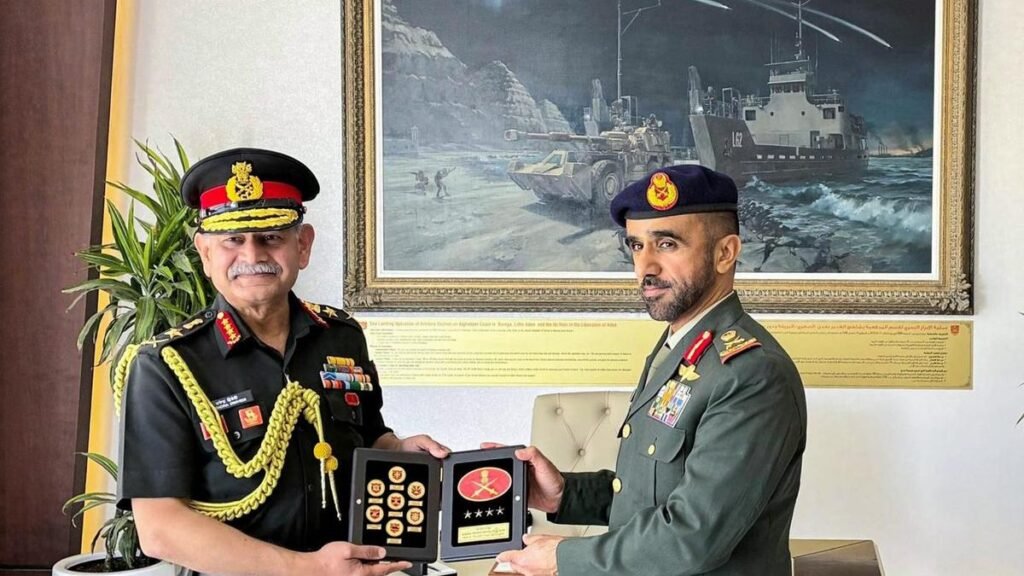
He described the success as collective, stating that the focus has been on promoting transformation, jointness, and self-reliance. The biggest achievement is “Operation Sindoor,” which validated the service’s jointness and its ability to fight future-ready wars. It demonstrated the true strength of the national security architecture. The operation successfully demonstrated the practices we had been practicing in secure communications, cyber networks, and precision routing capabilities on a real battlefield.
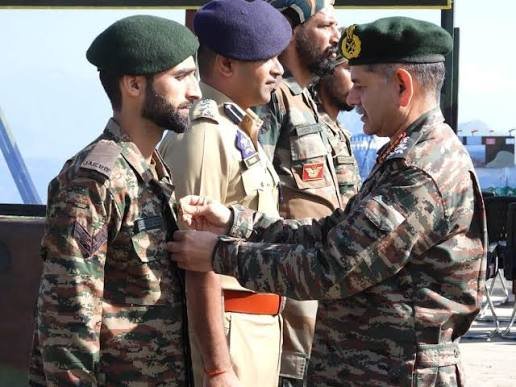
He stated that transformation is a continuous journey that requires sustained efforts to implement organizational reforms and technological integration. Modernization isn’t limited to the purchase of new weapons; it encompasses strategy, organizational structure, technology, and training. Operation Sindoor has clearly demonstrated that victory in future wars will depend on rapidly integrating intelligence, sensors, snipers, and networks. Specialized units like the Rudra Brigade, Bhairav Battalion, Ashri Drone Platoon, and Shaktiman Regiment have been created for this purpose. The current priority is the “absorption” of these new systems so that soldiers can respond quickly through the network.
He also described the “Baaz Battalion” as a game-changer in strengthening drone capabilities. A dedicated pool of technical military experts is being created to manage the drone ecosystem, with the aim of enhancing surveillance capabilities to provide real-time information and enable accurate action in the battlefield.
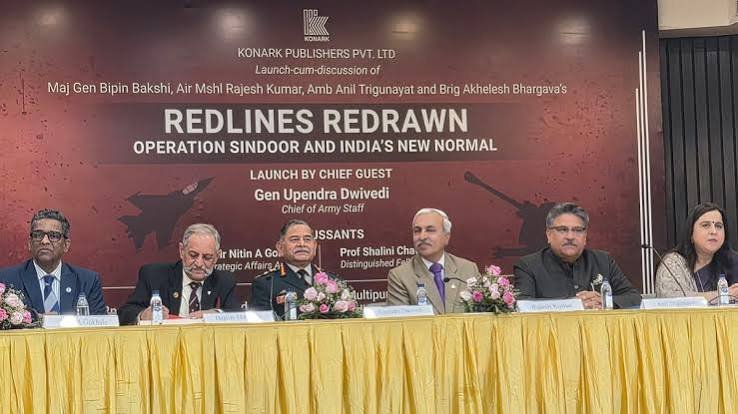
He emphasized that vigilance, credible preparedness, and continuous communication are essential for stability on the borders. Besides, the Disengagement Agreement has reduced tensions on the ground, and there are established mechanisms to resolve local issues related to different communities along the border, and over 1,000 flag meetings are held annually at the grassroots level.
He called self-reliance a fundamental requirement for future wars and national security, and that in times of crisis, we cannot rely entirely on foreign supply chains. Today, our indigenous communication, electronic warfare, and surveillance systems are playing a key role. We have engaged DPSUs, private industries, MSMEs, startups, and academic institutions to accelerate trials and induct equipment quickly. Domestic industry must now focus on developing long-range precision fires, smart ammunition, and anti-drone technology.
He described the Agnipath scheme as a major reform that empowers young and technically competent personnel. He said that initial feedback from field units on the Agni Veers is encouraging. These young people have undergone rigorous military training and are excellent at handling modern communication and drone systems. As far as increasing the retention limit to 25% is concerned, the plan is still being developed and the first batch has not completed the 4 year service cycle, hence it is premature to deactivate it. We are institutionally evaluating it and if required in future considering the need of technology areas like Air Defence, Cyber and Electronic Warfare, it will be considered at the policy level.