A two-day meeting of Finance Ministers and Central Bank Governors begins in Jaipur today, to discuss global economic issues.
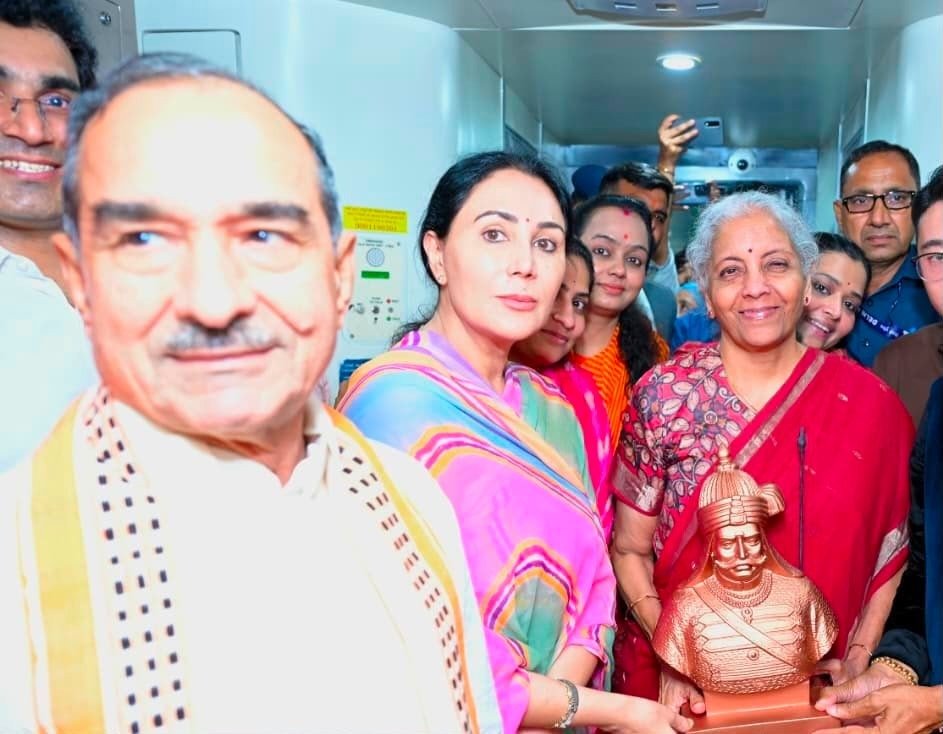
The two-day meeting of Finance Ministers and Central Bank Governors, under India’s BRICS chairmanship, began today, Wednesday, August 12, in Jaipur, Rajasthan. This high-level meeting, scheduled for August 12 and 13, will discuss key issues such as challenges facing the global economy, reforms in the international financial system, financial stability, the needs of developing economies, and strengthening global financial cooperation.https://x.com/nsitharamanoffc/status/2087179754336399398?s=20 Union Finance Minister Nirmala Sitharaman arrived in Jaipur on Tuesday night, August 11, to participate in the meeting. She was welcomed at Jaipur airport by Deputy Chief Minister Diya Kumari and Chief Secretary V. Srinivas. Reserve Bank of India Governor Sanjay Malhotra also arrived in Jaipur on Tuesday night. Furthermore, the influx of high-level delegations from BRICS member countries continues.https://x.com/ians_india/status/2087226397614133289?s=20 The primary objective of this meeting is to further strengthen cooperation among BRICS countries on global macroeconomic and financial issues. In addition, member countries will share their views on issues related to financial stability, development investment, and the role of international financial institutions in the changing global economic landscape. Increasing capital availability for developing and emerging economies, making private investment attractive, and strengthening development finance are among the key agenda items at the Jaipur meeting. The meeting will provide representatives from BRICS member countries with an opportunity to express their views. The delegations will address the following representatives: Brazil, China, Egypt, Ethiopia, Indonesia, Iran, Russia, South Africa, and the UAE. The FMCBG meeting in Jaipur is also considered important in preparation for the 18th BRICS Summit to be held in Delhi in September. The discussions and consensus reached at this meeting are expected to determine the direction of future financial strategies and cooperation. It is worth noting that a meeting of BRICS trade ministers was held in Jaipur on August 5th and 6th. In the coming days, a BRICS meeting related to the environment, sports, and tourism, among other sectors, is also scheduled.Send feedbackPress
Tata Sons Chairman N. Chandrasekaran Resigns Prematurely
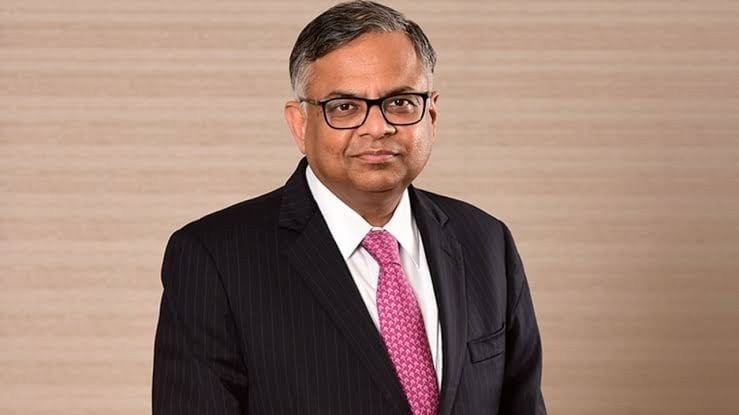
Big news is emerging regarding the Tata Group. Tata Sons Chairman N. Chandrasekaran has resigned from his post. His term was due to end in February 2027, but he has resigned prematurely and will not seek reappointment. Chairman N. Chandrasekaran has announced his resignation ahead of the company’s Annual General Meeting (AGM) on August 18th, and has issued a statement informing him of this. Chandrasekaran said, “My current term as Chairman of Tata Sons ends on February 20, 2027. The Sir Dorabji Tata Trust and the Sir Ratan Tata Trust unanimously passed a resolution recommending my extension for another five years. This was recorded by the Nomination and Remuneration Committee and the Board of Tata Sons and recommended for extension. Subsequently, the proposal was placed before the Tata Sons Board on February 24, 2026. However, the proposal could not proceed as one Board member did not support it. Due to the lack of unanimous support, I chose to defer the decision. Six months have passed since that Board meeting, and no decision has been taken. Tata Sons is a large organization, and several major strategic projects are currently at crucial junctures. Leading the Group after February 2027 requires not only a leader, but also clarity on leadership for employees, investors, partners, and other stakeholders.” It is necessary.”Send feedback
NDA MPs Protest Opposition Deadlock; Priyanka Gandhi, BJP Face Off Over Jharkhand Student Lathicharge…
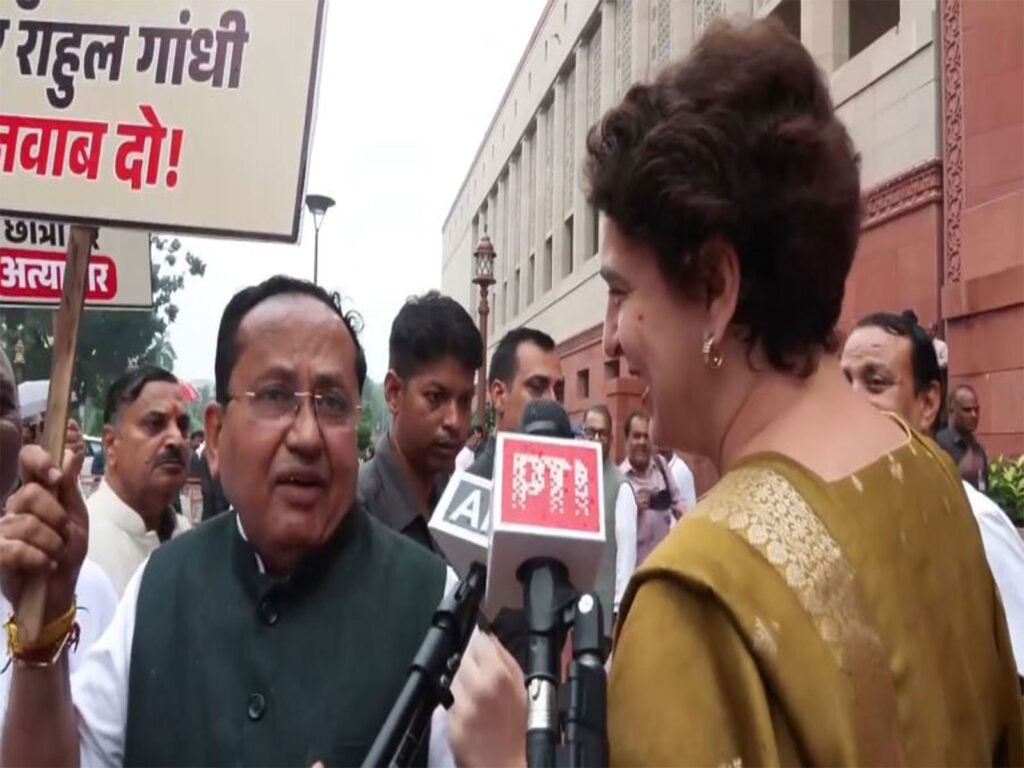
Today is the 17th day of the Monsoon Session, which began on July 20th, and not a single day has the House proceedings been smooth. Meanwhile, the opposition continues to create ruckus and raise slogans both inside and outside Parliament. On Tuesday, July 11th, National Democratic Alliance (NDA) MPs marched to Parliament to protest the opposition’s deadlock in both Houses of Parliament. This is due to the ongoing confrontation between the government and the opposition over the recent student protests and police action against the protesters. Parliament proceedings have been repeatedly disrupted due to this issue. The opposition is continuously demanding answers from the government. The government has now proposed a debate on this issue, and the Home Minister will respond. Meanwhile, on Monday, NDA MPs also demanded answers from Congress MPs regarding the lathicharge and use of water cannons by Jharkhand Police against protesting candidates taking the JPSC and JSSC exams. BJP MP and Congress MP faced off BJP MP Mukesh Dalal and Congress MP Priyanka Gandhi Vadra from Wayanad, Kerala, faced off. As Priyanka was heading to Parliament, Dalal shouted “Shame on Rahul Gandhi, shame on you!” He also held posters reading “Rahul Gandhi, answer for the brutality against students in Jharkhand.” The BJP MP asked Priyanka Gandhi when Rahul Gandhi would visit Jharkhand. Priyanka replied that she had met and interacted with the children of Jharkhand. With that, she moved on. Priyanka Gandhi also took a jab at the protests by NDA MPs, saying, “This is the first time I’ve seen MPs from the ruling party protesting. At least we forced them to do so.” Rajya Sabha member Tarun Chugh accused Gandhi of adopting double standards. He said, “This is a case of double standards. Rahul Gandhi is running away from the House and remaining silent on the lathicharge on students in Jharkhand. The country is watching.” BJP MP Sakshi Maharaj said that the entire opposition does not want any kind of discussion. As far as the issue related to students is concerned, they have one policy for Jantar Mantar and a completely different policy for Jharkhand. BJP MP Sanjay Jaiswal said that we are ready for discussion, but Rahul Gandhi is not. He has stalled the proceedings of the Lok Sabha. The Home Minister is ready to answer. BJP MP Manoj Tiwari said that Amit Shah will answer, Rahul Gandhi should not run away, Rahul Gandhi should be ashamed, so much brutality has been done to the students in Jharkhand. NCPI MP Rachna Banerjee said that everyone is demanding answers from them (the opposition). They will have to answer.
Bihar Liquor Ban Under Review: Why Ending It Won’t Be Easy for BJP
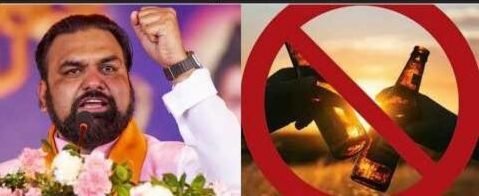
While the BJP is aware that ending prohibition could significantly boost state revenues, it is unlikely to take that step, given the potential backlash from Nitish Kumar. Bihar Liquor Ban Under Review: Bihar’s decade-old liquor ban is back in the political spotlight after a recent study recommended ending complete prohibition in the state. A study by the National Council of Applied Economic Research (NCAER) has suggested lifting the ban and bringing back regulated liquor sales with excise taxes. It said the move could increase Bihar’s state revenue by around 14-15%. The study also pointed to the growth of illegal liquor trade and the use of alternative intoxicants despite the ban. It said prohibition has created major enforcement challenges and has not fully achieved its key objective of reducing crimes against women. The report has triggered a political debate in Patna. The RJD has used the findings to target the government, while NDA allies have backed stricter enforcement rather than ending the ban. JD(U) MP Devesh Chandra Thakur, however, has called for a review of the policy, saying liquor prohibition has not succeeded anywhere. For the BJP, the issue is politically sensitive. While the party is aware of the potential revenue gains from lifting the ban, any change could upset former Chief Minister Nitish Kumar, who introduced prohibition in Bihar in 2016. For now, the government appears unlikely to make an immediate change to the liquor policy.
Indian Ambassador Naveen Srivastava Meets Nepal PM Balen Shah, Discusses Strengthening Bilateral Ties..
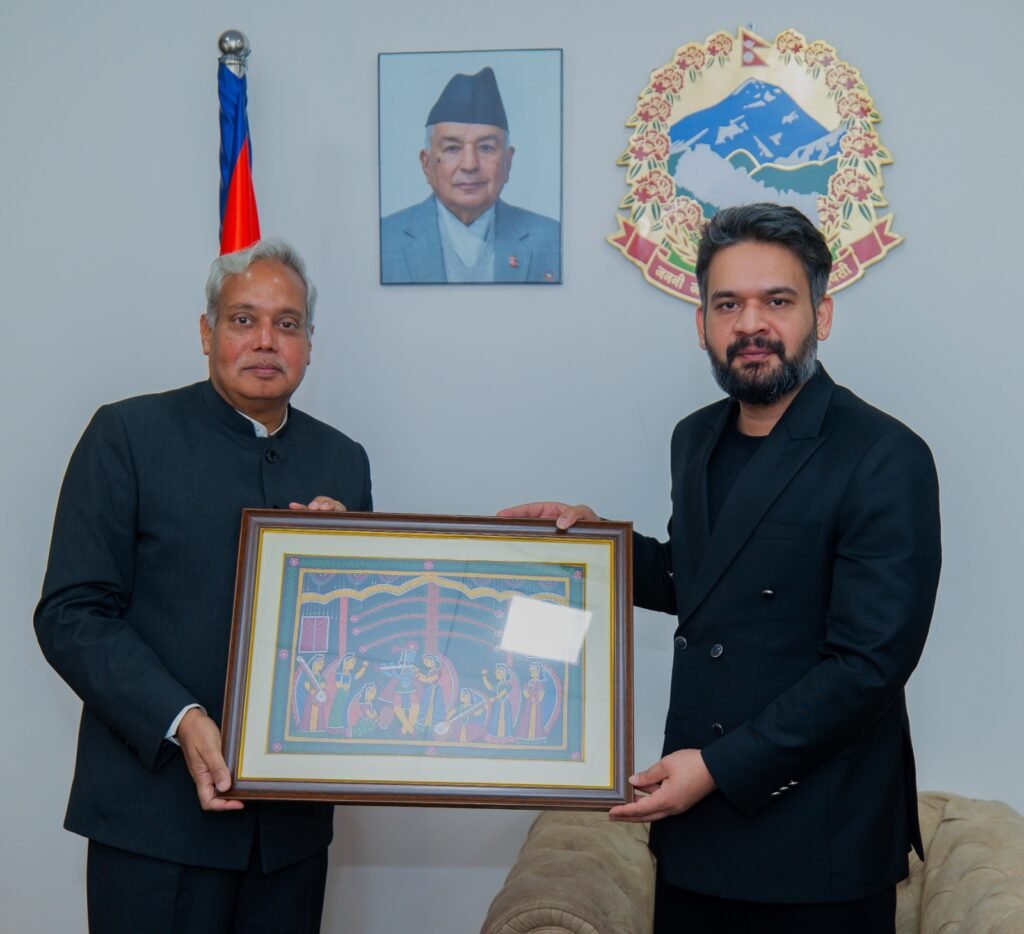
Indian Ambassador Naveen Srivastava met with Nepal’s Prime Minister Balen Shah today at the Prime Minister’s Office (PMO) and Council of Ministers’ Office at Singha Durbar in Nepal. During the meeting, the two sides discussed various aspects of Nepal-India relations, focusing on mutual friendship, shared interests, development partnership, and ongoing cooperation. According to reports, Ambassador Srivastava extended his best wishes to the Nepalese Prime Minister and reiterated India’s commitment to further strengthening the relationship between the two countries. In response, Prime Minister Shah emphasized the need to further deepen the historical ties between the two neighboring countries and underlined the importance of working together in areas of recent interest. Reporting about his meeting with the Nepalese Prime Minister, Naveen Srivastava said, “I am honored to have met the Honorable Prime Minister of Nepal, Balen Shah, this morning. I conveyed the warm greetings of Prime Minister Modi to him. We had a meaningful and productive discussion on further deepening the strong and multifaceted partnership between India and Nepal.” This is the first time Prime Minister Balen Shah has held face-to-face bilateral talks with a foreign diplomat since assuming office nearly four months ago. Earlier, Balen had taken a firm stance of not meeting with ambassadors one-on-one, preferring group talks instead.
India Officially Maps 27 Strategic Sites in Arunachal Pradesh to Counter China’s Claims..
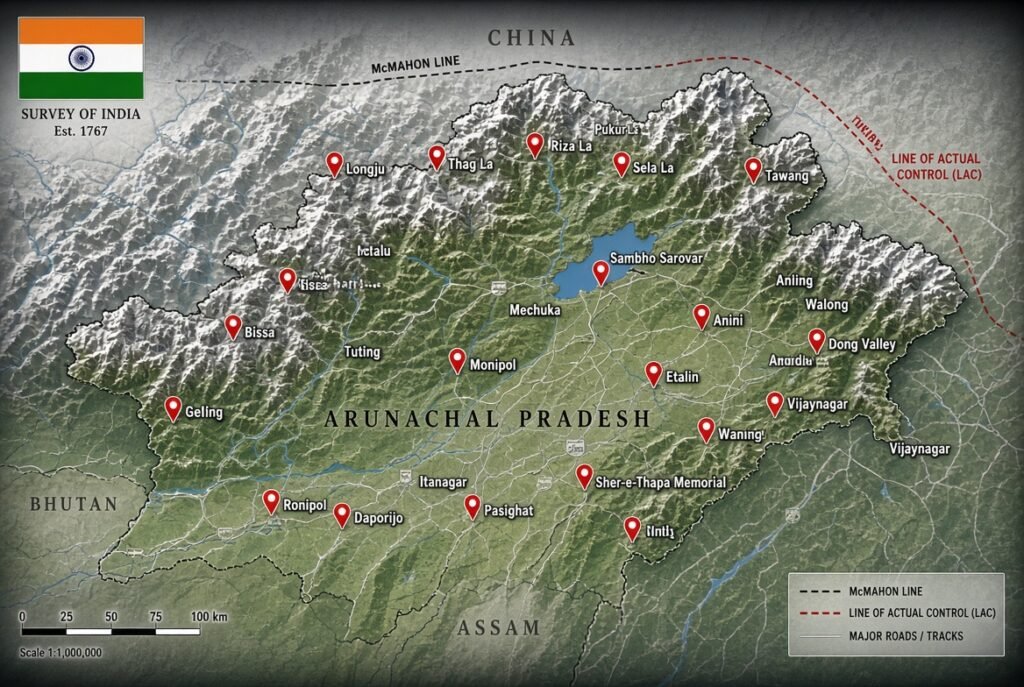
India has formally recognized 27 locations and geographical features in Arunachal Pradesh on the Survey of India’s official map, strengthening its territorial claims amid ongoing infrastructure development along the India-China border. The Indian government’s decision is seen as a response to China’s claim that Arunachal Pradesh is part of China. The Home Ministry shared this information on Friday. The list includes strategic locations such as Longju, Maja, and Bissa; mountain passes such as Thag La, Zo La, Riza La, and Pukur La; the high-altitude lake Sambho Sarovar; and the Sher-e-Thapa Memorial. Home Ministry officials stated that the move is aimed at ensuring a proper and definitive recognition of Arunachal Pradesh and responding to China’s repeated attempts to rename places in the region. Analysis of satellite imagery by independent monitors shows that China is building roads, camps, and other infrastructure near Jari in the disputed area. The area where India is changing the names of 27 places falls under the Indian-administered territory under the McMohan Line, but it was under Chinese control since 1959. Both these developments highlight the ongoing dispute related to infrastructure and maps on the Line of Actual Control (LAC), on which India says that such attempts at changing names and construction work cannot change the reality on the ground.
Pakistan, Saudi Arabia, and Turkey Sign Landmark Makkah Mutual Defense Pact..
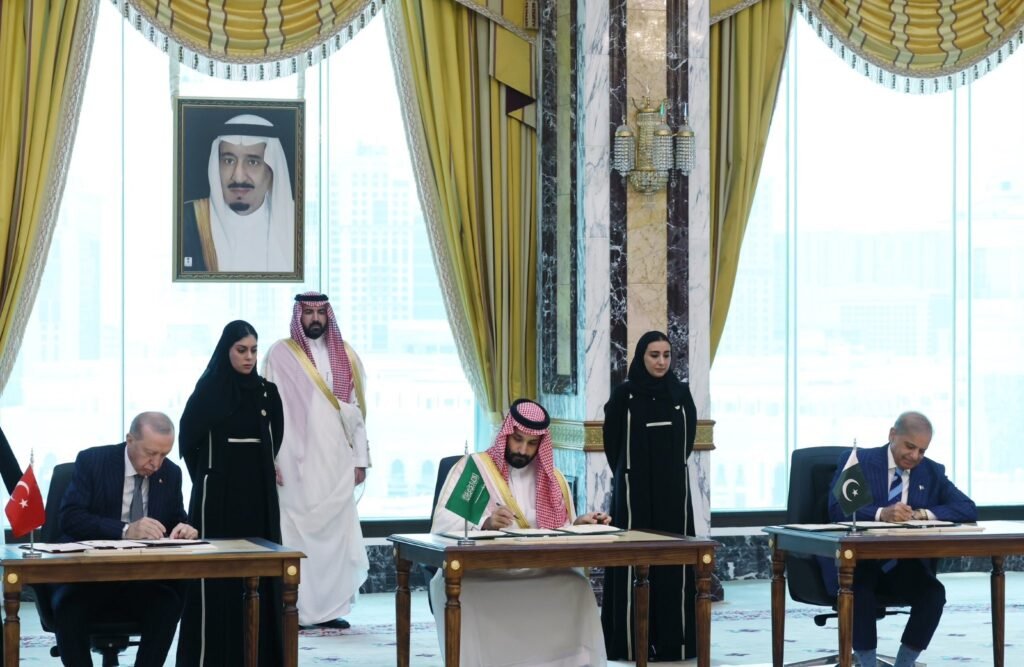
Pakistan, Saudi Arabia, and Turkey signed a joint defense agreement in August 2026 to strengthen military operations between the three countries. This agreement was the subject of long-standing negotiations between the three countries. The agreement aims to strengthen collective security against any kind of attack. Under the agreement, an attack on one country will be considered an attack on all three. This trilateral agreement was reached in August 2026 in Mecca, Saudi Arabia, during a meeting between Saudi Crown Prince Mohammed bin Salman, Turkish President Recep Tayyip Erdogan, and Pakistani Prime Minister Shahbaz Sharif. Pakistan has a long-standing rivalry with India According to a ministry statement, the agreement states that any attack on any one of the three countries will be considered an attack on all of them. Pakistan and Saudi Arabia already have a similar agreement, and this agreement is being considered a major blow to India and Israel. Pakistan has a long-standing rivalry with India and is also a recent enemy of Israel. According to Pakistan’s Foreign Ministry and media reports, the agreement, called the Makkah Joint Defense Agreement, comes amid rising regional tensions, including the ongoing war in West Asia and a new conflict in Yemen. However, officials have not yet disclosed the full details of the agreement. Pakistan’s Foreign Office stated that Prime Minister Shahbaz Sharif, Saudi Crown Prince Mohammed bin Salman, and Turkish President Recep Tayyip Erdogan signed the agreement. Pakistan has linked this trilateral defense agreement to collective security and peace and stability in the region. The joint statement said that the agreement is guided by “the long-standing historical ties between the three countries, the unbreakable bonds of brotherhood and Islamic solidarity that unite them, and their shared strategic interests and long-term defense cooperation.”
PM Modi Urges Youth to Wear Handlooms & Share GRWM Videos on National Handloom Day..
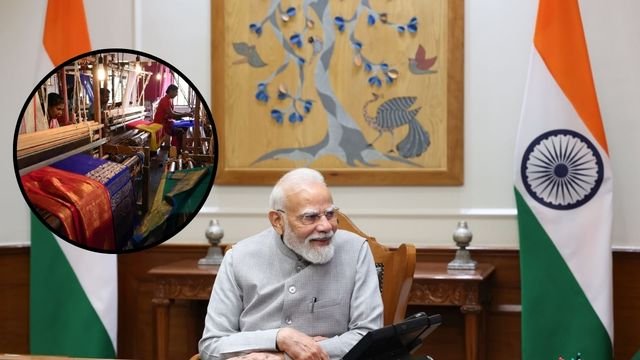
India is renowned worldwide for its handlooms. From Kashmir’s Pashmina to the Kanjeevaram of the South, the magic of Indian weavers has dominated the global market for centuries. National Handloom Day is celebrated every year on August 7th to preserve this unique heritage and promote the skills of weavers.\ This year, Prime Minister Narendra Modi has made a unique appeal to the countrymen on this special occasion. PM Modi released a special video and message on social media on the occasion of National Handloom Day, urging the country’s youth and citizens to adopt Indian handloom products. In the video, he urged the country’s youth and citizens to wear local clothing and follow the popular “Get ready with me” (GRWM) trend on social media. He urged people to share videos and photos of their favorite handloom products on digital platforms using the hashtag #NationalHandloomDay. He stated that this would give greater recognition to the diversity of Indian handlooms, strengthen the economic status of weavers, and strengthen the resolve for a self-reliant India. According to this, many Gen-Zs have uploaded videos on social media wearing local clothing, embodying the popular “Get ready with me” (GRWM) trend. Prime Minister Modi stated in his video message that August 7, 1905, is an important date in Indian history. The Swadeshi movement for India’s independence began on this day, which played a crucial role in laying the foundation for a self-reliant India. He noted that the entire nation participated unitedly in this movement against the British. PM Modi stated that just as Friendship Day is celebrated with great enthusiasm in the country, National Handloom Day should also be celebrated as a grand celebration. He said that celebrating Handloom Day means honouring the weaver families who work hard at home to prepare clothes and keep the Indian tradition alive.
Tewolde Gebremariam to Lead Air India as CEO, Succeeding Campbell Wilson
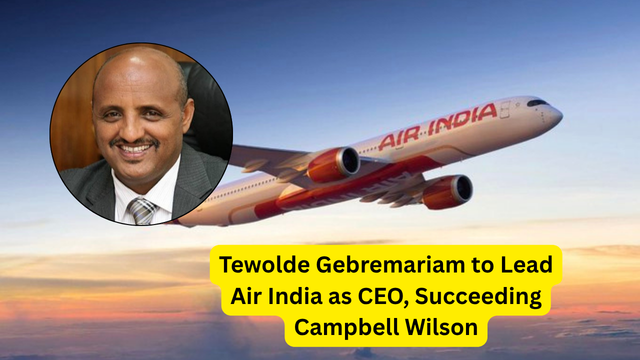
Air India has appointed Tewolde Gebremariam, the former head of Ethiopian Airlines, as its new CEO and Managing Director. He will succeed the current CEO, Campbell Wilson, who is set to step down on September 30. Tewolde Gebremariam previously served as the CEO of Ethiopian Airlines Group; under his leadership, the airline established itself as one of the most successful and profitable carriers in the world. He now joins the Tata Group-owned airline as it enters the next phase of its transformation and expansion. Campbell Wilson, the current CEO, has led Air India since 2022 and oversaw significant changes during his tenure. Although his term was originally scheduled to run until 2027, he expressed a desire to step down earlier—in 2026—and played a key role in the process of appointing the new CEO. Under Wilson’s leadership, Air India took several crucial steps, including modernizing the fleet, placing large orders for new aircraft, integrating with other Tata Group airlines, and strengthening corporate governance. Tewolde Gebremariam was selected by the Air India board after a thorough evaluation of qualified candidates from around the world. According to the company, the search focused on finding an individual with experience in airline transformation, operational improvement, strengthening safety standards, and driving profitable expansion. Gebremariam’s outstanding track record in these areas led to his selection for the CEO role. Upon his appointment as Air India’s new CEO, Tewolde Gebremariam stated that it is an honor to lead such a historic airline. He expressed great enthusiasm for the opportunity to transform Air India into a world-class airline at a time when India is rapidly emerging as a major global economy. He expressed confidence that, with the cooperation of the employees, management, and the government, he would take Air India to new heights of reliable service, Indian hospitality, and long-term growth.
August 5, 2019 to 2026: 7 Years of Post-Article 370 Jammu and Kashmir
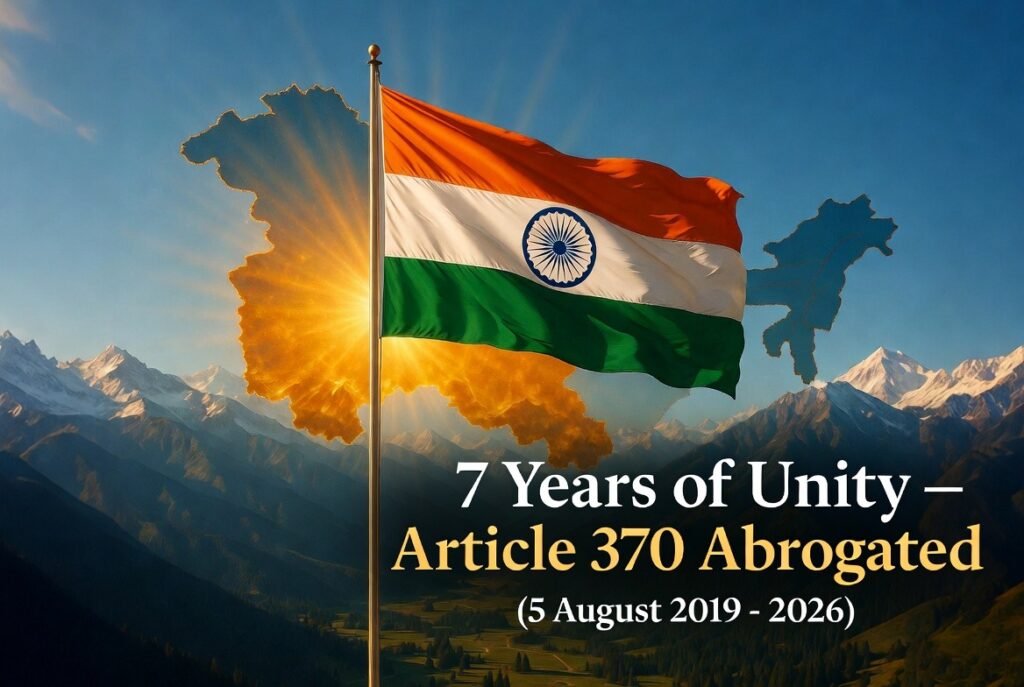
It has been seven years since the destiny of Jammu and Kashmir was transformed. It was on this very day in 2019 that Article 370 and Article 35A were abrogated in Jammu and Kashmir. This is considered the most significant achievement of the BJP government’s tenure. Just months after the NDA government began its second term under the leadership of Prime Minister Narendra Modi, Article 370 and Article 35A—which granted special status to Jammu and Kashmir—were revoked. This is regarded as one of the most secretive strategic missions in the history of Indian politics. Knowledge of the entire operation was confined to a select few—including PM Modi, Home Minister Amit Shah, and National Security Advisor Ajit Doval—and no one else got wind of it. What is Article 370? Article 370 was a temporary provision of the Constitution that granted Jammu and Kashmir a special autonomous status compared to other Indian states. This provision came into effect on October 26, 1947—shortly after India gained independence—and remained in force until August 5, 2019. Under this article, Jammu and Kashmir had its own separate constitution and flag. Except for matters concerning defense, foreign affairs, finance, and communications, the approval of the Jammu and Kashmir State Assembly was mandatory for the implementation of central laws. Furthermore, non-residents of Jammu and Kashmir could not purchase movable property, land, or houses in the region, nor were they eligible for state government jobs. Certain provisions of the Indian Constitution—such as the Right to Education (RTE) and the Right to Property—were not applicable in Jammu and Kashmir under this article. Changes after the abrogation of Article 370 With the abrogation of Article 370, the special status granted to Jammu and Kashmir came to an end. Post-2019, the Indian Constitution became fully applicable in the region. The provisions for a separate constitution and flag for Jammu and Kashmir were also abolished. Non-residents can now purchase land in Jammu and Kashmir, subject to certain conditions. Additionally, citizens of Jammu and Kashmir became eligible to apply for jobs in other states. Jammu and Kashmir was bifurcated into two Union Territories: Jammu and Kashmir, with a legislative assembly, and Ladakh, as a Union Territory without one. While incidents of stone-pelting were previously common in the region, the youth of Jammu and Kashmir began joining the Indian Army following the abrogation of Article 370. Terrorist incidents in the region also declined.